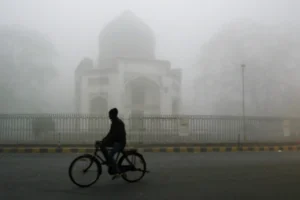




Delhi-NCR has begun experiencing a slight winter chill, with mornings and evenings turning cooler after the monsoon’s withdrawal from North India. However, the national capital faces another concern as air pollution threatens to push its air quality into the poor category for the first time this season on Monday.
Weather conditions have stabilised across Delhi, Uttar Pradesh, Bihar, Rajasthan and Madhya Pradesh. Temperatures have gradually declined during morning and evening hours following weeks of rain.
According to the India Meteorological Department (IMD), Delhi will likely experience clear skies and dry weather over the coming week.
The minimum temperature may remain between 18 and 20 degrees Celsius, while the maximum could range from 31 to 35 degrees Celsius.
The Safdarjung Meteorological Centre recorded a maximum temperature of 31.7 degrees Celsius and a minimum of 18.6 degrees Celsius on October 18. The minimum temperature may hover between 18 and 19 degrees Celsius on Monday.
The IMD expects clear conditions across North India from October 18 to 24. Temperatures in Delhi-NCR, Punjab, Haryana, Uttar Pradesh, Bihar and Rajasthan could remain up to two degrees above normal in some areas.
Dry weather and stagnant winds could worsen pollution across Delhi-NCR. Without rainfall to clear airborne pollutants, vehicle emissions, construction dust and other sources may push pollution levels higher.
Delhi recorded an Air Quality Index (AQI) of 187 on Sunday, placing it in the moderate category. However, 22 monitoring stations reported poor air quality, signalling elevated pollution across several parts of the capital.
Meanwhile, the IMD forecast continued rainfall across southern India through October 23. Tamil Nadu, Puducherry, Kerala, Karnataka and Lakshadweep may receive showers. Isolated heavy rainfall could affect Tamil Nadu and Puducherry, while Kerala, Mahe and south interior Karnataka may experience heavy showers.
The IMD had forecast heavy rainfall in coastal Andhra Pradesh and Rayalaseema on Sunday.
Meteorologists are monitoring the possible influence of El Niño on the upcoming winter.
Changes in Pacific Ocean temperatures could affect India’s weather patterns, although the impact on winter temperatures and rainfall remains uncertain.
Also Read: Tiger Shroff Shooting Incident: Actor Unhurt, Driver Injured In Juhu Firing
To read more such news, download Bharat Express news apps