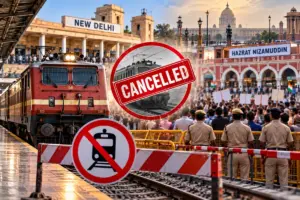




Officials reported that Delhi saw a slight improvement in air quality on Wednesday, according to data from the Sameer app.
Measurements indicated that the overall Air Quality Index (AQI) dropped to 269 from 310 on Tuesday, offering minor relief to residents.
Despite this decline, pollution remained firmly in the ‘poor’ category, with visible smog continuing to cover much of the city.
Data showed that 28 stations across Delhi recorded air quality in the ‘poor’ range, while nine stations remained in the ‘very poor’ category.
Readings were highest at Dwarka’s NSIT (324) and Bawana (319), indicating severely degraded air quality.
Additionally, areas including Jahangirpuri, Mundka, Nehru Nagar, Pusa, Vivek Vihar, and Wazirpur recorded AQI levels above 300, placing them in the ‘very poor’ bracket.
Aya Nagar, IGI Airport (T3), and Mandir Marg recorded comparatively better air quality, remaining in the ‘moderate’ category.
Tuesday morning’s AQI stood at 292, also within the ‘poor’ category.
Locations such as Akshardham, Ghazipur, and Anand Vihar slipped into the ‘very poor’ range, with readings around 319. These fluctuations highlight how weather conditions and pollutant accumulation contribute to rapid changes in air quality across the city.
Winter Conditions Add to Challenges
Forecasts from the India Meteorological Department (IMD) indicate dense fog and a cold wave for Wednesday, warning of reduced visibility and a significant drop in temperatures.
The minimum temperature is expected to fall to 7 degrees Celsius, making early mornings and nights particularly chilly. Daytime temperatures are likely to reach around 25 degrees Celsius, offering only partial respite.
Citizens face another challenging week as smog, cold winds, and low temperatures persist.
Smog, cold winds, and low temperatures will affect outdoor activities, health, and daily routines, emphasising the need for residents to take precautions against pollution-related issues.
Authorities caution that despite minor improvements in AQI, the national capital remains under the shadow of winter pollution.
Vigilance is expected to continue as fluctuating air quality levels, fog, and cold conditions shape life in the city.
Also Read: Clearer Skies Over Delhi-NCR After Days Of Dense Smog, Says IMD
To read more such news, download Bharat Express news apps