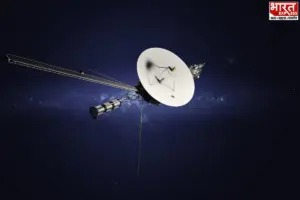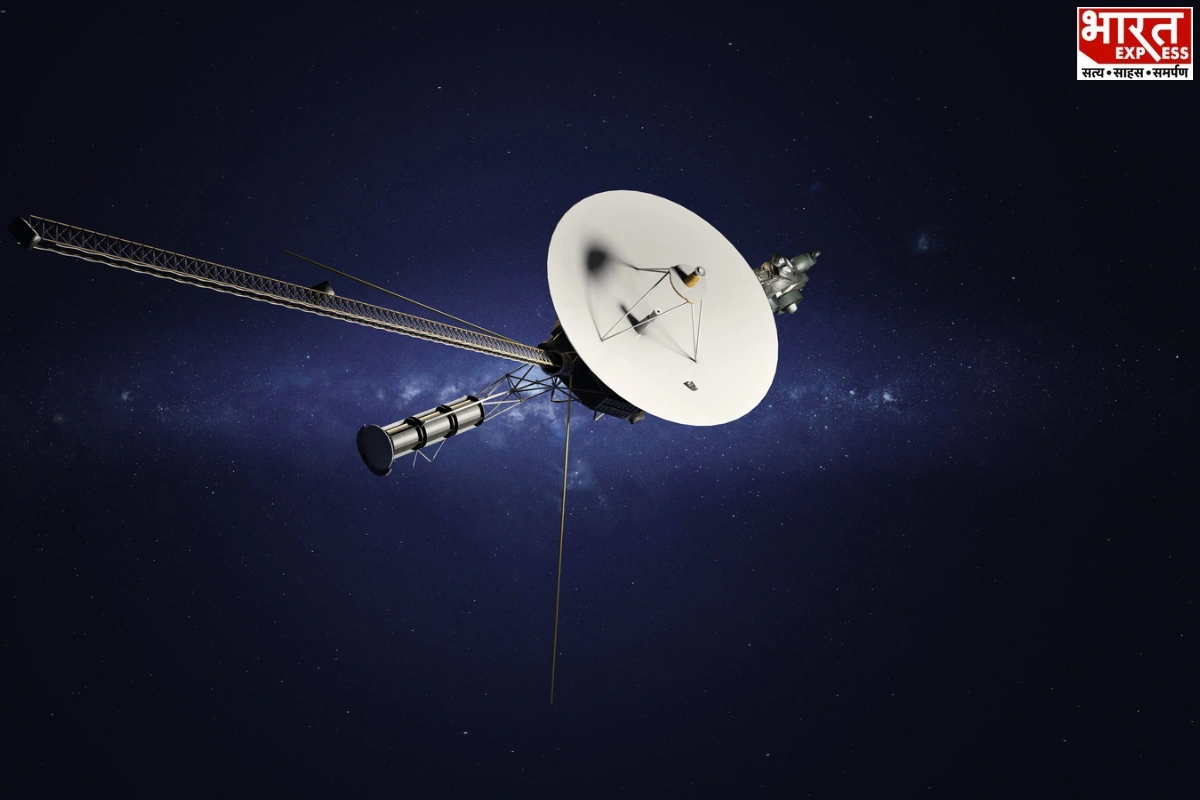
NASA’s Voyager 1 spacecraft has continued its remarkable journey through space, travelling approximately 25.9 billion kilometres from Earth.
Launched in 1977, the spacecraft has far exceeded its original mission expectations and remains one of humanity’s most distant space explorers.
Scientists originally designed Voyager 1 for a mission lasting just four to five years.
Nearly 50 years after its launch, the spacecraft continues to operate and transmit valuable information from beyond the boundaries of the Solar System.
Its longevity has made Voyager 1 one of the most extraordinary achievements in space exploration, offering scientists insights into regions of space that no other spacecraft has explored in the same way.
Voyager 1’s immense distance from Earth presents significant communication challenges.
A radio signal takes approximately 24 hours to reach the spacecraft, while the return signal takes another 24 hours. This means a complete communication exchange can take nearly two days, highlighting the enormous distances involved in communicating with humanity’s farthest-travelling spacecraft.
Voyager 1 continues to send scientific data from interstellar space, helping scientists understand the environment beyond the Solar System. Its ongoing mission, however, demonstrates the remarkable durability of spacecraft technology and the possibilities of long-term space exploration.
Nearly five decades after its launch, Voyager 1 continues its journey into the unknown, carrying humanity’s scientific curiosity farther into the cosmos.
Also Read: WhatsApp Zaps: Could The New Feature Change How You Share Photos And Videos?
To read more such news, download Bharat Express news apps