



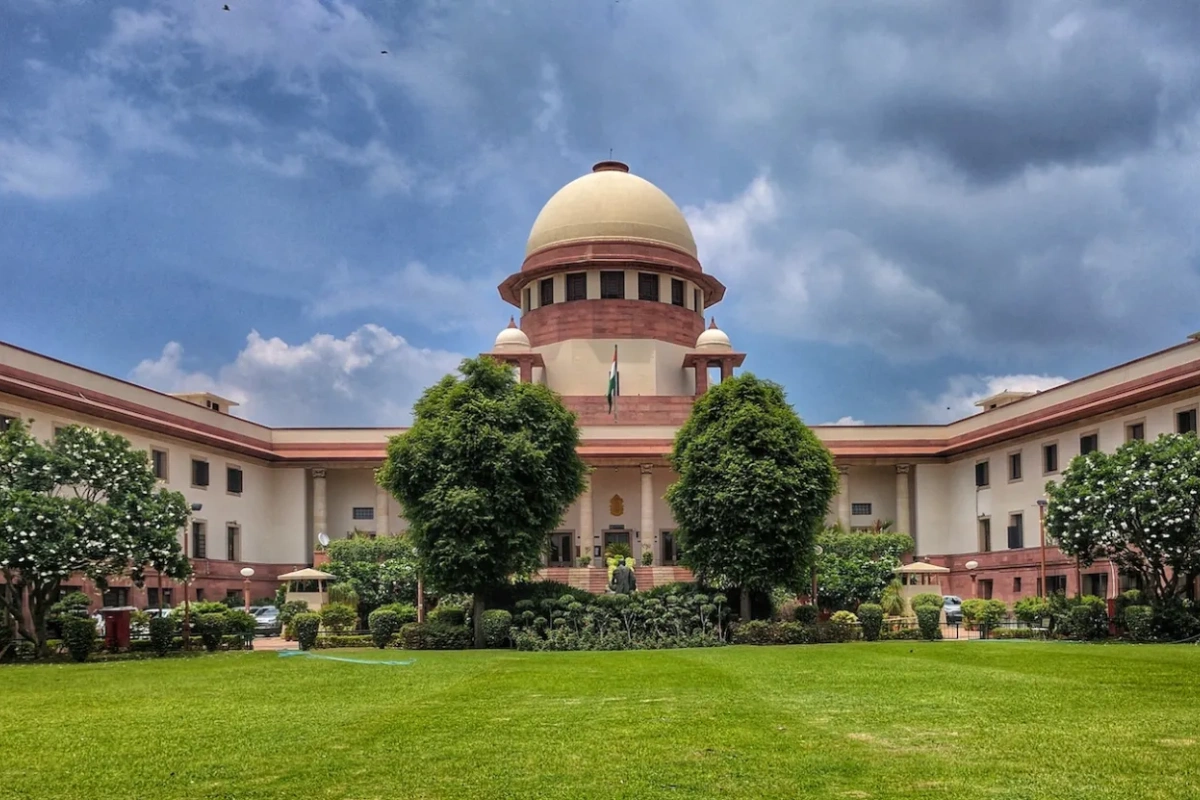
The Supreme Court on Friday held that access to menstrual hygiene is an integral component of a girl child’s right to life, dignity, health and education, and issued a comprehensive set of mandatory directions to all states and Union Territories to ensure uniform implementation across schools.
A Bench of Justices J.B. Pardiwala and R Mahadevan observed that ‘a period should end a sentence – not a girl’s education,’ underlining that the State bears a positive obligation under Article 21 of the Constitution to safeguard the right to health, particularly the menstrual health of girl children.
In its detailed 127-page judgment, the Justice Pardiwala-led Bench noted that the absence of access to proper menstrual hygiene management (MHM) products forces girls to rely on unhygienic alternatives such as rags or prolonged use of absorbents, leading to serious and demonstrable health risks.
“Inaccessibility of menstrual hygiene management measures undermines the dignity of a girl child, as dignity finds expression in conditions that enable individuals to live without humiliation, exclusion, or avoidable suffering,” the apex court said.
Highlighting the link between menstrual hygiene and education, the court observed that the lack of clean washrooms, menstrual absorbents and safe disposal facilities often compels girls to remain absent from school or drop out altogether.
“Participation in education is not limited to physical presence in the classroom; it encompasses the ability to attend school, concentrate during lessons, and take part in academic and co-curricular activities on an equal footing with peers,” the Bench said.
Mandatory Directions For Schools Nationwide
Issuing a slew of directions, the Supreme Court ordered that all schools, government-run as well as privately managed, must have functional, gender-segregated toilets with usable water connectivity, hand-washing facilities with soap, and infrastructure accessible to children with disabilities.
On menstrual products, the court directed states and UTs to ensure that every school provides oxo-biodegradable sanitary napkins free of cost, preferably through vending machines installed within toilet premises. Schools have also been mandated to set up Menstrual Hygiene Management corners stocked with spare uniforms, innerwear, and other essential materials.
The Bench further ordered that schools must have safe, hygienic, and environmentally compliant systems for the disposal of sanitary waste, in accordance with the Solid Waste Management Rules. “Each toilet unit shall be equipped with a covered waste bin for the collection of sanitary material, and cleanliness and regular maintenance of such bins shall be ensured at all times,” the court said.
Directed To Incorporate Gender-Responsive Curricula
To address stigma and lack of awareness, the Supreme Court directed NCERT and State Councils of Educational Research and Training to incorporate gender-responsive curricula on menstruation, puberty, and related health issues. It also mandated training and sensitisation of all teachers, both male and female, on menstrual hygiene.
The District Education Officer has been tasked with conducting annual inspections of school infrastructure and obtaining anonymous feedback from students through tailored surveys.
Oversight of implementation has been entrusted to the National Commission for Protection of Child Rights and State Commissions, with directions to initiate action in cases of non-compliance.
Issuing a continuing mandamus, the apex court ordered the Centre and all states and UTs to ensure strict compliance within three months and said progress would be monitored through compliance reports.
Concluding the judgment, the Justice Pardiwala-led Bench made an emotional appeal, stating,
This pronouncement is not just for the stakeholders of the legal system, it is also meant to be for the classroom where girls hesitate to ask for help, it is for the teachers who want to help but are restrained due to lack of resources, and it is for the parents who may not realize the impact of their silence, and for the society to establish that progress is measured how we protect the most vulnerable.
The matter has been listed after three months for further monitoring of compliance.
To read more such news, download Bharat Express news apps