AI Generated Image
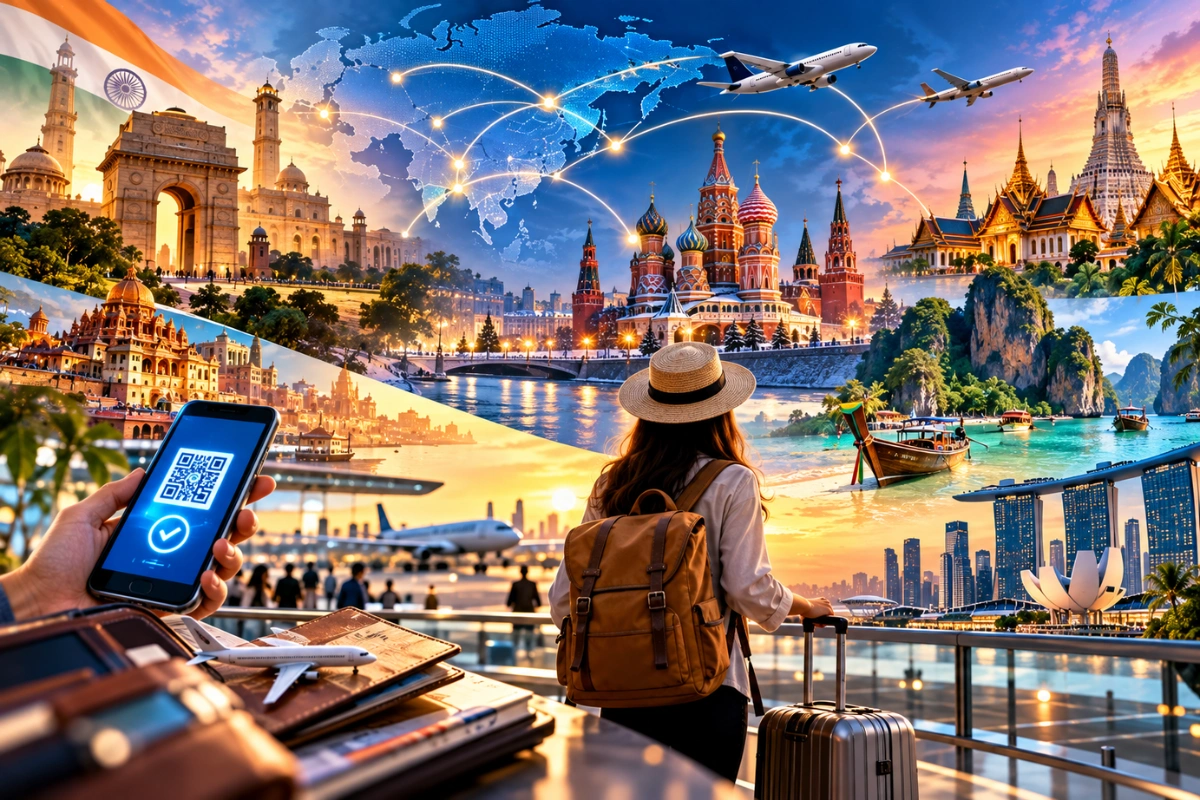
Travel across India, Russia, and Southeast Asia is becoming less dependent on traditional Western hubs. Direct flight links, regional aviation growth, and faster digital payment systems are making multi-country itineraries easier to imagine, book, and manage. For travellers, this means shorter journeys, fewer transit complications, and a more practical way to combine business, family visits, culture, beach breaks, and city escapes in one Asia-focused route.
Why Is India Russia SE Asia Travel Changing Now?
India Russia SE Asia travel is changing because connectivity is becoming more regional and more digital at the same time. Air links are improving between key city pairs, while payment systems such as UPI, PayNow, and emerging instant-payment networks are reducing the friction of moving money across borders. The result is not a perfectly seamless travel zone yet, but it is a meaningful shift away from the old habit of routing everything through Europe or the Gulf.
For years, many long-haul travellers planned Asia journeys as separate trips: India on one ticket, Russia on another, and Southeast Asia as a holiday add-on through Bangkok, Singapore, or Kuala Lumpur. That approach still works, but it often adds layovers, extra immigration checks, and more uncertainty if one segment changes. Direct flights and better payment acceptance make it easier to think regionally: Delhi to Moscow, Moscow to Vietnam, India to Singapore, or India to Thailand as connected possibilities rather than isolated routes.
Direct Flights Are Reshaping the Travel Map
The most visible change is aviation. Direct flights do more than cut hours off a journey; they change traveller behaviour. When a route becomes easier, it starts attracting not only tourists but also students, traders, medical travellers, visiting families, remote workers, and small business owners who would previously have avoided a complicated itinerary.
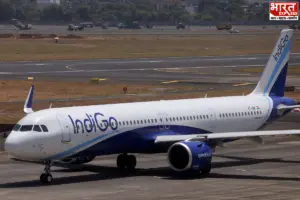
India-Russia connectivity has often centred on Moscow and Delhi, with Aeroflot operating non-stop service between Sheremetyevo and Indira Gandhi International Airport in recent schedules, while seasonal Goa service has also appeared in network planning. Because airline schedules can change quickly, travellers should verify operating days, aircraft, baggage rules, and payment options directly with the airline or a reliable booking channel before purchasing.
Russia-Southeast Asia links are also important. Vietjet announced direct services in 2025 connecting Nha Trang with cities in Russia’s Far East, and Da Nang airport reported the return of a Moscow-Da Nang direct flight in May 2026. These routes matter because they connect Russian outbound demand with Vietnam’s beach and city destinations without requiring a Western transit point.
For travellers building SE Asia trips from India, the region already has strong air access through Singapore, Bangkok, Kuala Lumpur, Ho Chi Minh City, Hanoi, Phuket, Bali connections, and other hubs. The difference now is that these routes increasingly fit into a wider Asian itinerary. A traveller might attend meetings in Delhi, continue to Moscow, and end with Vietnam or Thailand, or begin in Russia and use Southeast Asia as a warm-weather extension.
Digital Payments Are Becoming Part of the Itinerary
Flights get travellers across borders, but payments determine how comfortable those borders feel once they arrive. In the past, international travel planning focused heavily on cash exchange, global cards, and ATM access. Those tools still matter, but digital wallets and instant payment systems are becoming part of the practical Asia travel guide every traveller needs.
India’s UPI has expanded into cross-border use cases, including acceptance or linkages in several countries. An Indian government release in 2026 stated that UPI was operational in Bhutan, Nepal, Singapore, the UAE, France, Sri Lanka, Mauritius, and Qatar, and noted a June 2026 partnership for UPI acceptance in Cambodia. For Southeast Asia travel, Singapore and Cambodia are especially relevant examples of how Indian payment habits are beginning to travel with Indian users.
Singapore remains a key digital-payments bridge. The PayNow-UPI linkage allows participating users in India and Singapore to send and receive cross-border funds quickly using identifiers such as UPI IDs, mobile numbers, or virtual payment addresses, depending on bank participation. This is especially useful for students, families, small merchants, and frequent travellers who need smaller-value transfers without traditional delays.
Project Nexus points to the next stage. The Bank for International Settlements describes Nexus as a way to connect domestic instant payment systems through a standardised platform, with central banks from India, Indonesia, Malaysia, the Philippines, Singapore, and Thailand incorporating Nexus Global Payments in 2025 to move towards live implementation. If it works as intended, it could make future Southeast Asia travel feel less fragmented for payments, though travellers should treat it as an evolving infrastructure project rather than a universal wallet today.
What Does This Mean for Travellers Planning SE Asia Trips?
It means travellers can plan with more confidence, but not with autopilot. Better flights and payment links reduce friction, yet visas, sanctions, local rules, airline changes, and app acceptance still vary by country. The smartest approach is to combine the optimism of new connectivity with the discipline of old-fashioned travel preparation.
Start with route logic. If you want to explore Southeast Asia after India, choose a hub that fits your interests rather than simply the cheapest fare. Singapore works well for finance, events, and polished urban travel. Thailand suits beaches, wellness, nightlife, and short breaks. Vietnam offers strong value for coastal stays, food-focused trips, and history-rich city travel. Malaysia can be a practical bridge between South Asia and the wider region.
Then check entry rules one country at a time. Russia’s unified e-visa system allows eligible travellers to apply online for tourism and other permitted purposes, but it is single-entry, has defined validity and stay limits, and requires a passport valid for at least six months from the application date. Vietnam’s official e-visa portal states that e-visas may be valid for up to 90 days for single or multiple entries, while Thailand’s visa policies have changed repeatedly, so Indian ordinary passport holders should verify the latest Thai embassy guidance before booking.
A practical planning flow looks like this:
- Choose the main purpose of the trip: holiday, meetings, study, family, medical, or mixed travel.
- Select the anchor city first, such as Delhi, Moscow, Singapore, Bangkok, Hanoi, Ho Chi Minh City, or Da Nang.
- Add secondary destinations only if direct or low-risk connections exist.
- Check visa rules using official portals before buying non-refundable tickets.
- Confirm payment methods for each country, not just for the first stop.
- Keep a backup card, some local cash, travel insurance, and offline copies of documents.
- Recheck flight times and entry requirements a few days before departure.
Russia Travel Tips for a Smoother Journey
Any article on travel to Russia needs a practical note on payments and risk. Many Western-issued credit and debit cards do not work in Russia, and the US State Department continues to warn US citizens against travel to Russia, including citing risks such as wrongful detention and limited consular assistance. Travellers of any nationality should review their own government’s advisory, understand local laws, and plan payments carefully before departure.
For Indian travellers, the direct-flight advantage does not remove the need for preparation. Russia can be rewarding for architecture, museums, winter landscapes, ballet, history, metro design, and business travel, but the on-ground experience may differ sharply from card-heavy destinations like Singapore. Do not assume every international app, card, roaming plan, or booking site will work as it does elsewhere.
Use these Russia travel tips as a starting checklist:
- Confirm whether your bank cards will work in Russia before you leave, and do not rely on a single payment method.
- Carry an emergency cash reserve in a currency you can legally bring and exchange, while following declaration rules.
- Book accommodation through channels that clearly explain payment, cancellation, and registration support.
- Download maps, tickets, hotel confirmations, insurance documents, and visa papers for offline access.
- Learn basic Cyrillic for station names, exits, streets, and food labels.
- Build extra time into airport transfers and domestic connections.
- Avoid border regions or restricted areas unless you have a clear legal reason and verified permission.
These precautions do not make the trip difficult; they make it realistic. The easier the flight becomes, the more important it is to remember that financial infrastructure, political conditions, and traveller protections are not uniform across the route.
Southeast Asia Is the Flexible Middle Ground
Southeast Asia often works as the most flexible part of an India-Russia-Asia itinerary because it offers many travel styles in a relatively compact region. You can build a polished urban break in Singapore, a food and heritage loop through Vietnam, a beach stay in Thailand, a nature-focused trip in Malaysia, or a slower cultural journey through Cambodia. That variety is why people searching for an Asia travel guide often start here.
For Indian travellers, Southeast Asia can feel familiar enough to be comfortable and different enough to feel expansive. Food options, flight frequency, budget ranges, and short-stay formats make it ideal for first-time international travellers as well as repeat visitors. For Russian travellers, the region offers warmth, beaches, winter escape options, and a growing range of direct or easier connections through Vietnam and Thailand.
The best way to explore Southeast Asia is not to pack every country into one rushed itinerary. Choose a theme. If the theme is food, combine Bangkok and Hanoi. If it is beaches, compare Phuket, Krabi, Da Nang, Nha Trang, or Bali connections. Similarly, if it is business and finance, Singapore and Kuala Lumpur may make more sense. If it is culture, consider Siem Reap, Luang Prabang, Penang, Hoi An, or Chiang Mai depending on current access and visa fit.
The New Traveller Mindset Is Regional, Not Western-Facing
The bigger story is not just that a few routes are opening. It is that travellers are beginning to plan Asia from within Asia. Instead of asking, ‘Which European hub connects these places?’ they can ask, ‘Which Asian city best links my purpose, budget, visa needs, and payment options?’
That shift matters for families and small businesses. A family with relatives in India and Russia can reduce transit stress. A trader attending exhibitions in Delhi or Moscow can add Singapore or Bangkok without rebuilding the trip from scratch. A leisure traveller can pair Russia’s museums and cityscapes with Vietnam’s coast or Thailand’s islands. Even when the itinerary is ambitious, direct routing makes it easier to visualise.
For tourism boards, airlines, hotels, and travel platforms, the opportunity is to design products around this corridor. That could mean multilingual support, better payment guidance, bundled city-pair content, clearer visa explanations, and packages that do not assume Western cards or Western transit points. The winners will be companies that understand the real traveller journey: search, visa, ticket, payment, arrival, local transport, and support.
How to Plan a Practical Multi-Country Route
A strong multi-country route balances ambition with simplicity. The goal is not to prove how many borders you can cross, but to create a journey that still feels enjoyable if one flight moves, one app fails, or one visa takes longer than expected.
Consider these sample frameworks:
- Culture and city route: Delhi, Moscow, St Petersburg, Singapore.
- Business and meetings route: Mumbai or Delhi, Moscow, Dubai or Singapore, Kuala Lumpur.
- Winter escape route: Moscow, Nha Trang or Da Nang, Bangkok, Delhi.
- First-time Southeast Asia route from India: Delhi or Mumbai, Singapore, Bangkok or Phuket, return via a direct India flight.
- Slow travel route: India, Vietnam, Cambodia, Thailand, with Russia kept as a separate trip if visa or payment planning feels complex.
Before booking, pressure-test the plan. Ask whether each border crossing has a clear purpose. Check whether the second and third destinations add joy or just fatigue. Make sure your return route is protected against missed connections. If you are carrying business equipment, medicines, or high-value electronics, review customs and documentation rules before departure.
Payments Should Be Planned Like Transport
Many travellers treat payment planning as an afterthought, but on these routes it deserves the same attention as flights. A smooth payment plan can save time at check-in, reduce stress at restaurants, help with local transport, and prevent avoidable dependence on strangers or last-minute exchanges.
For India and parts of Southeast Asia, UPI-linked services and local QR systems are making everyday payments feel easier. In Russia, the situation is different for many foreign cards, so cash planning and local arrangements matter more. In Singapore, digital transfer links are more advanced. Similarly, in Vietnam, Thailand, Cambodia, Malaysia, and Indonesia, QR payments may be common locally, but foreign-wallet acceptance is not always universal.
A simple rule helps: never arrive in a country with only one way to pay. Carry a primary card, a backup card, some cash, and a tested digital option where available. Save customer support numbers offline. Tell your bank where you are going. If you are depending on UPI abroad, confirm that your bank, app, mobile number, and merchant network are supported at your destination.
The Takeaway for Modern Asia Travel
The future of India–Russia–Southeast Asia travel is not a borderless super-route, at least not yet. Instead, it points towards something more practical: more direct flights, more regional hubs and better payment links. These improvements could create more reasons to plan journeys across Asia without automatically routing through the West.
For travellers, the opportunity is exciting but still requires careful planning. Use direct flights where they reduce risk, not just where they look faster. Treat digital payments as a convenience, not your only safety net. And when you build your next SE Asia trips itinerary, think regionally: India, Russia, and Southeast Asia are no longer separate travel conversations. They are increasingly part of the same map.
To read more such news, download Bharat Express news apps