AI Generated Image
The Black Stone Ramayana: Where Exile Turned into Destiny
Shree Kalaram Sansthan and Panchavati in Nashik, Maharashtra, bring together devotion to Lord Ram, the sacred landscape of his exile and a history of resistance to caste discrimination. At its heart stands Kalaram Temple, named for its black stone image of Ram. Understanding this place means looking beyond its architecture to the Ramayana traditions and struggle for equality that give it lasting significance.
What Does the Black Stone Ramayana Mean at Kalaram Temple?
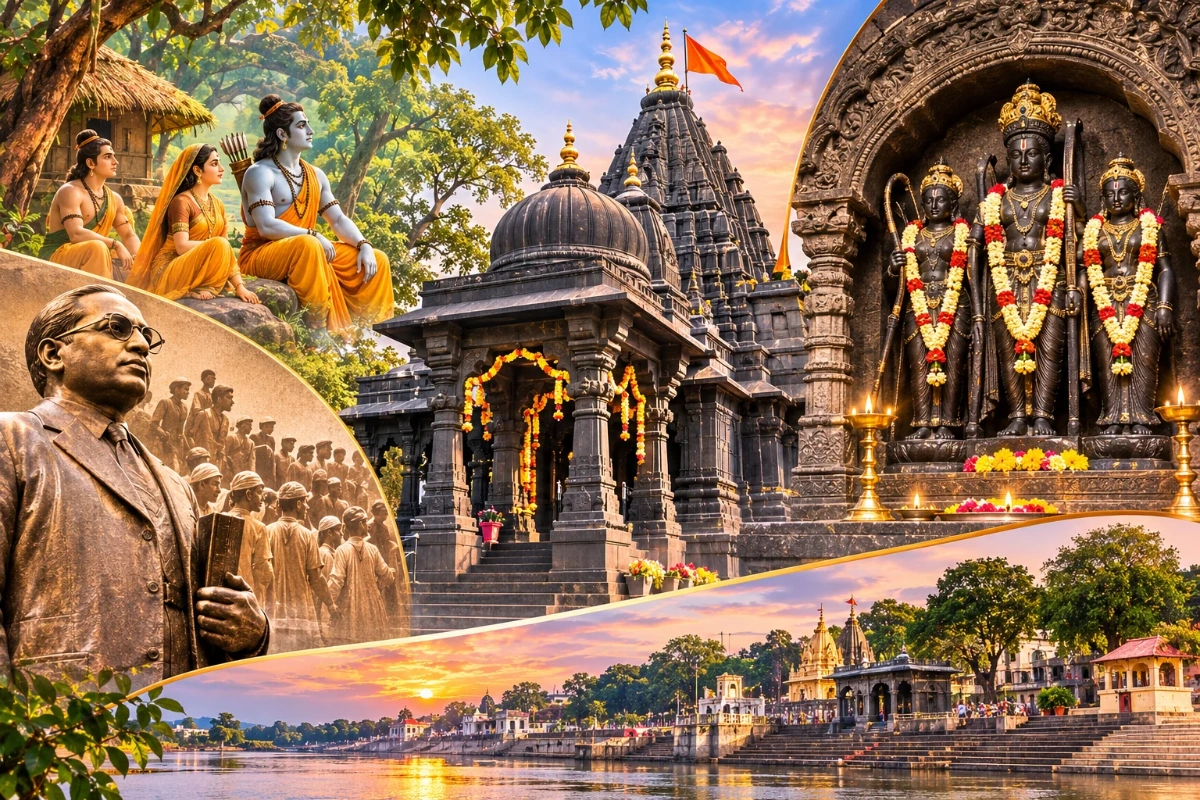
The phrase black stone Ramayana offers a way to understand Kalaram Temple: a place where the story of Ram is remembered through sacred images, architecture and Panchavati’s association with his exile. Here, the phrase is descriptive rather than the title of a separate scripture. The temple’s name comes from its black image of Lord Ram, worshipped alongside Sita and Lakshmana.
That distinction matters. A visitor need not expect the entire epic to be carved across the temple walls to find a meaningful connection with it. The connection lies in the relationship between the deities, the surrounding landscape and the stories devotees bring to their worship.
Think of the temple as an invitation to read with more than your eyes. The sacred black stone gives devotion a visible focus, while Panchavati provides the remembered setting. Together, they encourage reflection on what exile demanded of Ram, Sita and Lakshmana—and why those experiences still speak to readers.
Panchavati, Where Exile Became a Turning Point
Panchavati lies along the Godavari River in Nashik. According to Ramayana tradition, Lord Ram, Sita and Lakshmana lived here during their Vanvas, or exile. The temple’s own account connects the northern banks of the river with their stay, making this landscape central to its devotional identity.
The importance of Panchavati is not simply that the three lived away from Ayodhya. In the remembered story, their forest dwelling becomes a setting where private hardship opens into a much larger conflict. Reading this episode invites us to consider exile not as an empty interval, but as a period filled with choices and consequences.
The Surpanakha Episode and Its Consequences
Ramayana tradition associates Panchavati with the episode in which Lakshmana cut off Surpanakha’s nose. This belongs to the epic and the region’s sacred memory; it should not be presented as an archaeologically verified event. Maharashtra’s official cultural material also connects the episode with the traditional account of Nashik’s name.
For a thoughtful reading, this is more than a dramatic incident to attach to a sightseeing stop. It raises difficult questions about anger, humiliation, protection and retaliation. Rather than reducing the episode to a simple moral slogan, consider how actions reshape relationships and make an already uncertain exile more dangerous.
Panchavati is also traditionally associated with Sita’s abduction by Ravana, which leads the narrative towards Ram’s journey to Lanka. This is why the location carries such strong Ramayana significance: it marks a decisive change in the direction of the story.
Black Stone, Devotion and the Temple’s Construction
Maharashtra Tourism describes Kalaram Temple as built entirely from black basalt stone. Its dark masonry and black stone deities make the material central to the shrine’s identity rather than a decorative detail. The name ‘Kalaram’ itself means ‘Black Ram’.
The Nashik district administration records that the temple was built in 1782 by Sardar Rangrao Odhekar, also referred to as Sardar Odhekar, on the site of an older wooden temple. Construction dates differ across institutional accounts: the Sansthan describes work beginning in 1780 and the main temple being completed in 1792. The responsible approach is to acknowledge this variation rather than treat every published date as an identical milestone.
The Sansthan also preserves the tradition that Odhekar dreamed of a black image of Ram in the Godavari and subsequently recovered it. This is a devotional account of the temple’s origins, distinct from its construction history. Keeping those categories clear allows the story to retain its religious meaning without turning belief into an unsupported historical claim.
When looking at the building, use three points of attention:
- Begin with the material. Notice how the dark stone changes in light and shadow before concentrating on individual details.
- Consider the deities together. Ram, Sita and Lakshmana share the sanctum, keeping their relationship visible within worship.
- Separate observation from interpretation. Describe what you can see, then identify which meanings come from tradition, a guide or your own reflection.
Why Is Kalaram Temple Important to Social Equality?
Kalaram Temple is important to the history of social equality because it was the site of Dr B.R. Ambedkar’s 1930 Kalaram Temple Entry Satyagraha. Launched on 2 March 1930, the movement challenged the exclusion of Dalits from temple worship and asserted their right to equal treatment. Its significance extends beyond entry into one shrine to the wider struggle against caste-based discrimination.
This history deserves more than a passing mention beside architectural details. The protesters were confronting a system in which access to a sacred place was restricted by caste. Remembering that exclusion changes how we understand the temple entrance: it was also a boundary that people organised to challenge.
The movement should not be simplified into a story of immediate success. Historical accounts describe a prolonged struggle rather than the doors opening as soon as the protest began. Its legacy includes the collective assertion of dignity by people denied equal standing.
A respectful account of Kalaram therefore holds devotion and social history together. Recognising discrimination does not require overlooking religious meaning; equally, celebrating the shrine should not erase those who struggled for access. Both deserve space in how the site is remembered.
Reading the Ancient Ramayana Through a Living Landscape
The ancient Ramayana can feel distant when approached only as a sequence of familiar episodes. At Panchavati, try a different reading practice: pause over the relationships behind the events. Consider what it means to share hardship, remain responsible to others and act when the consequences are uncertain.
This approach is useful when engaging with Hindu epics because it resists turning every character into a single quality. Instead of seeing only courage, loyalty or anger, ask how those qualities interact. A difficult scene may offer more to think about than a reassuring lesson.
You might carry these prompts into your reading or reflection:
- Duty under pressure: When does keeping a commitment become most demanding, and who shares its cost?
- Companionship in hardship: How does reading Ram, Sita and Lakshmana together change your understanding of exile?
- Consequences beyond intention: What happens when an action produces effects larger than its immediate purpose?
- Dignity in sacred spaces: How does the Satyagraha challenge you to think about belonging and exclusion?
These are interpretive prompts, not claims that the epic supplies one answer to every modern problem. Their value lies in slowing down your response. A sacred landscape can become an occasion for careful thought rather than a backdrop for hurried photographs.
Approaching Panchavati with Care
If you choose to visit, let attention matter more than the number of stops you complete. Make room for worshippers, listen before photographing and follow the instructions given at each sacred space. Avoid treating someone else’s prayer as part of your personal sightseeing experience.
A simple preparation checklist can help:
- Confirm arrangements directly. Check current access, worship schedules, photography restrictions and accessibility information with the temple before travelling.
- Keep traditions clearly attributed. Use phrases such as ‘according to local tradition’ when discussing epic associations.
- Leave time for both histories. Reflect on Panchavati’s devotional meaning and the people who challenged caste exclusion.
- Care for the surroundings. Dispose of waste responsibly and avoid leaving offerings or packaging where they may pollute public spaces or water.
A Legacy Larger Than Stone
The most meaningful way to approach Shree Kalaram Sansthan and Panchavati is with both reverence and curiosity. Allow the black stone shrine to focus your attention, the exile narrative to deepen your questions and the history of the Satyagraha to sharpen your understanding of dignity.
‘Where exile turned into destiny’ is best read as an invitation to reflection, not a shortcut past complexity. Take away more than an image of a temple: take away a reason to read carefully, remember honestly and consider who is welcomed into the spaces we call sacred.
Also Read: Discover The River Tapi Guardian: Ambika Niketan Temple
To read more such news, download Bharat Express news apps