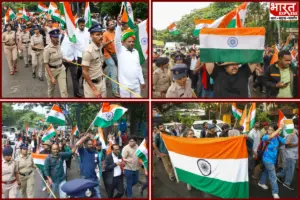




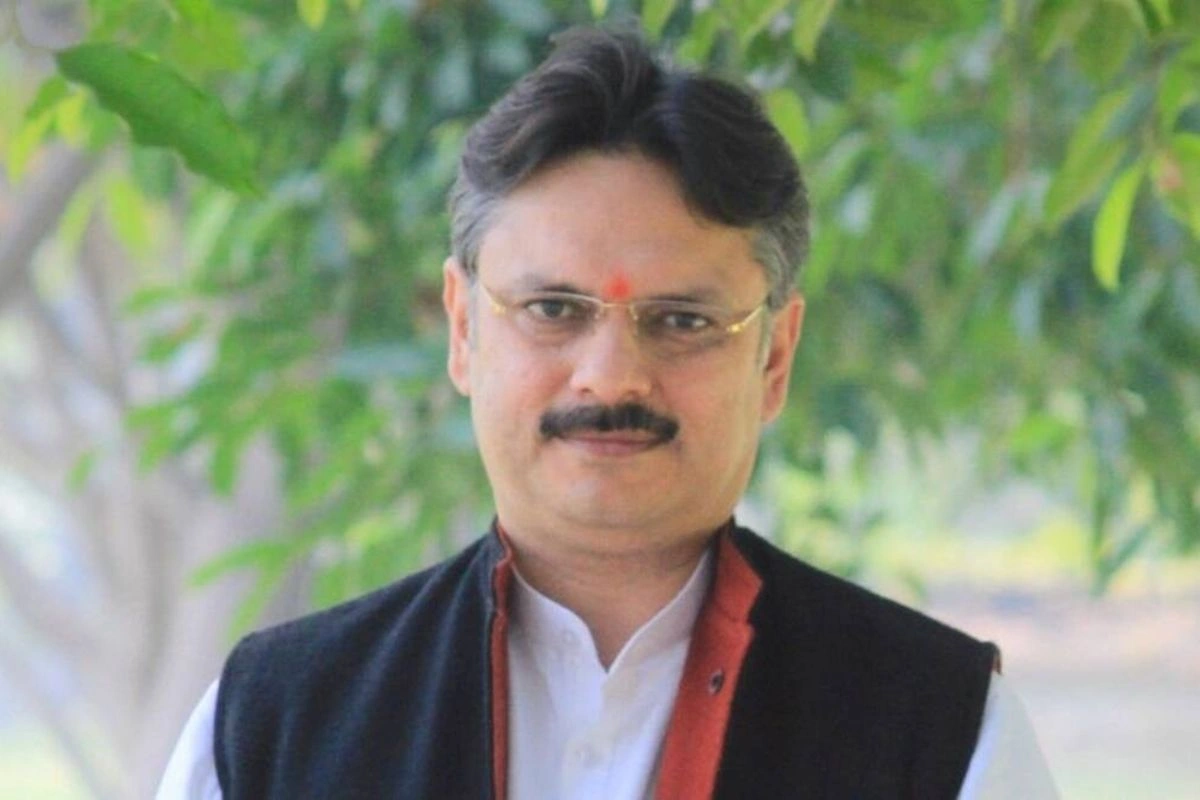
Sarojni Nagar MLA Rajeshwar Singh criticised the protest that erupted in Lucknow over the killing of Iran’s Supreme Leader Ayatollah Khamenei.
Strong reactions to international developments are emerging from various parts of the country. While expressing one’s views is a fundamental right in a democracy, an important question arises in this context: Is our morality guided by principles, or is it selective?
Dr. Rajeshwar Singh, MLA from Sarojini Nagar in Lucknow, raised this concern while commenting on the nature of public responses to global events.
MLA Dr. Singh said that when a proposal surfaced in Iran to lower the age of child marriage to nine years, it sparked intense debate, and when thousands of young female students took to the streets, strict action led to the loss of many young lives. Why were global human rights voices not as vocal?
Similarly, he questioned the absence of widespread and organised protests when daughters’ education was restricted in Afghanistan, university doors were closed to girls, and women’s participation in public life was curtailed.
Equal Sensitivity To Every Injustice
He observed that strong reactions are currently visible in Lucknow over international developments. The issue, he said, is not why someone speaks out — in a democracy, speaking is a right. The real question is whether society demonstrates equal sensitivity toward every injustice or reacts based on circumstances and political convenience.
Dr. Singh emphasised that human rights are universal. The dignity of women transcends borders, and the lives of young people cannot be considered less important due to geography or political context. If justice, equality, and dignity are upheld as values, they must be applied uniformly across all situations.
He further stated that selective outrage weakens credibility. According to him, principle-based, impartial, and universal sensitivity is the true hallmark of moral integrity.
To read more such news, download Bharat Express news apps