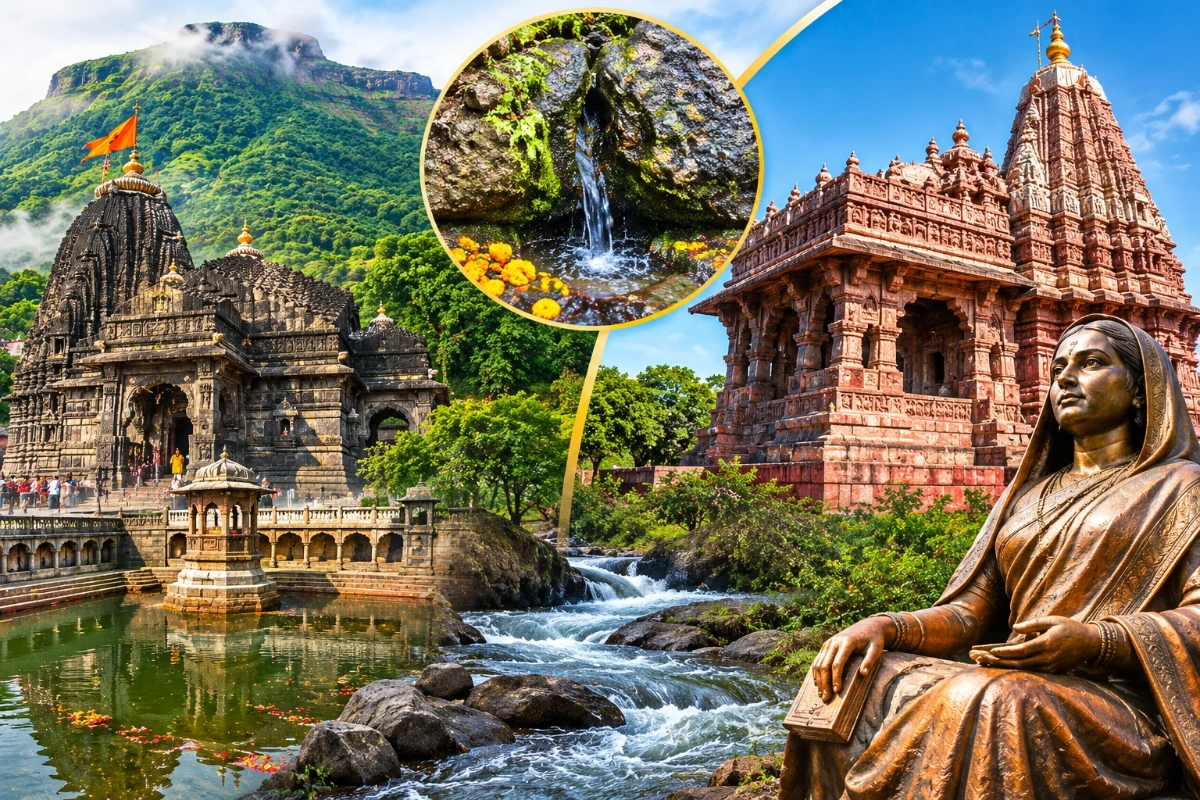
AI Generated Image
The Source of the Godavari and the Rebuilt Jewel of Ahilyabai Holkar
The Godavari River originates in the Brahmagiri Hills near Trimbak, Maharashtra, where Trimbakeshwar connects the river’s beginnings with one of Hinduism’s revered Jyotirlinga shrines. Elsewhere in Maharashtra, Grishneshwar, near Ellora, tells a complementary story: a sacred temple restored by Queen Ahilyabai Holkar after earlier destruction. Exploring both places brings together river geography, ancestral traditions, carved stone architecture and the work of preserving living places of worship.
For pilgrims and curious travellers alike, the rewarding approach is to understand what makes each destination distinct before combining them into one journey. Start with the water and its sacred associations at Trimbak, then turn to the history and craftsmanship of Grishneshwar.
Where Is the Source of the Godavari River?
The source of the Godavari River is in the Brahmagiri Hills beside Trimbak in Nashik district, Maharashtra. Trimbakeshwar marks the origin of the sacred Godavari in the region’s pilgrimage tradition, while nearby Kushavarta Kund is revered as the river’s visible ritual source. The hill landscape and the sacred tank therefore belong to the same origin story, but they are not interchangeable geographical features.
This distinction helps when planning a visit. Someone seeking the river’s source as a landscape feature should understand the role of Brahmagiri; someone following the pilgrimage tradition will also want to understand Kushavarta and the temple. The source of the Godavari is best appreciated through both perspectives rather than reduced to a single photograph.
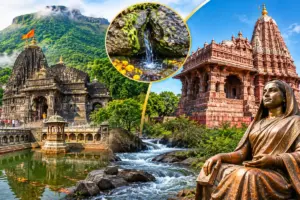
Official accounts of the local pilgrimage landscape describe Gangadwar on Brahmagiri as a place where water emerges through a cleft in the hill. Tradition connects that water with Kushavarta below. For a visitor, this makes the relationship between the mountain, water and town more meaningful than simply ticking off separate landmarks.
Trimbakeshwar’s Three-Faced Lingam and Sacred Beginnings
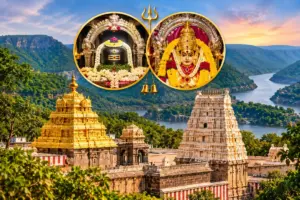
At Trimbakeshwar, the distinctive three-faced Lingam represents Brahma, Vishnu and Shiva, also called Mahesh. More precisely, an official account describes three small linga-like forms within a hollow rather than a single tall, freestanding Lingam. Knowing this beforehand helps visitors understand why the shrine’s sacred form is described differently from those at many other Shiva temples.
The Godavari’s origin is also explained through religious narrative. According to local sacred tradition, Gautama Rishi’s penance moved Shiva to release the Ganga, which became known here as the Godavari. This is a devotional explanation of the river’s beginnings, distinct from a geographical account of its headwaters.
The temple building adds another historical layer. Its black-stone structure was commissioned in the eighteenth century by Peshwa Balaji Baji Rao, bringing architectural patronage into a place already associated with sacred tradition. The contrast matters: the antiquity of a place’s religious associations does not mean every surviving building dates from the same period.
During your visit, allow time to notice the setting as well as the shrine. Reading about the Lingam beforehand can make a brief darshan more comprehensible without turning worship into a sightseeing exercise.
From a Mountain Beginning to the Wider Godavari Basin
The Godavari basin is the landscape drained by the main river and its tributaries, not simply the strip of land beside its banks. From its beginnings in Maharashtra, the river system extends across a broad part of peninsular India towards the Bay of Bengal. Its importance includes agriculture, freshwater habitats, drinking-water supplies and cultural life.
Understanding the Godavari tributaries puts Trimbak’s modest beginnings into perspective. A great river develops through a network of incoming waters rather than drawing its entire strength from one spring or sacred tank. The Central Water Commission identifies these important tributaries:
- Pravara and Manjira: Notable tributaries joining the Godavari from its right bank.
- Purna: An important left-bank tributary within the wider drainage system.
- Pranhita: A major tributary carrying the combined waters of the Penganga, Wardha and Wainganga systems.
- Indravati and Sabari: Substantial tributaries contributing farther downstream.
The practical takeaway is simple: the river’s health cannot be understood only at its origin. The Godavari supports interconnected habitats and livelihoods across its basin, so its cultural significance accompanies a much wider ecological responsibility.
What Rituals Do Pilgrims Perform at Trimbak?
Pilgrims visit Trimbak for ancestral observances, including Shraddha-related ceremonies and Narayan Nagbali, as well as separate Kalsarpa Dosh rituals. These are not interchangeable ceremonies: ancestral rites concern the departed and family obligations, while Kalsarpa Shanti addresses a condition interpreted within Hindu astrology. Local practitioners describe distinct procedures for each.
For participating families, these can be deeply significant Vedic rituals rather than incidental additions to temple darshan. Tripindi Shraddha, for example, involves offerings associated with ancestors, while Narayan Nagbali combines distinct ritual observances. Their meaning belongs to religious belief and practice; participation should not be presented as guaranteeing health, prosperity or a particular life outcome.
If rituals are central to your journey, clarify the arrangements before booking onward travel:
- Name the intended ceremony: Explain whether your purpose is ancestral remembrance, Kalsarpa Dosh worship or another observance.
- Confirm the commitment: Ask about the required number of days, attendance, preparation, clothing and materials.
- Separate services clearly: Establish which arrangements concern a private priest and which concern temple administration.
- Request transparent costs: Agree on what is included before making a payment.
Keep the schedule spacious enough for the family’s purpose. A meaningful ancestral ceremony deserves more attention than a hurried stop between attractions.
Grishneshwar and Ahilyabai Holkar’s Restoration
Grishneshwar is traditionally recognised as the 12th Jyotirlinga, completing the customary enumeration of twelve sacred Shiva shrines. It stands at Verul near Ellora, in the Chhatrapati Sambhajinagar region of Maharashtra. This makes it a separate destination from Trimbak, not another landmark within the Godavari’s immediate source area.
Its history includes destruction, desecration and successive rebuilding. Maharashtra Tourism records earlier destruction and reconstruction before the eighteenth-century restoration associated with Queen Ahilyabai Holkar. The Archaeological Survey of India likewise credits Ahilyabai of Indore with building the present temple in the eighteenth century.
Ahilyabai’s contribution is therefore central to understanding what visitors encounter today. The temple is not an untouched survival from a single ancient moment; its standing structure reflects renewed patronage after historical disruption. Looking at it this way gives restoration its proper place in the story rather than treating rebuilding as a footnote.
For pilgrims visiting both Trimbak and Grishneshwar, the connection is devotional rather than a claim that the temples share an identical history. One emphasises a sacred river’s beginning; the other makes the renewal of a sacred place especially visible.
Reading Grishneshwar’s Hand-Carved Red Basalt Architecture
Grishneshwar’s hand-carved red-basalt architecture rewards close attention, but its materials deserve a precise description. The Archaeological Survey of India identifies red basalt up to the entablature, with brick and stucco above. Calling the entire temple solid basalt would therefore overlook how the building was actually constructed.
The same account describes a star-shaped plan, a sunken sanctum and elaborately carved central pillars supporting the hall’s domed ceiling. It also notes bands of elephants and lions on the exterior. These details offer a useful way to look: begin with the building’s overall shape, then move towards its sculptural surfaces and interior arrangement.
Try choosing a few details rather than photographing everything. Study a pillar’s carving, look at how decoration changes across the wall and notice the transition towards the sanctum. Ask permission before taking photographs, avoid touching carved surfaces and leave worshippers an unobstructed route.
Bringing Both Places into One Thoughtful Journey
Build the journey around two distinct visiting stages: Trimbak for Trimbakeshwar, Kushavarta and the source landscape; then the Ellora area for Grishneshwar. Ellora’s rock-cut monuments provide additional architectural context nearby, but they should not be confused with Grishneshwar’s freestanding temple.
Before departure, check temple notices, access arrangements and any ritual bookings directly. Leave flexibility for worship rather than filling every hour with another stop. Together, these places invite a richer understanding of Maharashtra: water becomes sacred geography, family remembrance becomes pilgrimage, and restored stone keeps a place of devotion alive.
Also Read: Discovering Tantric Wisdom: Insights From Kalighat And Tarapith
To read more such news, download Bharat Express news apps