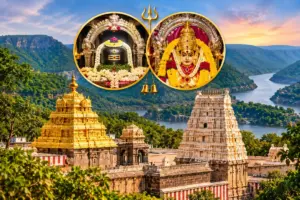
AI Generated Image
The Sacred Mountain Where the Jyotirlinga and Maha Shakti Peetha Reside as One
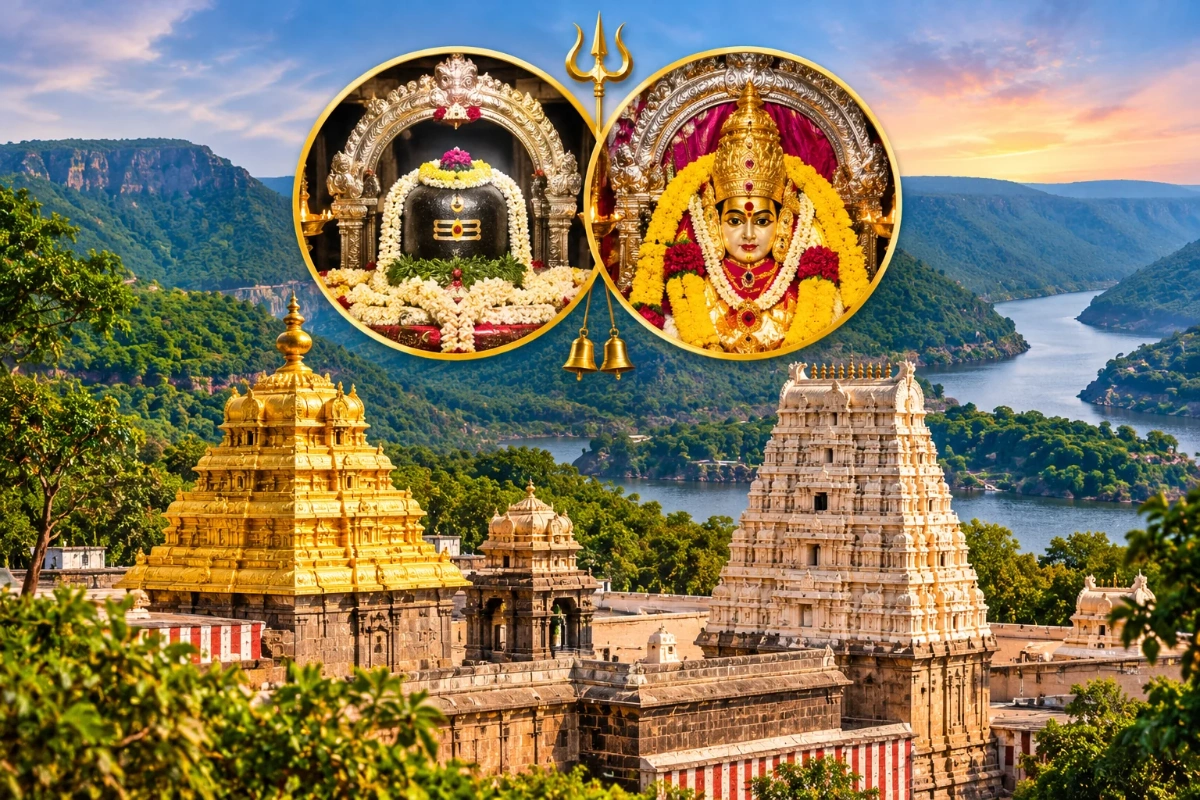
Srisailam is a sacred hill pilgrimage centre in Andhra Pradesh where Shiva, as Mallikarjuna, and the Goddess, as Bhramaramba, are worshipped within the same temple complex. Set in the Nallamala Hills above the Krishna River, it brings together a Jyotirlinga and a Maha Shakti Peetha. Understanding its legends, forest approaches and living traditions reveals why this mountain is more than another stop on a temple itinerary.
The Sacred Mountain: Where the Jyotirlinga and Maha Shakti Peetha Reside as One
Shree Srisailam Mallikarjuna and Bhramaramba (Andhra Pradesh)
The landscape helps explain the shrine’s hold on the imagination. Srisailam occupies a plateau in the Nallamala range, with the Krishna flowing below and forest surrounding the pilgrimage town. Its older names include Srigiri and Sriparvata, placing the mountain itself, not merely its buildings, at the centre of devotion.
Here, two major devotional traditions meet. Mallikarjuna belongs to the twelve Jyotirlingas associated with Shiva, while Bhramaramba belongs to the eighteen Maha Shakti Peethas revered in the Goddess tradition. Their presence within one enclosure gives pilgrims the opportunity to honour both without travelling between separate sacred towns.
For a visitor, that distinction changes the emphasis of the journey. Rather than treating Bhramaramba’s shrine as an optional addition, plan time and attention for both deities. The relationship between them is fundamental to understanding Srisailam.
Why Do the Jyotirlinga and Maha Shakti Peetha Belong Together at Srisailam?
Srisailam unites the worship of Shiva as Mallikarjuna with the worship of the Goddess as Bhramaramba in one temple complex. Its importance comes from the coexistence of these two recognised sacred identities, bringing Shaiva and Shakta devotion into a shared place of pilgrimage. Government tourism descriptions specifically identify this combination within the same premises as exceptional.
A clarification matters when describing its rarity. The claim that Srisailam is ‘one of three places in India’ where both exist ‘within the same walls’ is not supported by the official descriptions consulted. Those sources instead describe its shared-complex arrangement as unique; broader comparisons between pilgrimage towns should not be confused with shrines occupying one enclosure.
The practical distinction is straightforward:
- Mallikarjuna: The Shiva shrine, recognised among the twelve Jyotirlingas.
- Bhramaramba: The Goddess shrine, recognised among the eighteen Maha Shakti Peethas.
- Their shared setting: One complex in which pilgrims can encounter both devotional traditions together.
This is the central Jyotirlinga significance of Srisailam: the Shiva pilgrimage here is inseparable from a major centre of Goddess worship.
Legends That Make the Mountain Sacred
Srisailam’s legends explain its holiness through devotion, revelation and an intimate relationship with the landscape. They should be understood as sacred traditions rather than dated historical events. Their value lies in what they communicate about the mountain and the divine presence worshipped there.
One account recorded in the Census of India’s study of local festivals tells of Vrishabha, Shiva’s sacred bull, performing penance here. Shiva is said to have appeared as Mallikarjuna with Bhramaramba in response. In this telling, the hill is a place where sustained devotion receives a divine answer.
Another tradition centres on Chandravati, who discovers a Lingam after observing a cow pouring milk over it. Her worship with jasmine flowers becomes associated with the name Mallikarjuna. A study of the temple’s sacred plants records this story alongside the importance of jasmine and the arjuna tree in local religious understanding.
Chenchu tradition offers a different intimacy: Shiva comes into the forest and marries a Chenchu woman. The deity is remembered as Chenchu Malliah, binding the shrine to the community’s own sacred history. Read together, these legends invite pilgrims to see forest, flowers, animals and human devotion as participants in Srisailam’s religious life.
A Civilisational Meeting Place, Not an Isolated Monument
Srisailam’s significance extends beyond any single legend. Its identification with Sriparvata connects it with references in the Mahabharata and several Puranas, including the Skanda and Shiva Puranas. These literary associations place the mountain within a wider sacred geography remembered across generations.
Literary memory and historical evidence serve different purposes. A scriptural reference expresses sanctity; inscriptions, buildings and patronage help trace the development of an institution. Keeping those categories distinct allows reverence and careful historical understanding to coexist.
Royal patronage is another part of this story. Andhra Pradesh Tourism identifies the Kakatiyas, Vijayanagara ruler Krishnadevaraya and Maratha king Chhatrapati Shivaji among the temple’s patrons. Their association shows how the shrine drew support across political boundaries rather than belonging to one dynasty alone.
Srisaila Devasthanam also remembers Adi Shankaracharya among the spiritual figures associated with the mountain. Alongside royal support and tribal devotion, that remembrance helps explain Srisailam’s civilisational role: a place where religious learning, pilgrimage and regional communities meet. Its importance cannot be reduced to architecture, although the architecture remains part of that inheritance.
The Chenchu Relationship Remains Essential
The Chenchu communities are not incidental to Srisailam’s story. Their relationship with Mallikarjuna and Bhramaramba belongs to the religious life of the Nallamala region. Heritage documentation records their devotion and the marriage tradition linking Mallikarjuna with a Chenchu maiden.
Their historical role also extended to the pilgrimage journey itself. Research preserved by the Ministry of Tribal Affairs describes Chenchu guides escorting pilgrims through difficult forest terrain and helping older travellers before roads transformed access. The same account records how changing transport and temple arrangements affected community livelihoods and ritual participation.
That history deserves attention without romanticising it. Respectful visitors can approach local people as living communities, not as picturesque evidence of an ancient past. Ask permission before photographing individuals, avoid intrusive questions and allow community members to describe their own relationship with the shrine.
What Should Pilgrims Understand About the Forest Journey?
The journey to Srisailam passes through a protected forest landscape, and some devotees undertake traditional walking pilgrimages through the Nallamala forests to reach the sanctuary. Such hikes are documented particularly around Maha Shivaratri. They are devotional journeys through wildlife habitat, not unrestricted recreational trails.
Reports describe pilgrims traversing tiger-reserve terrain, with forest officials managing fire risks, plastic waste and access near sensitive areas. The setting therefore calls for restraint as well as devotion. An old pilgrimage route should never be assumed to be open simply because another traveller has walked it.
Before choosing a walking approach:
- Confirm permission and route access: Check with the relevant forest authorities and Devasthanam before committing to a departure.
- Choose a journey suited to your group: Consider walking ability, heat, rest requirements and the needs of older companions.
- Prepare for the route: Carry water, suitable footwear and essentials without assuming supplies will be available everywhere.
- Protect the forest: Carry waste back, avoid fires and do not feed or approach wildlife.
- Stay on authorised paths: A pilgrimage is no reason to enter restricted habitat or improvise shortcuts.
Treat these as preparation principles, not permission to enter. Forest protection and pilgrimage need to support each other.
Planning a Meaningful Jyotirlinga Pilgrimage
Among India’s Jyotirlinga locations, Srisailam merits an itinerary that makes room for both its principal shrines and its wider setting. The official Devasthanam provides information and booking facilities for darshan, sevas and accommodation. Consult those channels for arrangements rather than relying on remembered schedules or unofficial promises.
Build your visit around priorities rather than a crowded checklist:
- Give both shrines attention: Avoid leaving Bhramaramba’s worship to whatever time remains.
- Check arrangements before departure: Confirm the requirements for any particular darshan or seva you intend to book.
- Allow a flexible pace: Leave space for queues, rest and the needs of your companions.
- Choose nearby visits selectively: District tourism information identifies places such as Sakshi Ganapathi and Pathala Ganga; check access before adding them.
You do not need to complete every nearby excursion to make the pilgrimage meaningful. A less crowded plan can leave more room for attention, prayer and understanding.
The Mountain’s Enduring Invitation
Srisailam brings together a sacred mountain, a Jyotirlinga and a Maha Shakti Peetha within one living pilgrimage landscape. Its paired shrines, remembered teachers, royal patrons and Chenchu traditions give the destination a significance larger than any single monument.
Go with enough knowledge to recognise those relationships and enough patience to encounter them respectfully. Honour both deities, respect the forest and leave room for the mountain to be more than a destination you have checked off.
Also Read: Discover The Godavari River Source At Trimbak
To read more such news, download Bharat Express news apps