


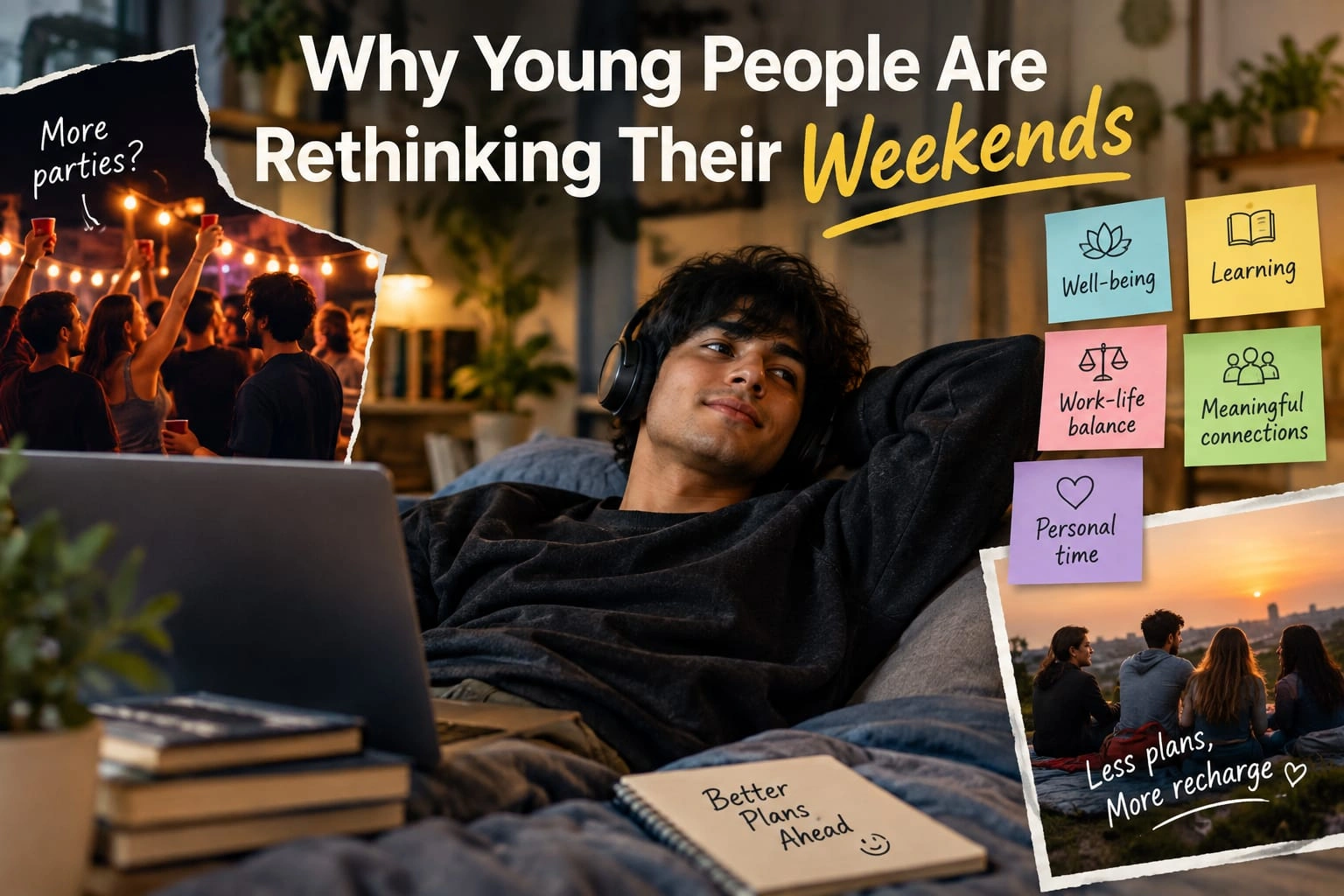
AI Generated Image
For many young adults, the weekend no longer means filling every free hour with parties, outings and social plans.
Increasing attention to work-life balance, well-being and personal time is changing how younger generations approach their days off.
Deloitte’s 2025 Gen Z and Millennial Survey, which covered more than 23,000 respondents globally, found that Gen Z and millennials continue to place strong importance on well-being, learning and work-life balance.
The survey also highlighted these priorities among respondents in India.
Social connection remains important, but young adults increasingly maintain friendships through smaller and more flexible interactions.
A 2025 Pew Research Centre survey of 6,204 U.S. adults found that 81% had at least one close friend, while 74% of adults with close friends connected with one at least a few times a week through texting, social media, calls, video chats or in-person meetings.
Among adults under 30, 72% said they texted a close friend at least a few times a week.
The same research also shows why young adults may value meaningful downtime. Adults under 50 reported loneliness or isolation more often than adults aged 50 and older, at 22% compared with 9%.
Young adults also use friendships to discuss personal interests and well-being. Pew found that 52% of Americans under 30 often discussed pop culture with close friends, while 37% often discussed their mental health.
These figures do not prove that young people have stopped partying or going out. Instead, they show a broader shift in how younger adults balance social connection, personal interests and well-being.
For many, the ideal weekend may now involve fewer plans, closer company and enough time to simply recharge.
Also Read: 5 Simple Dinner Ideas For Days When You Don’t Feel Like Cooking
To read more such news, download Bharat Express news apps