



AI Generated Image
You must have experienced this before. As you walk into a mobile store, the salesperson somehow always recommends one model that’s on offer. Or you sign up for a credit card, and the agent at the counter is enthusiastically pushing for one specific bank’s card over five others.
That enthusiasm isn’t loyalty. It’s maths. Some products simply pay the salesperson more to sell than others.
Insurance in India runs on the exact same logic, with one exception: the stakes are bigger because an insurance commitment runs over decades, unlike a phone you can return within a few days.
IRDAI has decided it’s time to break this maths.
Insurers Have Been Living Large
Every rupee of your insurance premium is supposed to be split two ways: money that protects you and money that keeps the insurance company’s lights on.
The problem is, ‘keeping the lights on’ has ballooned into commissions, advertising budgets, and sales armies that cost way more than they should.
IRDAI wants that to shrink. Life insurers overspending today need to cut down to 15 pc of their premium income within two years and 12.5 pc within five. General and health insurers face the same squeeze; their ceiling drops from 30 pc to 20 pc over five years.
The Commission Crackdown
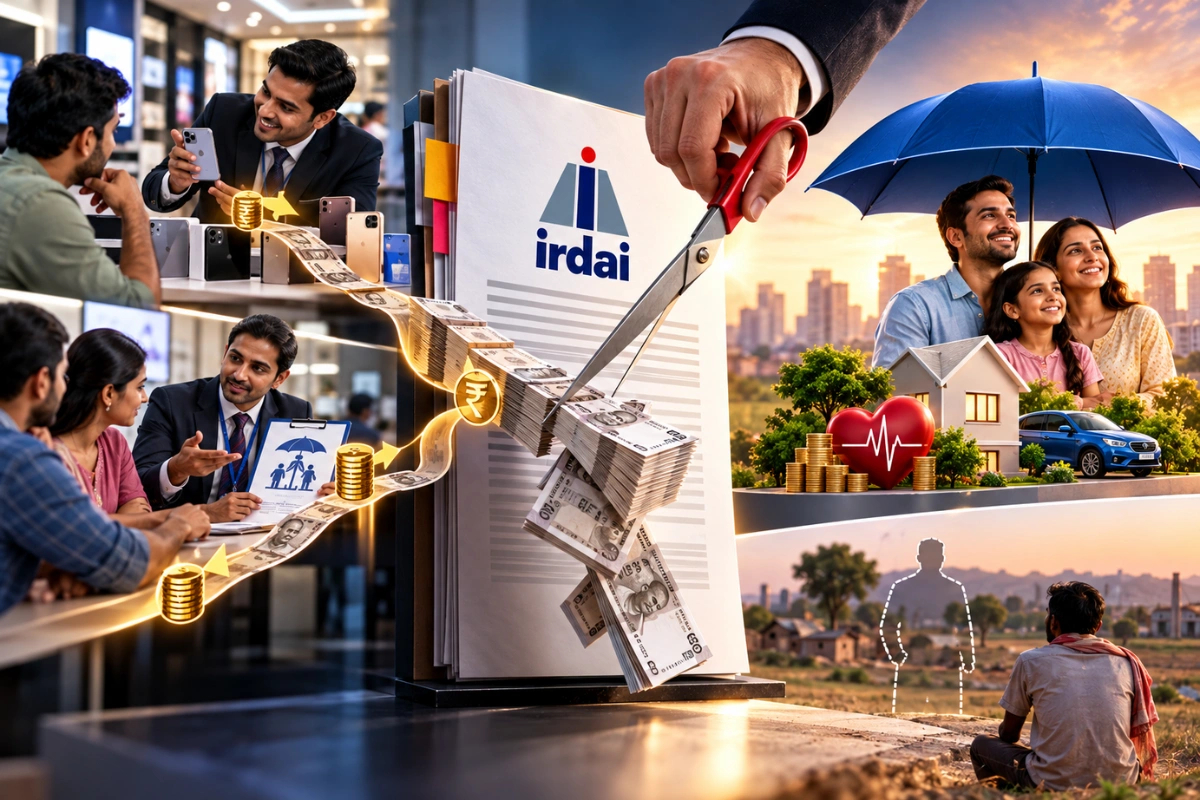
Here’s the real shift. Instead of one flat commission rule for every policy, IRDAI wants commissions to match the actual effort of selling and not just the size of the sale.
A basic, no-frills term plan? Small commission: it’s not a hard sell. A complex, long-term savings product with a dozen features to explain? Bigger commission: the agent’s actually earning it.
For instance, a life insurance policy quietly bundled into your home loan, the one you signed off on without reading, currently earns banks a commission of roughly 45 pc.
But if the new rules get implemented, this commission crashes to 2 pc.
Why Is IRDAI Even Doing This?
A fat commission never comes free; it’s either baked into your premium, or it shows up as an agent nudging you towards the policy that pays them the most, not what actually fits you. Cut the commission, cut the incentive to oversell or mis-sell.
Who Wins, Who Bleeds?
The big names in the sector like LIC and HDFC Life are already fairly close to these limits. The new rule barely affects them.
The real damage lands on smaller, newer insurers. Without a big brand name to lean on, they’ve been buying market share by simply paying agents more than the competition. This can lead to consolidation as smaller players get squeezed out or bought up by the big guys.
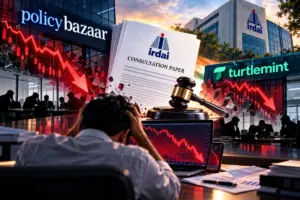
Large-scale brokers such as Policybazaar could also face a significant impact.
The share market has already factored that in. PB Fintech Limited, the parent company of Policybazaar, shares crashed 36 pc to close at Rs 1,207.20 on September 24, 2026, following the release of an IRDAI consultation paper.
Banks, meanwhile, just lost a quietly lucrative revenue stream.
What Does It Mean for You?
Cheaper premiums going forward and insurance agents recommending a policy because it fits your needs rather than because it fits their commission slab.
But the part nobody’s shouting about: if there’s barely any money in selling a Rs 3,000 policy to someone in a small town, agents might simply stop showing up there.
The same rule that protects you from a pushy sales pitch might also mean nobody bothers pitching you anything at all at a time when India’s insurance penetration is already painfully low.
It’s a classic trade-off: fix the mis-selling problem, and you risk creating an under-selling problem instead.
What Happens Next?
This is still a draft, and IRDAI is taking feedback from stakeholders until October 25, 2026.
So the final numbers could shift, but the direction remains clear: insurance selling in India is moving towards a less commission-driven model. The key question is whether the industry is ready for this change.
Also Read: Explained: When A Regulator’s Memo Wipes Out Rs 31,000 Crore Overnight
To read more such news, download Bharat Express news apps