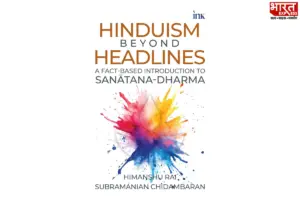




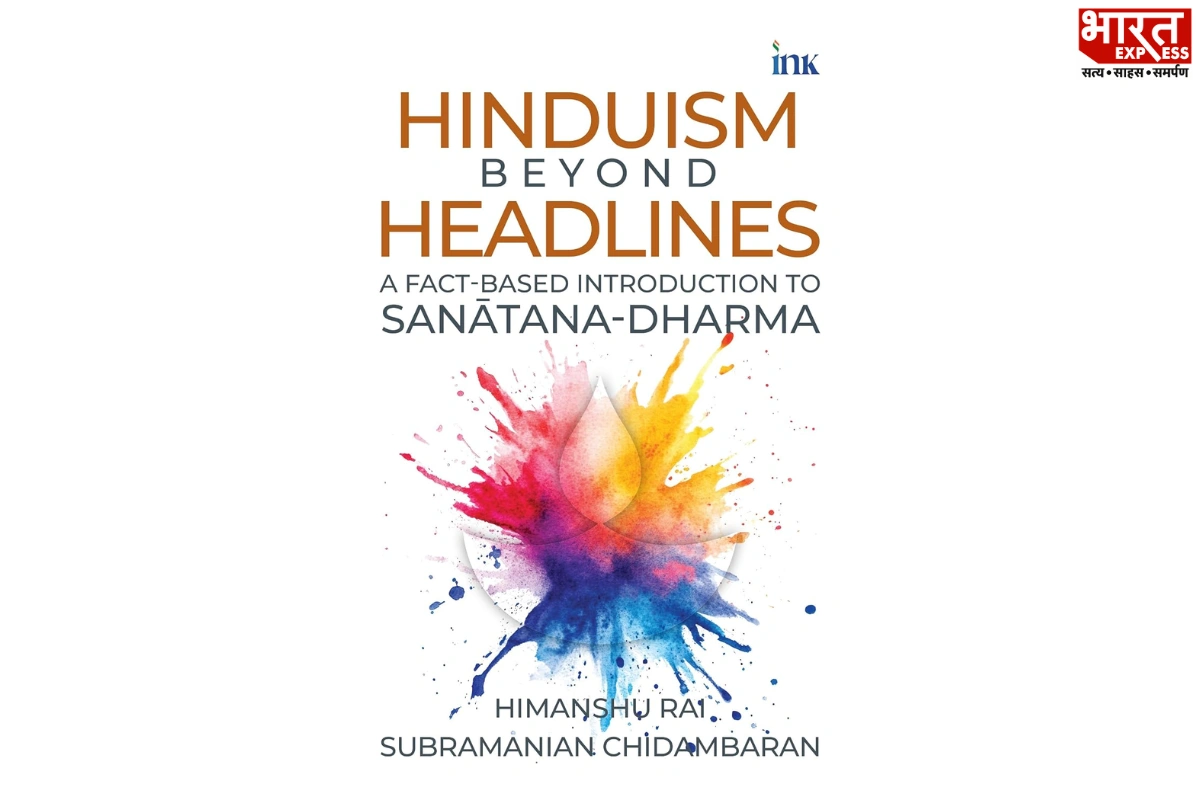
Hinduism Beyond Headlines: A Fact-Based Introduction to Sanātana-Dharma by Himanshu Rai and Subramanian Chidambaran is a timely and much-needed contribution to contemporary discussions on one of the world’s oldest living traditions.
The book arrives at a moment when public conversations about Hinduism frequently remain trapped in media soundbites, colonial-era interpretations, political polarisation, or superficial stereotypes.
The authors deliberately step away from these filters. As Himanshu Rai has noted in announcing the work, Sanātana Dharma has for too long been explained ‘through the lenses of colonial narratives, media headlines, and ideological debates’.
The book’s central invitation is clear: return to the sources—philosophy, scriptures, knowledge systems, and civilisational ethos—and rebuild understanding on a foundation of facts rather than fashionable narratives.
What the Book Offers
Hinduism Beyond Headlines functions as an accessible, structured introduction rather than a specialised academic treatise. It moves deliberately beyond rituals and assumptions to examine the deeper architecture of Sanātana Dharma. Topics range across:
- Core philosophical ideas and scriptural foundations (including the Vedas)
- Concepts such as karma, the nature of deities, and the role of murtis
- Yoga as both practice and worldview
- Temples and their civilisational significance
- Discussions of caste that seek clarity rather than polemics
- Traditional knowledge systems—Ayurveda, education, governance, medicine, architecture, and the arts
- The broader Indic civilisational continuum
The approach is fact-based and source-oriented. The authors aim to equip readers—Hindus seeking clearer self-understanding, as well as non-Hindus curious about the tradition—with a coherent framework that does not reduce a vast, plural, and living civilisation to any single political or journalistic narrative.
Why It Matters
In an era of information overload and ideological contestation, a book that prioritises primary sources and civilisational self-description over reactive commentary performs an important service.
Sanātana Dharma is not a monolithic ‘religion’ in the Abrahamic sense; it is a complex ecosystem of philosophies, practices, knowledge traditions, and ways of living.
Reducing it to headlines—whether celebratory or critical—inevitably distorts it.
Rai and Chidambaran’s work pushes back against that reduction. It does not claim to settle every debate, but it insists that any serious conversation must begin with accurate knowledge of what the tradition actually says about itself.
Early responses and promotional material highlight the book’s potential to help readers ‘reconnect with their roots’ and to serve as a starting point for those who wish to understand before they judge.
Endorsements, including those from spiritual leaders, underscore its value as a bridge between scholarly seriousness and accessible prose.
A Civilisational Invitation
Hinduism Beyond Headlines is ultimately an invitation rather than a manifesto. It asks readers to look past the noise of the present moment and encounter Sanātana Dharma on its own terms—through its texts, its knowledge systems, its philosophical depth, and its long civilisational continuity. In doing so, it contributes to a quieter but more durable shift: the recovery of informed conversation grounded in facts, sources, and intellectual honesty.
Also Read: Lal Thanhawla Biography: How A Former Insurgent Helped Shape Modern Mizoram
To read more such news, download Bharat Express news apps