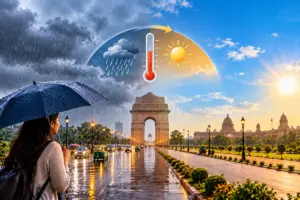




Residents of Delhi began Friday under a thick blanket of fog, with misty conditions, cloudy skies and reduced visibility shaping the morning commute.
Cooler temperatures and lingering haze added to discomfort across the capital, while concerns over air pollution continued despite a marginal improvement in overall air quality.
According to data from the Central Pollution Control Board (CPCB), Delhi’s average Air Quality Index stood at 231 at 6 AM, placing it in the ‘poor’ category. While this marked a slight improvement compared to previous days, pollution levels remained elevated in many areas.
Out of 39 monitoring stations, 13 reported ‘moderate’ air quality, while 22 remained in the ‘poor’ range. Some pockets recorded more alarming levels, with AQI readings crossing 300 in areas such as Jahangirpuri, RK Puram, Nehru Nagar and Siri Fort, categorising air quality there as ‘very poor’.
Wide Variations Across the City
Pollution levels varied significantly across different localities. Areas such as Anand Vihar, Dwarka Sector-8, Rohini and Sonia Vihar recorded AQI levels near the higher end of the ‘poor’ category, while Lodhi Road and Narela reported comparatively cleaner air in the ‘moderate’ range.
Neighbouring Noida reflected similar conditions, with AQI readings ranging from moderate to poor across multiple sectors, indicating a broader regional impact.
The India Meteorological Department (IMD) has attributed the changing conditions to weather systems.
Another western disturbance will affect northwest India from February 2, while a subtropical westerly jet stream over northeast India continues to drive unstable weather conditions.
For January 30, the IMD forecast shallow to moderate fog during morning hours, along with generally overcast skies. Forecasts indicate that minimum temperatures will remain above normal, while daytime temperatures will stay lower than average.
The IMD has predicted rainfall and thunderstorms over Delhi and adjoining areas between January 31 and February 2. A yellow alert has been issued for heavy rainfall on January 31 and February 1. Minimum temperatures may drop by 3 to 4 degrees Celsius before rising again gradually.
January has already seen Delhi record its highest rainfall in four years, with totals reaching 24 mm so far, adding another layer of complexity to the city’s winter weather and pollution challenges.
Also Read: Delhi Air Quality Remains Poor As IMD Issues Yellow Fog Alert
To read more such news, download Bharat Express news apps