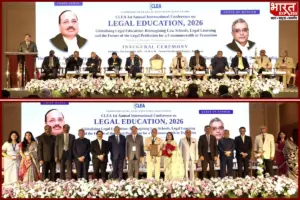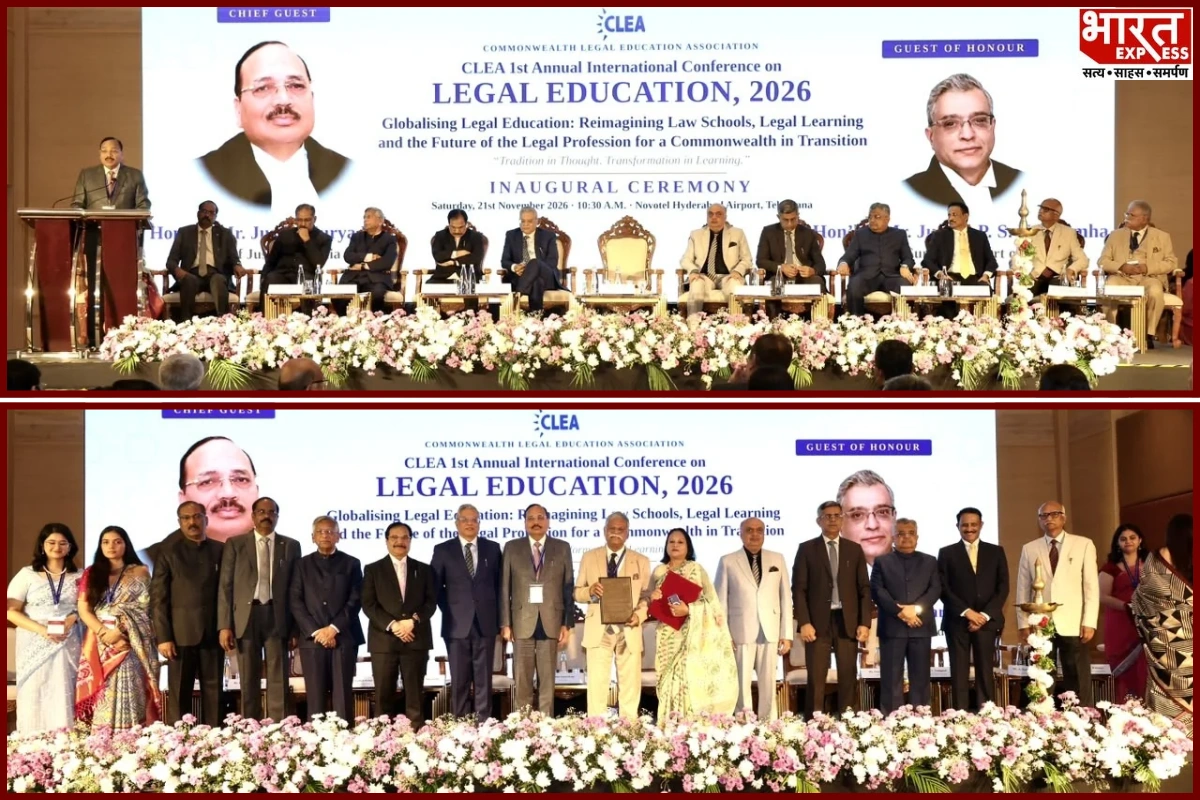
Chief Justice of India (CJI) Surya Kant addressed the changing landscape of legal education while inaugurating CLEA’s first international conference in Hyderabad.
The event, themed ‘Globalising Legal Education’, brought together judges, legal experts and academicians from Commonwealth countries.
He proposed making legal aid service compulsory for every law student before graduation. This requirement would help students understand the legal difficulties experienced by disadvantaged communities.
He also suggested awarding additional academic credits to students who complete more than the prescribed service period.
Surya Kant said banning Artificial Intelligence (AI) from legal education would not be practical, given its growing role in the legal profession.
He urged educational institutions to encourage students to use AI as a research aid rather than a substitute for independent thinking.
Questioning AI-detection tools, he cited a 2023 study in which seven popular detectors wrongly identified over 60 per cent of essays by non-native English-speaking students as AI-generated.
He cautioned against declaring students guilty of academic misconduct based solely on automated reports.
He also warned that AI-assisted legal research could produce fabricated judgments and inaccurate citations. Researchers must verify references against original documents and disclose their use of AI.
The CJI advocated a shared minimum framework for citing court judgments across Commonwealth countries.
Referring to the Kesavananda Bharati case, he explained that judgments often appear in different citation formats, including SCC and AIR.
He stressed that law students need practical courtroom exposure alongside theoretical knowledge. He said legal education must ultimately help extend legal rights and access to justice to every section of society.
Also Read: Written Grounds Of Arrest: Why Supreme Court Judgments Have Sparked A Legal Debate
To read more such news, download Bharat Express news apps