




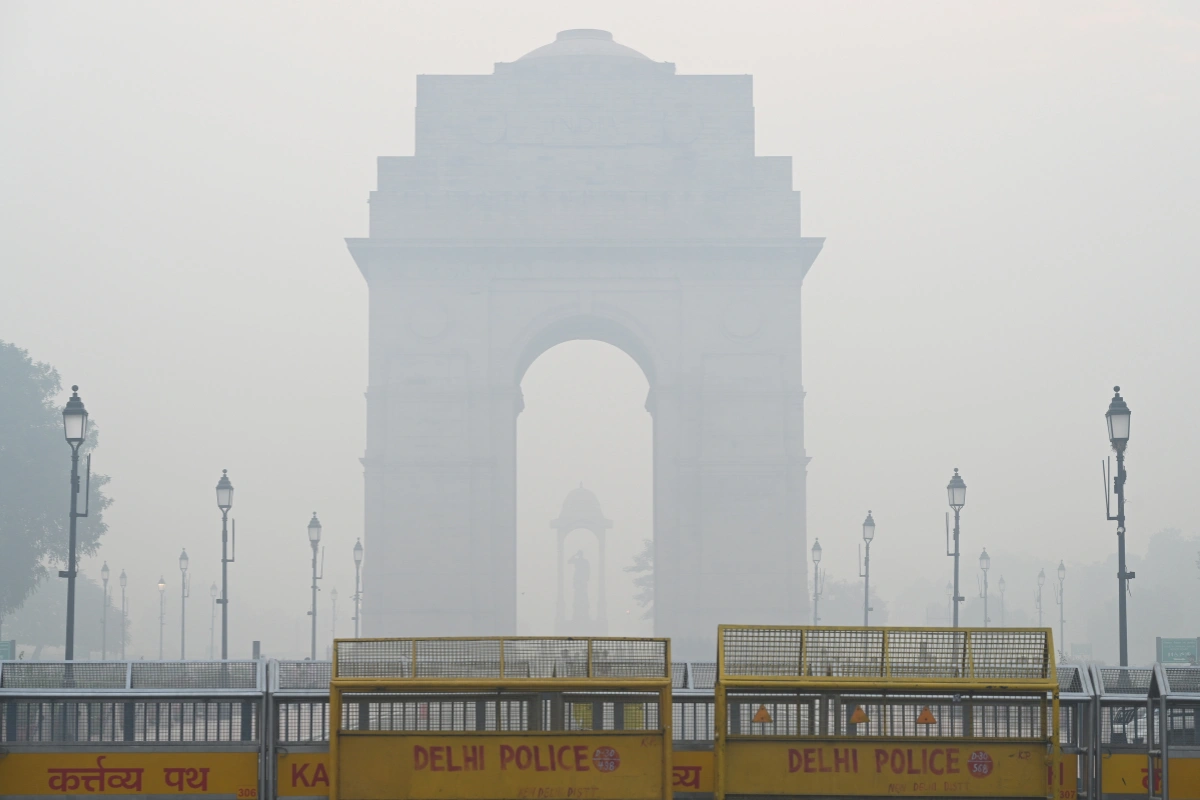
Delhi saw another dip in air quality on Wednesday morning, with pollution rising sharply across several parts of the city.
Readings from 40 CPCB monitoring stations showed that 14 locations had already moved into the ‘severe’ category by 7:05 AM, registering AQI levels above 401.
The citywide average AQI was recorded at 376 around 7 AM, slightly higher than Tuesday’s figure of 372 and still placed in the ‘very poor’ band.
The improvement seen briefly over the weekend has now faded, and the capital is once again edging close to hazardous conditions.
A thick layer of smog reduced morning visibility, especially in older parts of Delhi.
Chandni Chowk reported one of the worst readings at 431.
Residents in many neighbourhoods complained of irritation in the eyes and throat and difficulty breathing.
Pollution has been rising steadily over the last few days: Delhi registered an AQI of 279 on 30 November, 304 on 1 December, and 372 on 2 December.
Several locations recorded AQI readings in the ‘severe’ bracket on Wednesday. These included:
- Anand Vihar – 405
- Ashok Vihar – 403
- Bawana – 408
- Chandni Chowk – 431
- Dr Karni Singh Shooting Range – 406
- Jahangirpuri – 406
- Jawaharlal Nehru Stadium – 405
- Okhla – 404
- RK Puram – 420
- Rohini – 417
- Vivek Vihar – 415
- Wazirpur – 406
NSIT Dwarka was the only location with ‘poor’ air quality; the rest fell under ‘very poor’.
Doctors have urged people to limit exposure, warning that such high pollution levels can worsen breathing issues, especially for those with asthma, lung disease or heart problems.
Long-term exposure may also affect healthy individuals.
Neighbouring cities fared no better. Noida’s Sector 125 station reported an AQI of 406, while Greater Noida recorded 372.
Delhi’s brief relief on Sunday came when strong winds dispersed pollutants, breaking a 24-day stretch of ‘very poor’ air.
However, conditions have deteriorated again. The CPCB guidelines define the AQI scale as ranging from 0 to 500 and divide it into six categories that indicate increasing health risks.
To read more such news, download Bharat Express news apps