



AI Generated Image
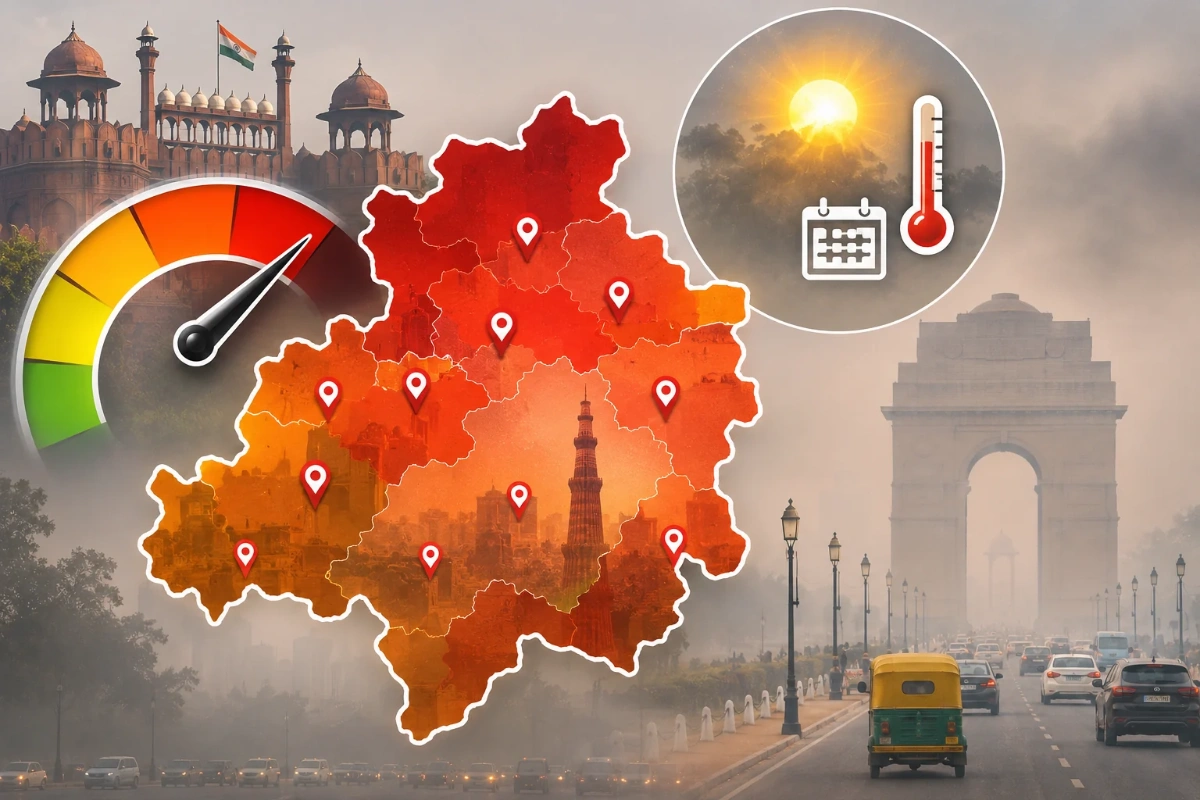
Delhi’s air quality remained in the ‘severe’ category on Friday morning, with the Air Quality Index (AQI) touching 419 at 8:40 am. A thick layer of smoky haze continued to blanket the national capital, reducing air quality across several areas.
According to the Central Pollution Control Board (CPCB), 33 of Delhi’s 58 monitoring stations recorded severe air quality. Several locations reported AQI levels above 450.
Chandni Chowk recorded the highest AQI in Delhi at 479, followed by IIT Delhi at 488, North Campus at 478, Pusa at 469 and Punjabi Bagh at 456. Other severely polluted areas included Burari Crossing (456), NIH Narela (445), Mundka (435) and Aya Nagar (433).
The situation remained equally concerning in neighbouring Noida, where the AQI reached 474 at 8:05 am. Gurugram recorded 352, Ghaziabad 369 and Greater Noida 351, placing all three cities in the ‘very poor’ category.
The CPCB classifies AQI levels between 401 and 500 as severe, while readings between 301 and 400 fall under the very poor category.
Data from AQI.in further showed that 86 of the world’s 100 most polluted cities on Friday were in India.
The India Meteorological Department (IMD) has forecast that Delhi’s air quality will remain between very poor and severe until November 16. Improved wind conditions could bring some relief thereafter.
Vehicular emissions, stubble burning, industrial pollution, firecracker emissions, falling temperatures and low wind speeds continue to worsen pollution levels during winter.
On November 6, the Commission for Air Quality Management (CAQM) invoked Stage III restrictions under the Graded Response Action Plan (GRAP) across Delhi-NCR to control rising pollution.
Also Read: Filling Granaries Not Enough; Agriculture Must Evolve With Markets, Technology: PM Modi
To read more such news, download Bharat Express news apps