




AI Generated Image
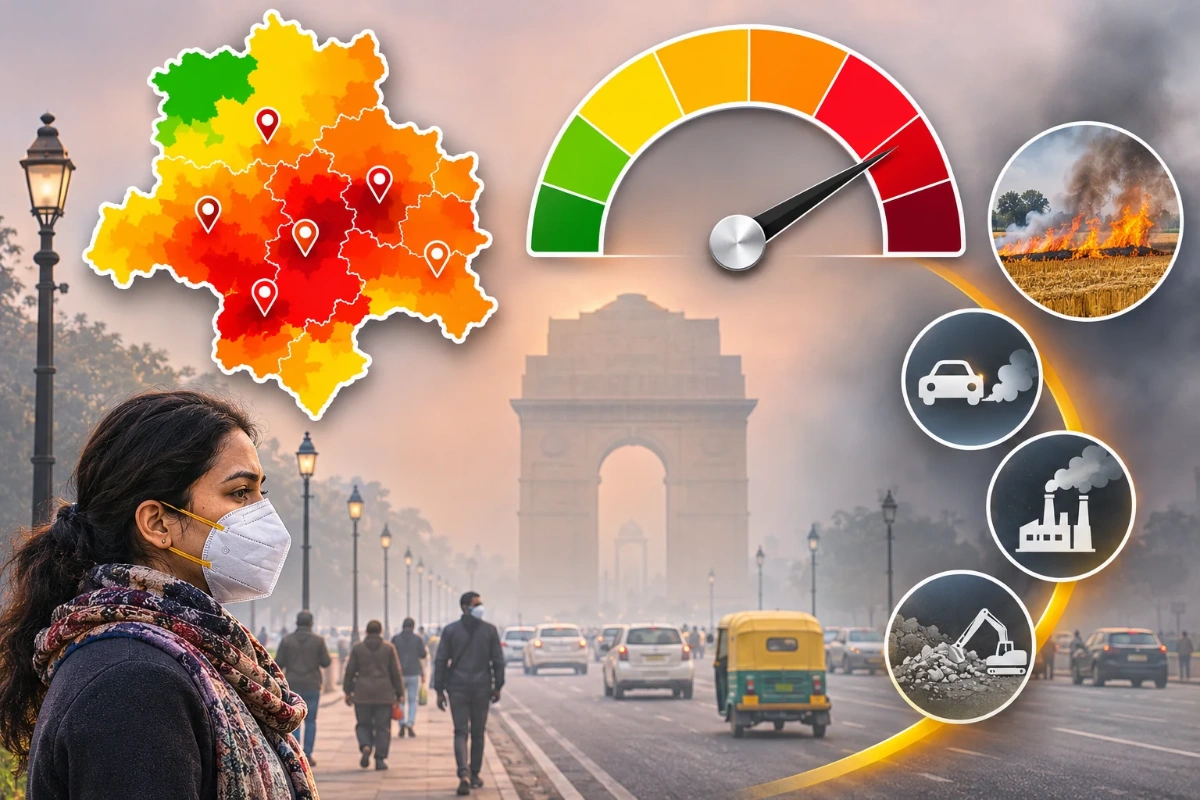
Delhi continued to experience poor air quality on Tuesday, November 24, with the average Air Quality Index (AQI) reaching 200 at 08:00 AM, according to real-time data from the Central Pollution Control Board (CPCB). PM2.5 remained the dominant pollutant.
Several Delhi monitoring stations recorded AQI levels above 300, with Sirifort topping the list at 333, followed by IGNOU-Maidan Garhi (330), North Campus (322) and Talkatora Garden (319). Other areas, including JNU, Mundka and Aya Nagar, reported elevated pollution levels.
IITM data showed that stubble burning contributed just 0.8 per cent of Delhi’s daily average PM2.5 pollution on November 23.
The ‘Others’ category accounted for the largest share at 32 per cent, followed by local transport emissions at 21.5 per cent.
Neighbouring districts contributed to Delhi’s pollution, with Jhajjar accounting for 10.2 per cent and Rohtak 6.1 per cent.
CAQM continues to enforce Stage II of GRAP across Delhi-NCR, including measures such as mechanised road sweeping, water sprinkling and stricter construction dust controls.
CAQM Member Secretary Tarun Kumar Pithode reviewed winter pollution-control measures and District Action Plans 2027 with district officials, assigning officers responsibility for meeting emission-reduction targets.
In a post on X, the CAQM said the meeting emphasised implementing the district plans to reduce pollution.
Earlier, the commission began assessing Delhi and neighbouring states on their pollution-control performance.
1/3 #CAQM Member Secretary Shri Tarun Kumar Pithode held a meeting with DCs/DMs across Delhi-NCR & adjoining areas to review winter pollution measures and District Action Plans 2027, targeting 15–20% pollution reduction, with designated officers responsible for the targets. https://t.co/4RhpAy3Hhr
— Commission for Air Quality Management (@CAQM_Official) November 23, 2026
Its 2026 report card, covering progress until October, highlighted gaps in industrial inspections, waste management, public transport and pollution-monitoring infrastructure.
Also Read: Delhi-NCR Pollution: CAQM Targets 15-20% Reduction By 2027
To read more such news, download Bharat Express news apps