




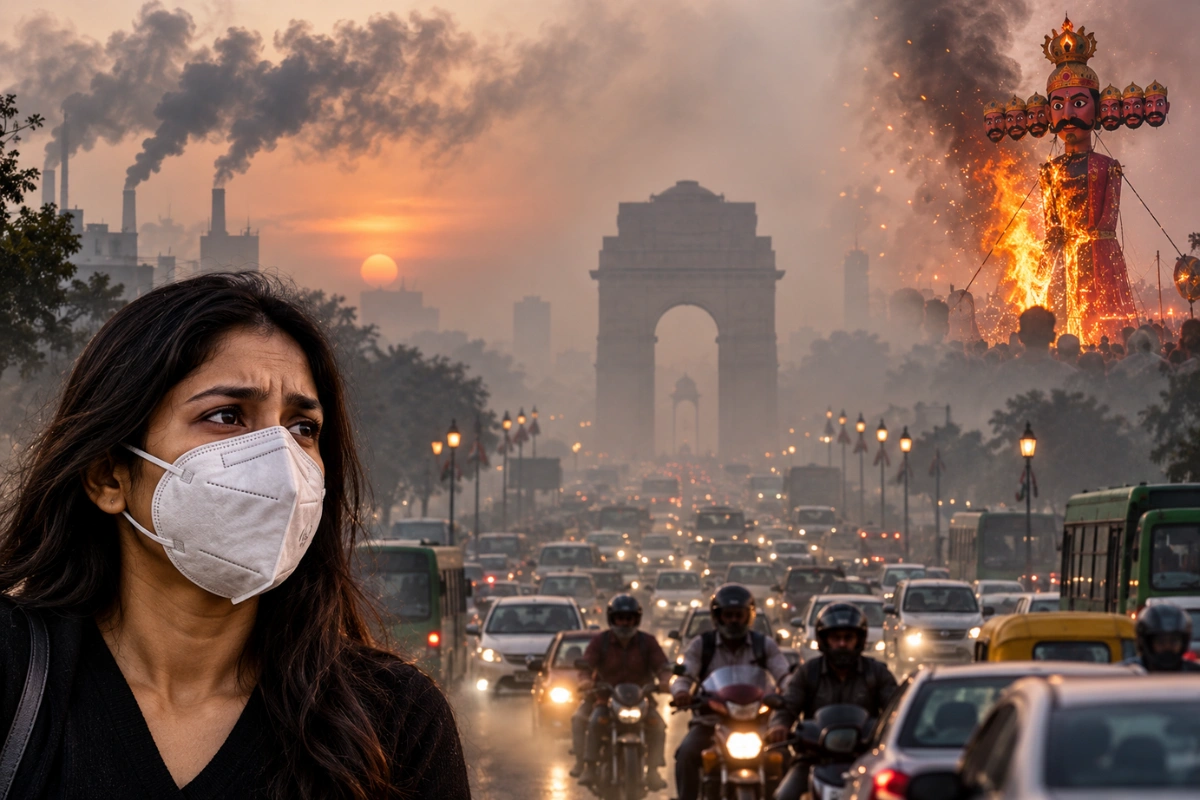
AI Generated Image
Delhi’s air quality remained in the ‘poor’ category for the third consecutive day on Saturday, with the Air Quality Index (AQI) reaching 180.
Smoke from Dussehra celebrations and unfavourable weather conditions contributed to rising pollution levels across Delhi-NCR.
Several monitoring stations recorded elevated AQI levels. Jahangirpuri reported 270, Mundka 264, Vivek Vihar 261 and Alipur 254.
Punjabi Bagh recorded 247, while RK Puram registered 240. NIH Narela reported an AQI of 241.
The Commission for Air Quality Management (CAQM) invoked Stage I of the Graded Response Action Plan (GRAP) earlier this week after Delhi’s AQI entered the poor category.
Delhi Environment Minister Manjinder Singh Sirsa directed officials to prepare targeted action plans for identified pollution hotspots. He asked agencies to identify local pollution sources, assign responsibilities and set deadlines for corrective measures.
During a review meeting, Sirsa instructed officials to analyse monitoring data and identify major pollution contributors. These include road dust, traffic congestion, construction activities, unauthorised parking and waste burning.
On Friday, three monitoring stations recorded ‘very poor’ air quality. Pusa registered an AQI of 319, Punjabi Bagh recorded 302 and RK Puram reported 307.
Of the 56 stations reporting data, 36 recorded poor air quality, while the remaining stations fell in the moderate category.
Government data identified transport as the largest listed contributor to Delhi’s air pollution, accounting for 20.3 per cent.
Residential sources contributed 5.2 per cent, industries 4.2 per cent and construction 2.6 per cent.
Stage I of GRAP remains in force across Delhi-NCR.
Authorities are focusing on dust suppression, construction compliance, waste management and controlling vehicular emissions to curb pollution.
Also Read: Bay Of Bengal Cyclone Alert: Storm Likely By October 26, Andhra Pradesh On Watch
To read more such news, download Bharat Express news apps