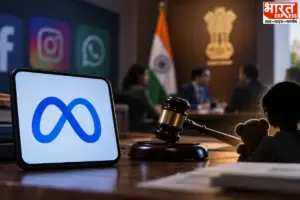
AI Generated Image
Despite investing more than Rs 9,800 crore since 2011 to improve court infrastructure and integrate technology into the judicial system, India has witnessed little progress in clearing long-pending cases.
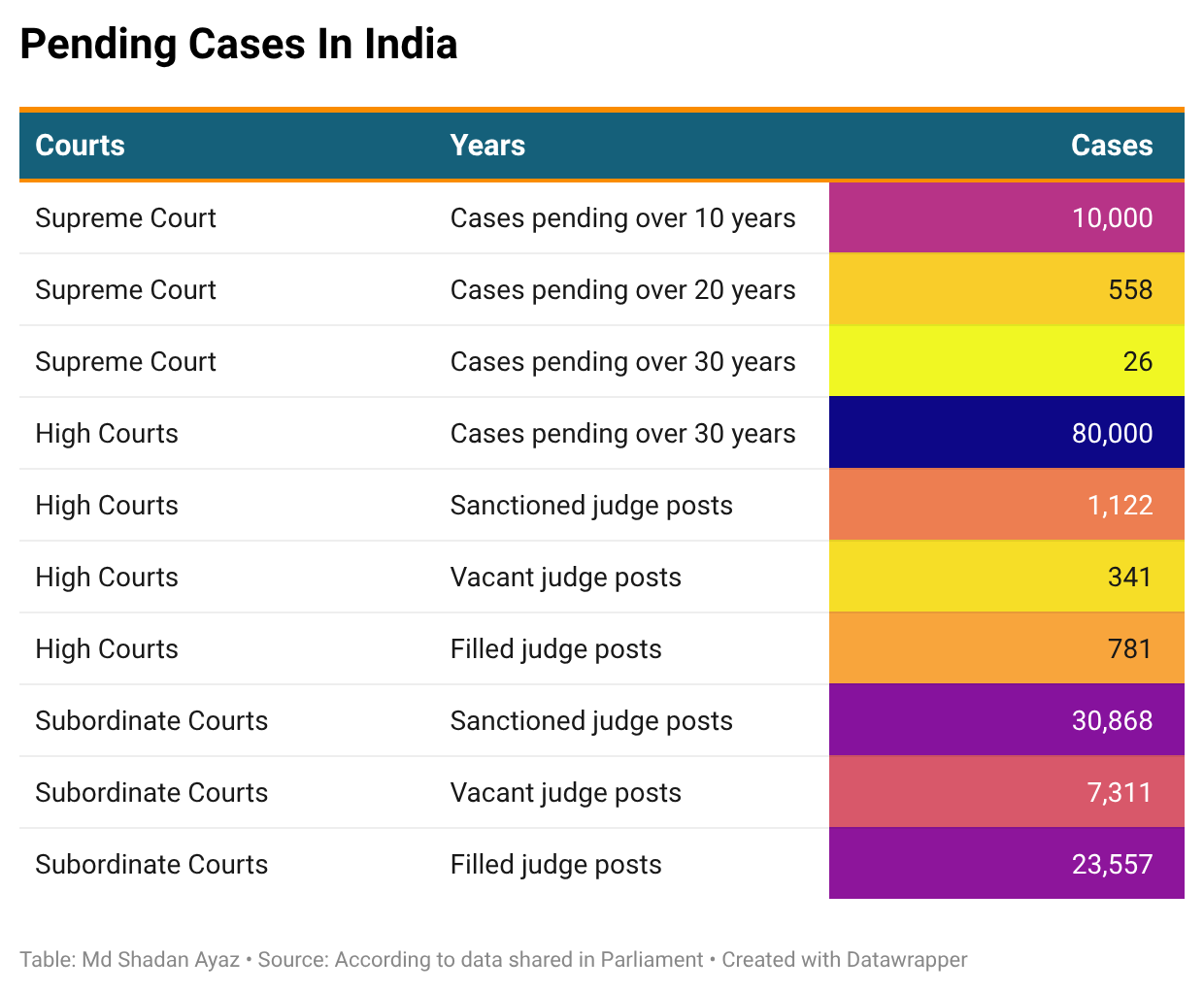
According to data shared in Parliament, the Supreme Court has more than 10,000 cases pending for over 10 years. Of these, 558 cases have remained unresolved for more than 20 years, while 26 cases have been pending for over 30 years.
Across the country’s 25 High Courts, more than 80,000 cases have remained pending for over three decades.
Government’s Response
In a written reply to a question in Parliament last week, Union Law Minister Arjun Ram Meghwal said the responsibility for timely disposal of cases rests with the judiciary, which has not prescribed any time limit for deciding cases.
He said timely disposal depends on several factors, including the availability of judges and judicial officers, adequate support staff and physical infrastructure, the complexity of cases, the nature of evidence, cooperation from stakeholders such as the Bar, investigating agencies, witnesses and litigants, and adherence to legal procedures.
While the Supreme Court has expedited appointments to vacant positions, vacancies continue to affect the High Courts and subordinate courts.
High Courts have filled 781 of the 1,122 sanctioned posts, leaving 341 vacancies. Subordinate courts have filled 23,557 of their 30,868 sanctioned posts, while 7,311 posts are still vacant.
The Law Minister attributed the large number of vacancies in High Courts to delays by the respective High Court collegiums in initiating recommendations for judicial appointments within the prescribed timeline.
Meghwal also said Arrears Committees have been constituted in all 25 High Courts and district courts to expedite cases pending for more than five years.
He added that the government has implemented the new criminal laws, 2023, along with the Negotiable Instruments (Amendment) Act, 2018, the Commercial Courts (Amendment) Act, 2018, and the Specific Relief (Amendment) Act, 2018, to help reduce the pendency of cases.
Also Read: Delhi Court Acquits Brij Bhushan Sharan Singh, Vinod Tomar In Sexual Harassment Case
To read more such news, download Bharat Express news apps