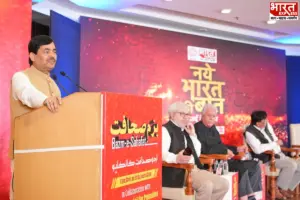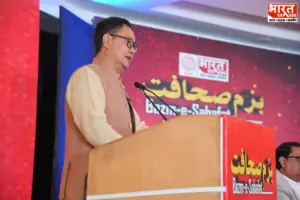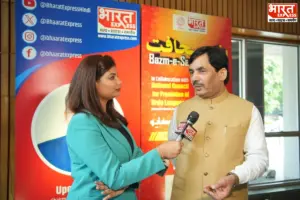



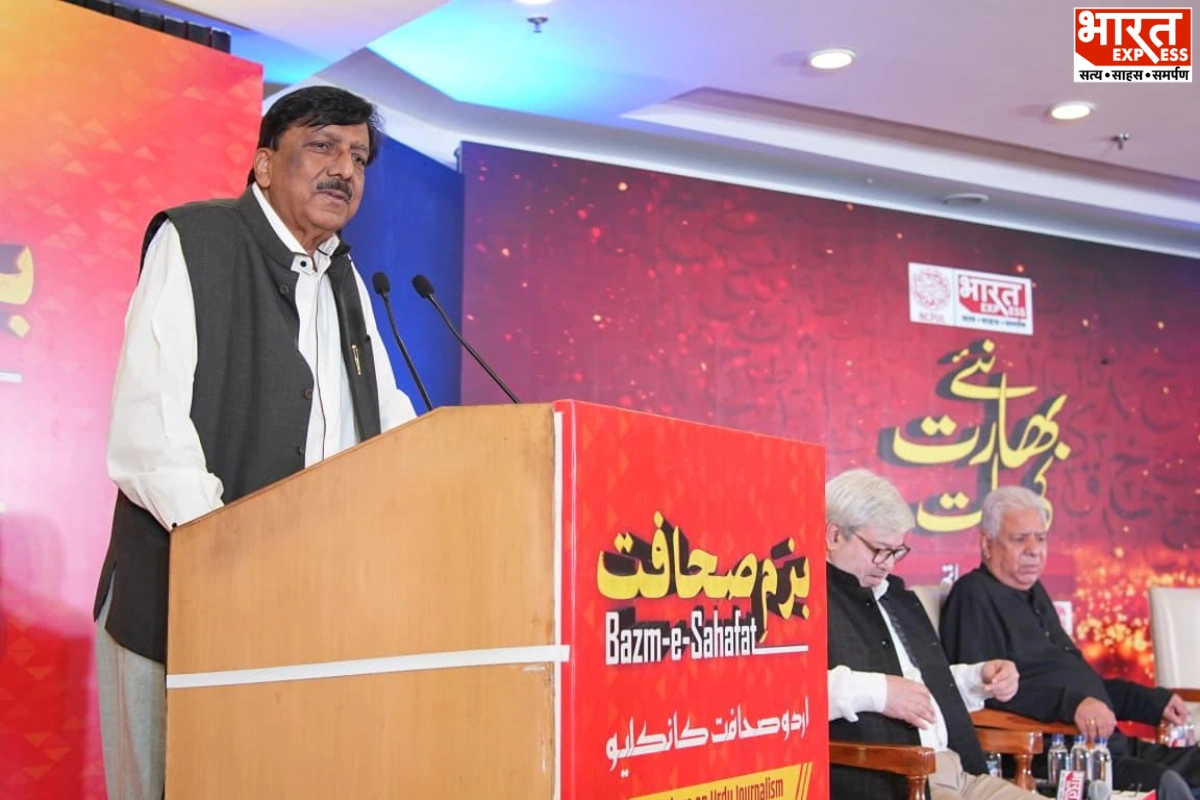
Urdu must embrace technology and evolve with changing times to remain relevant, speakers said at the Bharat Express Urdu Conclave.
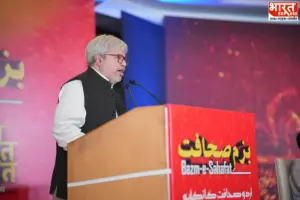
Speaking on the changing character of language in New India, Shahid Siddiqui said Urdu cannot be confined to one script. He cited Punjabi, which remains Punjabi when written in Devanagari, Gurmukhi, Urdu or Roman scripts.
He said the popularity of events such as Jashn-e-Rekhta shows Urdu continues to connect deeply with ordinary people.
Siddiqui recalled how Doordarshan’s excessive emphasis on pure Hindi in the 1970s reduced the use of Urdu words.
Viewership declined during that period. In the 1980s, programmes adopted Mahatma Gandhi’s idea of Hindustani. This everyday language later became a defining feature of Indian media.
He stressed that a language survives only when it adapts to its era and technology.
Siddiqui recalled growing up around Urdu newspaper offices and the distinctive atmosphere of traditional calligraphy, or kitabt. He said Urdu faced greater risks if it resisted technological progress.
Traditional kitabt centres were therefore converted into Urdu computer training centres. The objective was to preserve the language while preparing it for digital platforms.
Early Urdu computing faced challenges involving fonts such as Shahkar and InPage. Excessive line spacing and overlapping characters affected publication quality. Traditional Nastaliq conventions were modified to address these problems.
Changes included adjusting the central form of Qaaf and refining the size of dots. These technical improvements helped Urdu newspapers and articles meet modern printing standards.
Siddiqui said Urdu’s real threat comes not from external forces but from resistance to change. He stressed that combining heritage, technology, innovation and modern journalism can secure Urdu’s future and strengthen its contribution to Viksit Bharat 2047.
Also Read: World Leaders Greet PM Modi On 76th Birthday; Highlight Stronger India Ties
To read more such news, download Bharat Express news apps