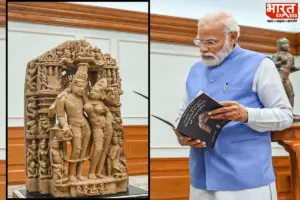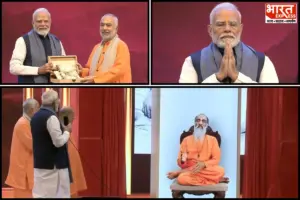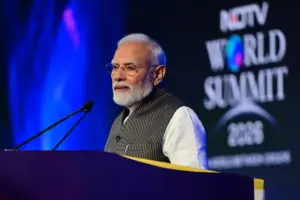




Prime Minister Narendra Modi on Monday encouraged citizens to visit the ‘Rajaji Utsav’ at Rashtrapati Bhavan. The event marks the unveiling of a bronze bust of C.
Rajagopalachari, replacing that of British architect Edwin Lutyens.
In a message shared on X, the Prime Minister described the festival as a commendable initiative.
Rajaji Utsav is a wonderful initiative, which brings out different aspects of Rajaji’s rich contribution to our nation. I urge you all to visit it and get inspired! https://t.co/ubwrwcb3Dt
— Narendra Modi (@narendramodi) February 23, 2026
He stated that it highlights diverse aspects of Rajaji’s distinguished service to the nation. He urged citizens to attend and draw inspiration from his life.
During a recent episode of Mann Ki Baat, the Prime Minister observed that India is discarding remnants of colonial symbolism.
PM Modi remarked that the country now honours emblems rooted in its own civilisation.
On February 22, he indicated that the bust of Lutyens would be removed from the central courtyard of Rashtrapati Bhavan.
Soon after the inauguration, Rashtrapati Bhavan shared images of President Droupadi Murmu viewing the exhibition following the unveiling ceremony.
President Droupadi Murmu graced the ‘Rajaji Utsav’ at Rashtrapati Bhavan. The President said that when Rajaji arrived at the Government House (now known as Rashtrapati Bhavan), he placed portraits of Ramakrishna Paramahamsa and Mahatma Gandhi in his room. Rajaji sent a clear… pic.twitter.com/IhRvXUAr8o
— President of India (@rashtrapatibhvn) February 23, 2026
The official statement noted that Rajaji exemplified mental decolonisation. It added that his ideals resonate with the national effort to take pride in India’s heritage.
Symbol Of Renewal
An exhibition on Rajaji’s life and work will run from February 24 to March 1, 2026, within the presidential estate.
President Murmu stated that replacing the earlier bust signifies a broader commitment to recognising Indian statesmen who shaped the republic’s destiny.
Rajagopalachari, widely known as Rajaji, served as India’s last Governor-General from 1948 to 1950. He was also a freedom fighter, scholar, and public intellectual.
The newly installed bust stands at the Grand Open Staircase near Ashok Mandap.
Vice-President C P Radhakrishnan underscored that shedding colonial influence represents a sustained transformation.
He linked the initiative to reforms across governance, education, law, and national identity.
Radhakrishnan cited measures such as transforming Raj Bhavans into Lok Bhavans, renaming the Central Secretariat as Kartavya Bhavan, revising colonial-era criminal statutes, installing a statue of Subhas Chandra Bose near India Gate, and constructing the National War Memorial.
C P Radhakrishnan asserted that these steps reflect a spirit of public service rather than symbolism alone.
Also Read: PM Modi Reaches Out To Bengal Voters; Promises Rebuilding Of The State
To read more such news, download Bharat Express news apps