



In a powerful reaffirmation of the constitutional vision that underpins India’s pluralistic democracy, the National Commission for Minority Educational Institutions (NCMEI) joined hands with the BS Abdur Rahman Crescent Institute of Science and Technology to host a landmark national conclave on ‘The Role of Minority Educational Institutions in Unity, Cultural Diversity and Nation Building: Viksit Bharat @ 2047’.
The day-long conference brought together some of the most influential voices in education policy and nation-building.
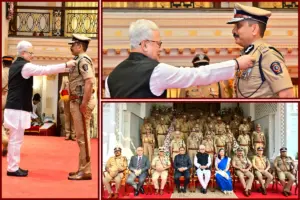
Tamil Nadu Governor Rajendra Vishwanath Arlekar attended the occasion as the Chief Guest, while RSS leader and Muslim Rashtriya Manch Margdarshak Dr Indresh Kumar shared his perspective during the deliberations.
Professor (Dr) Shahid Akhter, Officiating Chairman of the NCMEI, described the experience as deeply humbling and expressed gratitude for the opportunity to share the dais with such eminent personalities.
Call for Nation Building
Inaugurating the conclave, Governor Arlekar delivered a stirring address, asserting that the nation’s ethos must permeate the curriculum and syllabus of every educational institution.
“We all belong to this soil, this country, this culture. We are not aliens; we are not foreigners. Our education system will have to conform to that ethos and that thought process,” he remarked.
The Governor urged institutions to produce not job-seekers but job creators, emphasising the establishment of entrepreneurship development cells to foster self-reliance and innovation—a vision that aligns with the ambitious roadmap of Viksit Bharat @ 2047.
Professor Akhter highlighted the Commission’s significant adjudicatory role, revealing that the NCMEI has granted minority educational institution status to 14,364 institutions across the country, of which 1,175 are in Tamil Nadu.
Highlighting their inclusive character, Professor Akhter noted that more than 68 per cent of students studying in these institutions belong to communities other than the minority community that administers them.
“Autonomy and national integration are not mutually exclusive,” Professor Akhter has previously asserted. “Our institutions must excel in education and innovation to directly contribute to the Viksit Bharat 2047 mission.”
Professor Akhter further remarked that the soul of India resides in mutual brotherhood, tolerance and pluralism.
Road Ahead
The conclave served as a platform to deliberate on how minority educational institutions can act as engines of social cohesion, academic excellence and equitable development.
Dr Indresh Kumar encouraged young people to view their identity as a source of strength and reiterated that the Indian Constitution guarantees equal rights to all citizens.
Experts noted that the vision of Viksit Bharat @ 2047 can only be realised through quality, inclusive and equitable education that reaches every section of society.
Professor Akhter has consistently championed the view that education must cultivate ethical leadership, critical thinking and respect for India’s pluralistic traditions, preparing students not only for careers but also for responsible citizenship.
Expressing his heartfelt appreciation, Professor Akhter further thanked the entire Crescent family for its honour and hospitality.
The institute, a NAAC A+-accredited deemed university and one of India’s leading Muslim-minority engineering institutions, demonstrated its commitment to nation-building through this landmark event.
As India moves towards the centenary of its Independence, the role of minority educational institutions in fostering unity, preserving cultural diversity and contributing to nation-building has never been more vital.
With the stage set for sustained dialogue and action, minority educational institutions are emerging not as peripheral contributors but as central architects of India’s journey towards a prosperous and inclusive future.
To read more such news, download Bharat Express news apps