



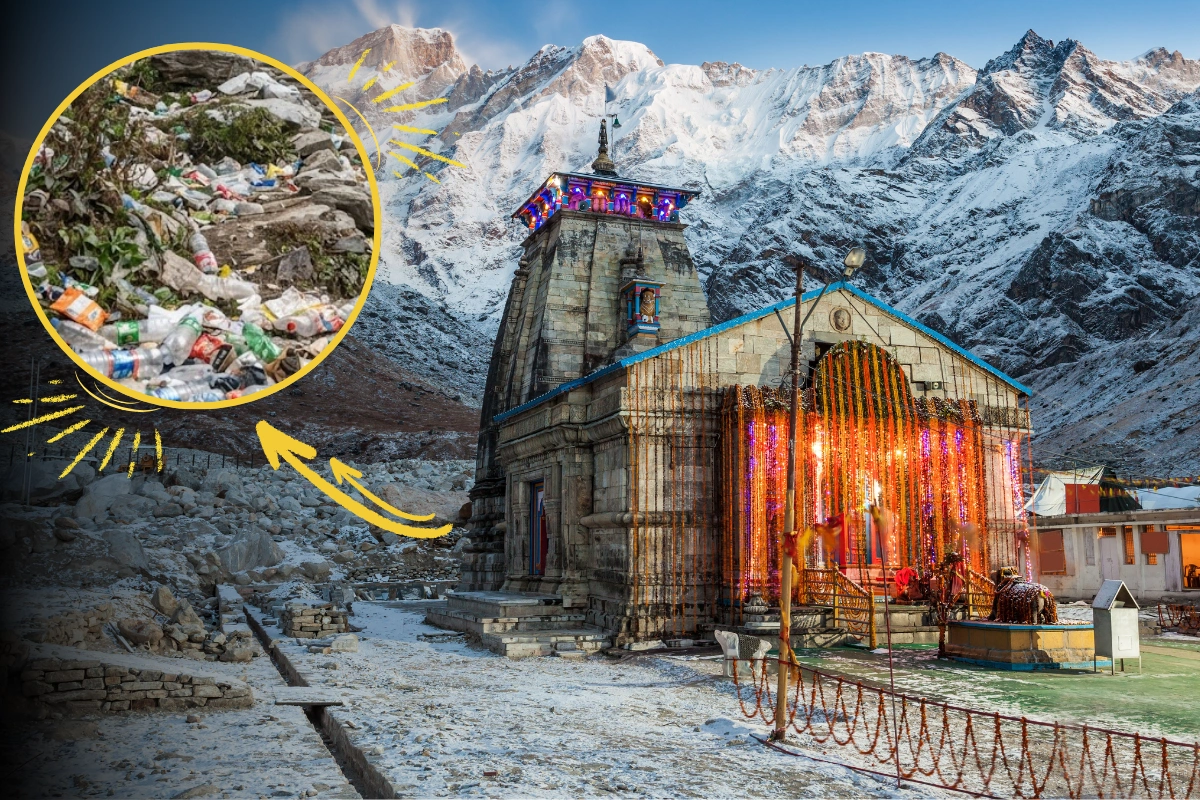
Kedarnath has recorded a sharp rise in waste generation in 2026 as pilgrim numbers continue to increase.
Data provided by the Kedarnath Nagar Panchayat under the Right to Information (RTI) Act shows that the shrine generated 50.30 metric tonnes of waste between April and August, more than twice the total recorded during the entire 2025 pilgrimage season.
Kedarnath generated 32.58 metric tonnes of waste in 2023, 26.10 tonnes in 2024 and 21.40 tonnes in 2025.
In comparison, waste generation reached 50.30 tonnes in just five months of 2026. More than 15 lakh pilgrims have visited the shrine this year, with the pilgrimage season still underway.
Authorities segregate the waste into plastic, organic and animal waste. They collect dung from mules and ponies separately.
Workers process plastic and animal waste near Sonprayag, while they transport organic waste nearly 70 km to Raintoli, the district headquarters.
Kedarnath generated around 20 metric tonnes of plastic waste between April and August. Authorities processed 18.5 tonnes, or 92.5 per cent, while around 1.5 tonnes remained.
Environmentalists have raised concerns over the impact of plastic waste on the Himalayan ecosystem. Improperly discarded plastic can break down into microplastics, which may settle on snow, glaciers and high-altitude lakes.
Dark particles on snow can absorb more solar radiation and potentially accelerate melting, while pollutants can enter freshwater systems as snow and ice melt.
The rise in waste mirrors the long-term growth in pilgrim numbers. Kedarnath received 1.18 lakh visitors in 1990, around four lakh in 2010 and 19.61 lakh in 2023. The shrine recorded 16.52 lakh visitors in 2024 and 17.68 lakh in 2025.
The 2026 pilgrimage began on April 22, with the temple scheduled to close on November 11. Authorities have capped daily registrations at around 13,000-15,000 pilgrims, but peak days have seen 30,000-38,000 visitors, causing congestion and safety concerns.
The growing waste burden has renewed questions over sustainable tourism in Kedarnath, particularly amid concerns over declining snow cover and glacier retreat in the Himalayan region.
Also Read: HM Amit Shah, CM Yogi Remember Guru Amar Das On Jyoti Jyot Diwas
To read more such news, download Bharat Express news apps