



AI Generated Image
The Sacred Tree and the Power of Devotion: Why Amalaki Ekadashi Is More Than a Day of Fasting
Amalaki Ekadashi is a Hindu observance dedicated to Lord Vishnu, distinguished by the worship of the amla tree and the practice of fasting. Its meaning extends beyond dietary restraint: prayer, sacred storytelling and reverence for a living tree bring devotion into focus. Understanding these connections helps explain why the day is more than a test of hunger.
What Is Amalaki Ekadashi, and Why Is It Significant?
Amalaki Ekadashi falls on the eleventh lunar day of the bright fortnight, or Shukla Paksha, in the Hindu month of Phalguna. Dedicated to Vishnu, it combines Ekadashi fasting with the worship of the amalaki, or amla tree. Devotees regard the tree as a dwelling place of Vishnu, giving this observance its distinctive connection between spiritual practice and the natural world.
The day usually falls in February or March, between Maha Shivaratri and Holi. Its position follows the Hindu lunar calendar rather than a fixed Gregorian date, so the calendar date changes each year. This is why checking the correct year matters before planning an observance.
A useful way to approach its meaning is to consider three connected elements:
- Restraint: Let the chosen fast create room for prayer rather than making food the day’s central concern.
- Remembrance: Give deliberate attention to Vishnu through worship, listening or reading.
- Reverence: Treat the sacred tree with care, not merely as a setting for ritual.
These are practical reflections on the observance, not a substitute for the customs of a particular family or temple.
Amalaki Ekadashi Dates: 2021, March 2023 and 2026
For readers checking historical calendars, the Amalaki Ekadashi 2021 date was Thursday, March 25, in the cited Indian calendar. Amalaki Ekadashi in March 2023 was observed on Friday, March 3, in India. These are past observances, not interchangeable dates for planning a fast in another year.
The Amalaki Ekadashi 2026 date was Friday, February 27. That date appears in both the ISKCON Jaipur calendar and Drik Panchang’s Washington, D.C., listing. The following morning, February 28, was the day for breaking the fast according to the applicable local parana instructions.
| Observance | Verified Date | Calendar Context |
|---|---|---|
| Amalaki Ekadashi 2021 | Thursday, March 25, 2021 | Cited Indian listing |
| Amalaki Ekadashi March 2023 | Friday, March 3, 2023 | Indian observance |
| Amalaki Ekadashi 2026 | Friday, February 27, 2026 | Jaipur and Washington, D.C., listings |
The table summarises the sources above; it does not establish universal fasting or fast-breaking times. When checking Ekadashi dates, select your city and follow your religious tradition. A tithi’s beginning and ending times are not, in themselves, instructions to start and finish fasting at those exact moments.
The Sacred Tree at the Heart of the Observance
The amla tree is not incidental decoration. Its worship is a defining feature of Amalaki Ekadashi because Vishnu is believed to reside there. The tree therefore becomes a focus of devotion alongside the day’s fasting and worship.
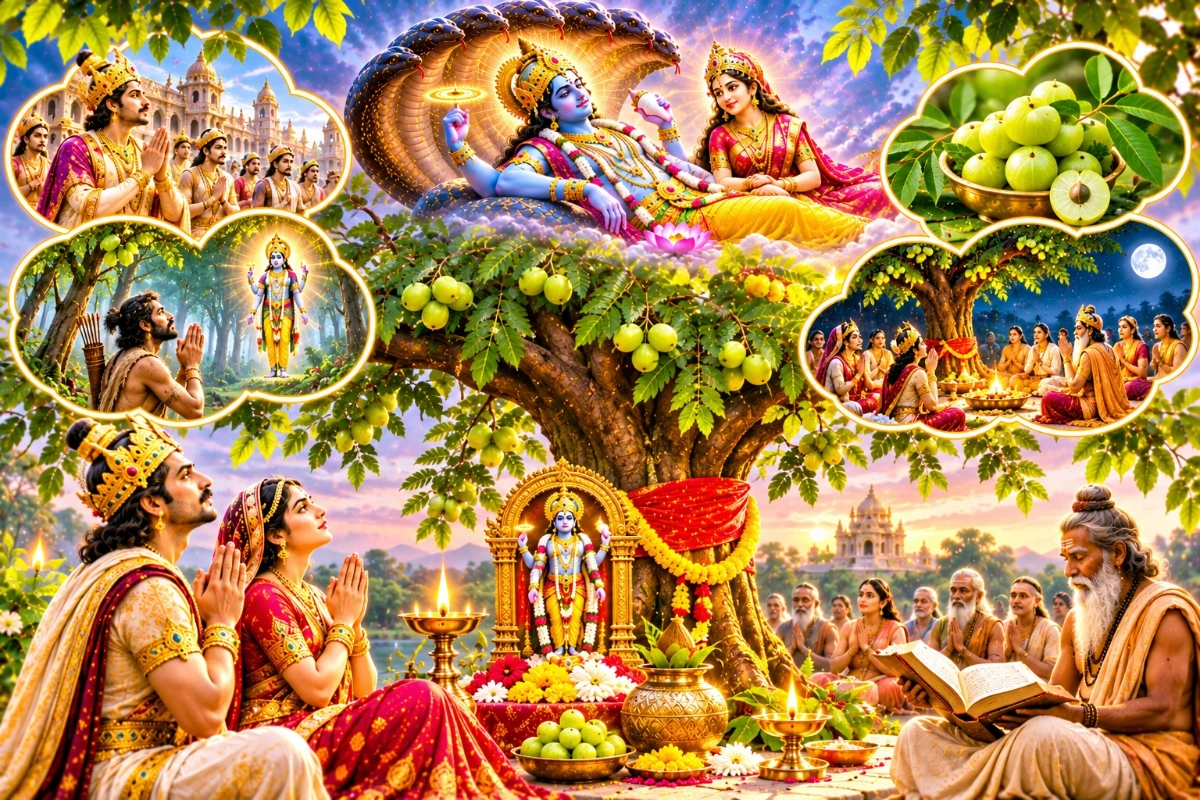
A traditional narrative describes worship with a water-filled vessel, incense, a lamp and offerings. The king and his people then remain awake in prayer. These details place the tree within a shared devotional setting, rather than presenting the observance as an isolated act of abstinence.
One thoughtful contemporary response is to let reverence shape how you care for the tree. Avoid damaging branches, fastening materials that could injure its bark or leaving packaging around its roots. Consider cleaning the surrounding area after worship. These are suggested ways to express care, not additional scriptural requirements.
If you cannot access an amla tree, ask your temple or family elder how your tradition approaches worship in that situation. There is no need to invent a ritual or assume that every household follows the same arrangement.
The Traditional Story and Its Lesson of Grace
One widely circulated Amalaki Ekadashi katha tells of King Chitraratha and his people gathering for worship and an overnight vigil. A hunter comes upon the gathering and remains there, listening to the glorification of Vishnu. Although he has not arrived as an accomplished devotee, he participates through wakefulness, listening and an unplanned fast.
The narrative says that the merit of this encounter leads to his rebirth as King Vasuratha. Later, when the king faces danger in a forest, divine intervention protects him. The story attributes that protection to the power of the earlier observance and Vishnu’s grace. These are elements of a religious narrative, not independently established historical events.
A meaningful interpretation is that spiritual participation need not begin with perfect knowledge. The hunter listens before he understands the full significance of the gathering. For a newcomer, this can be an invitation to approach the day with humility: learn the story, listen attentively and begin without pretending to know everything.
The lesson need not become a promise that one ritual guarantees worldly success. Instead, consider what the story asks you to notice about attention, transformation and the possibility of grace.
How Can You Observe the Day Meaningfully?
A meaningful observance brings fasting, worship and attentive remembrance together rather than treating dietary restriction as the whole practice. Traditional accounts emphasise offerings, prayer, sacred storytelling and a vigil alongside the fast. Your family’s or temple’s guidance can help you translate these elements into an appropriate observance.
Use this practical preparation checklist:
- Confirm the local calendar. Record the fasting date and the following day’s parana window. Check the city setting rather than copying a screenshot intended for another location.
- Clarify your tradition’s expectations. Ask about food rules, worship arrangements and any differences between household and temple practices before the day begins.
- Prepare a modest worship space. Gather what you genuinely need, keeping arrangements manageable rather than turning preparation into an expensive shopping exercise.
- Choose something to read or hear. The Amalaki Ekadashi katha offers a direct connection to the observance. Read slowly enough to reflect on it rather than rushing simply to finish.
- Protect time for attention. Consider putting your phone aside during prayer or setting aside a quiet period with family. Make the intention specific and achievable.
- Finish thoughtfully. Follow the applicable fast-breaking instructions, put away worship materials and leave the space clean. Parana is part of completing the fast, not an unrelated afterthought.
You might also choose a quiet act of generosity: help someone with a task, share resources or offer time without seeking recognition. Treat this as a personal expression of devotion rather than a compulsory ritual requirement.
Fasting With Attention, Not Competition
Ekadashi fasting does not always require complete abstinence from food and water. Drik Panchang describes different forms, including fruit-based observance, milk-based observance and a single permitted meal. ISKCON Reading likewise explains a common practice of avoiding grains, beans, peas and lentils. Specific food guidance should come from the tradition you follow.
Before preparing food, check the ingredients rather than relying only on a dish’s name. ISKCON Reading’s guidance includes products derived from restricted ingredients, so a familiar-looking preparation may still need checking. Ask about packaged foods or unfamiliar recipes instead of guessing.
Avoid turning the day into a comparison of who can endure the most. Choose an observance appropriate to your circumstances, and seek individual professional guidance if you are unsure whether dietary restriction is suitable for you. Do not change prescribed treatment to accommodate a fast without consulting the prescribing professional.
For reflection, ask yourself: did the chosen discipline support prayer and patience, or did it become the only thing you thought about? Use that question to prepare more thoughtfully next time, not to judge someone else’s practice.
Carrying Devotion Beyond the Day
The tree, the story and the fast offer different points of entry into Amalaki Ekadashi. You can reflect on reverence through the tree, attentive listening through the katha and intention through the discipline you choose. None needs to become a performance for others.
Choose one small commitment to continue afterwards: a regular moment of prayer, more patient speech or deliberate care for a living tree. Let the observance lead to something concrete. Its lasting value can be found not only in what you set aside for a day, but also in the attention and kindness you choose to carry forward.
Also Read: Vijaya Ekadashi: Sacred Fasting, Lord Rama’s Victory
To read more such news, download Bharat Express news apps