AI Generated Image
The River Tapi’s Guardian and the Eternal Beacon of the Western Coast
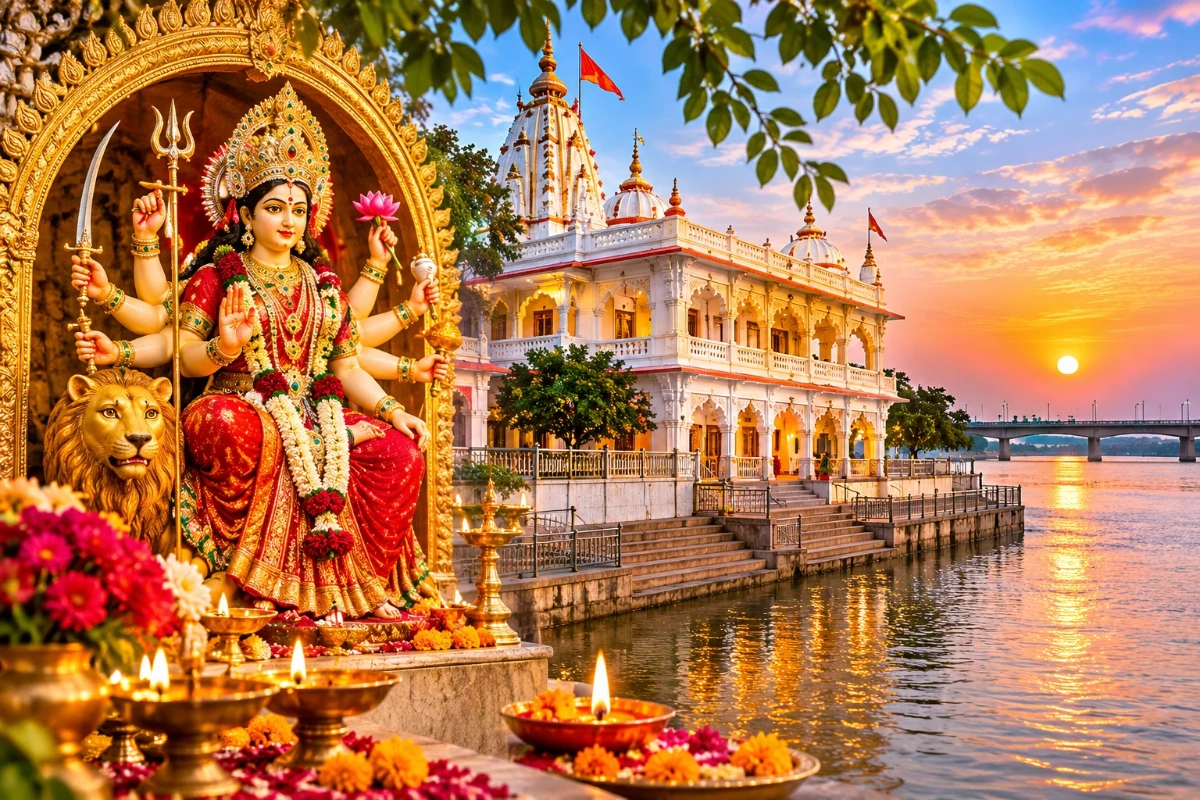
Ambika Niketan Temple, beside the River Tapi in Surat, offers a way to understand the relationship between devotion, livelihood and place. Founded by Bharati Maiya in 1969, the temple is dedicated to Goddess Ambika, worshipped here in her eight-armed form. Its riverside setting brings a spiritual dimension to a city shaped by commerce, making it a meaningful subject for pilgrims and culturally curious readers alike.
Who Is the River Tapi’s Guardian?
In this article, the phrase River Tapi’s Guardian describes Goddess Ambika at Surat’s Ambika Niketan Temple. It is a devotional interpretation of her protective presence beside the river, rather than a documented official title. The temple’s own account identifies the presiding deity as Ashtabhuja Ambika, a form of Shakti, and places her shrine on the banks of the Tapi.
The River Tapi’s Guardian and the Eternal Beacon of the Western Coast is a fitting descriptive tagline for Ambika Niketan, its riverside surroundings and Surat’s western coastal heritage. Here, ‘beacon’ means spiritual guidance, not a physical lighthouse, while ‘eternal’ expresses devotion rather than the age of the building.
That distinction helps visitors appreciate the temple without confusing poetic language with history. A relatively modern shrine can still inspire a profound sense of continuity. Its significance need not depend on claims of ancient construction: prayer, remembrance and the relationship between worshippers and the goddess provide a different measure of meaning.
The Tapi and Surat’s Outward-Looking History
The river is essential to understanding Surat’s commercial past. Surat Municipal Corporation describes the city’s prosperity through maritime trade during the sixteenth, seventeenth and eighteenth centuries, when it became an important link between India and overseas markets. The municipality also records shipbuilding along the Tapi between Athwalines and Dumas, connecting the riverbank directly with the city’s seafaring economy.
This history gives the temple’s setting an additional layer of meaning. Looking at a riverside shrine, visitors can consider both the movement of goods and the human desire for stability. Trade involves departures, promises, uncertain outcomes and responsibilities to people who may never meet. A place of worship offers a contrasting space in which to pause.
Surat’s international connections are also reflected in the municipal fort museum’s Trade Gallery. Its displays include containers associated with goods arriving from China and other Asian regions, showing how overseas exchange entered everyday material life. Such objects make commercial history tangible: global trade was not simply an abstract network, but something handled, stored, unpacked and reused.
Read against that background, Ambika Niketan invites reflection on a city’s inner life as well as its outward ambitions. Commerce explains part of Surat’s story; it does not have to explain everything.
How Do Trade and Devotion Meet at Ambika Niketan?
For devotees among Surat’s traders, diamond merchants and textile workers, bowing before Goddess Ambika before entering into global trade deals expresses a connection between commercial prosperity and spiritual grace. The prayer places business aspirations alongside hopes for protection, sound judgement and the well-being of those whose livelihoods depend on their work. It is an expression of faith, not a guarantee that a transaction will succeed.
This connection is especially relevant to Surat’s identity. The city’s municipal account describes its development from a historic trading centre into a global centre for diamonds and textiles. These industries provide the commercial context for understanding why questions of livelihood belong in a discussion of local devotion.
The most useful interpretation goes beyond asking for a profitable outcome. Before negotiating an order or beginning an important business commitment, a worshipper might reflect on responsibilities that financial figures cannot fully capture:
- Fair dealing: Are the terms clear, and can both parties understand what has been promised?
- Responsibility to workers: Does the pursuit of an order recognise the people whose labour makes delivery possible?
- Careful judgement: Is confidence supported by preparation rather than wishful thinking?
- Gratitude: If the work prospers, how might its benefits support family and community?
These are reflective prompts, not prescribed temple rituals. They offer a practical way to understand spiritual grace without treating worship as a shortcut around effort or accountability. Prosperity, in this reading, includes the quality of the relationships through which wealth is created—not merely the value of the final deal.
A Modern Shrine with a Distinct Devotional Identity
Ambika Niketan’s documented foundation matters because it anchors the story in a named person and a specific period. According to Shri Ambikaniketan Trust, Bharati Maiya established the two-storey temple in 1969. Alongside the principal goddess, the complex includes smaller shrines dedicated to Shiva, Rama, Sita and Lakshmi Narayan.
For a first-time visitor, these details suggest a better approach than searching only for a dramatic exterior photograph. Begin by understanding whom the temple honours and the devotion behind its establishment. Then give attention to the relationship between the principal shrine and the other sacred spaces, following the access and conduct guidance applicable during your visit.
The eight-armed form also gives the temple a clear devotional focus. Rather than assigning an unsupported meaning to every object or gesture, unfamiliar visitors can ask a knowledgeable temple representative for an explanation. That small act of inquiry is more rewarding than arriving with assumptions drawn from unrelated temples or generalised descriptions of goddess worship.
Navratri Brings the Goddess into Sharper Focus
Navratri holds particular importance at Ambika Niketan. The temple trust describes enthusiastic celebrations and notes that the shrine becomes especially crowded during the festival, although worshippers visit throughout the year. Surat district’s official visitor information likewise identifies the temple as a place where devotees offer prayers and receive prasad.
For readers deciding what kind of experience they value, the distinction is useful. A festival visit can emphasise collective devotion, while a visit outside a major celebration may better suit someone hoping to observe without seeking a festival atmosphere. Neither approach is inherently more authentic; the right choice depends on your purpose and comfort with crowds.
Avoid building plans around an assumed ceremony time or an old online schedule. Confirm current arrangements directly before setting out, particularly if attending a specific observance is important to you. Leave flexibility in the day so that prayer does not become another appointment to rush through.
A Respectful Way to Experience the Riverside Setting
A thoughtful visit begins with modest expectations. You do not need to understand every devotional gesture, and you do not need to participate in practices that are unfamiliar to you. The priority is to respect worshippers and allow the temple to remain a place of worship rather than treating it solely as an attraction.
Use this checklist to prepare without relying on unverified details:
- Confirm practical arrangements. Check current opening hours, access to ceremonies and any temporary restrictions with the temple before travelling.
- Ask about access needs. If stairs, queues or extended standing could be difficult, establish what assistance or alternative arrangements are available rather than making assumptions about facilities.
- Follow local conduct guidance. Observe signs and staff instructions about footwear, clothing, offerings and movement around the shrine.
- Request permission for photographs. Do not assume that permission outside the temple extends to the deity, prayer areas or individual worshippers.
- Keep the riverbank clean. Use designated disposal points, and do not place packaging, food waste or offerings in the water.
Once there, give yourself permission to notice rather than document everything. Consider the contrast between the river’s movement and the stillness you are seeking. If you are visiting with children, invite them to identify what they observe before explaining what it means. This encourages attention without turning someone else’s prayer into a spectacle.
The same care applies to conversations. Ask concise, respectful questions when someone is available, and accept that an active worship space may not be the right setting for a lengthy explanation. Curiosity works best when accompanied by patience.
Carrying the Meaning Beyond the Temple
Ambika Niketan can be understood through three connected perspectives: a documented modern foundation, a riverside location within Surat’s trading landscape and devotion to Goddess Ambika. Keeping those perspectives distinct allows history and faith to enrich one another without confusing belief with evidence.
The lasting takeaway is simple: ambition and humility need not be opposites. Whether you approach the goddess as a devotee or the temple as a respectful observer, its story offers an invitation to consider what prosperity is for. Beyond the next order or agreement lies a larger question of how to work, give thanks and remain responsible to others.
Also Read: Western Ghats Sanctuary: Bhimashankar & Grishneshwar
To read more such news, download Bharat Express news apps