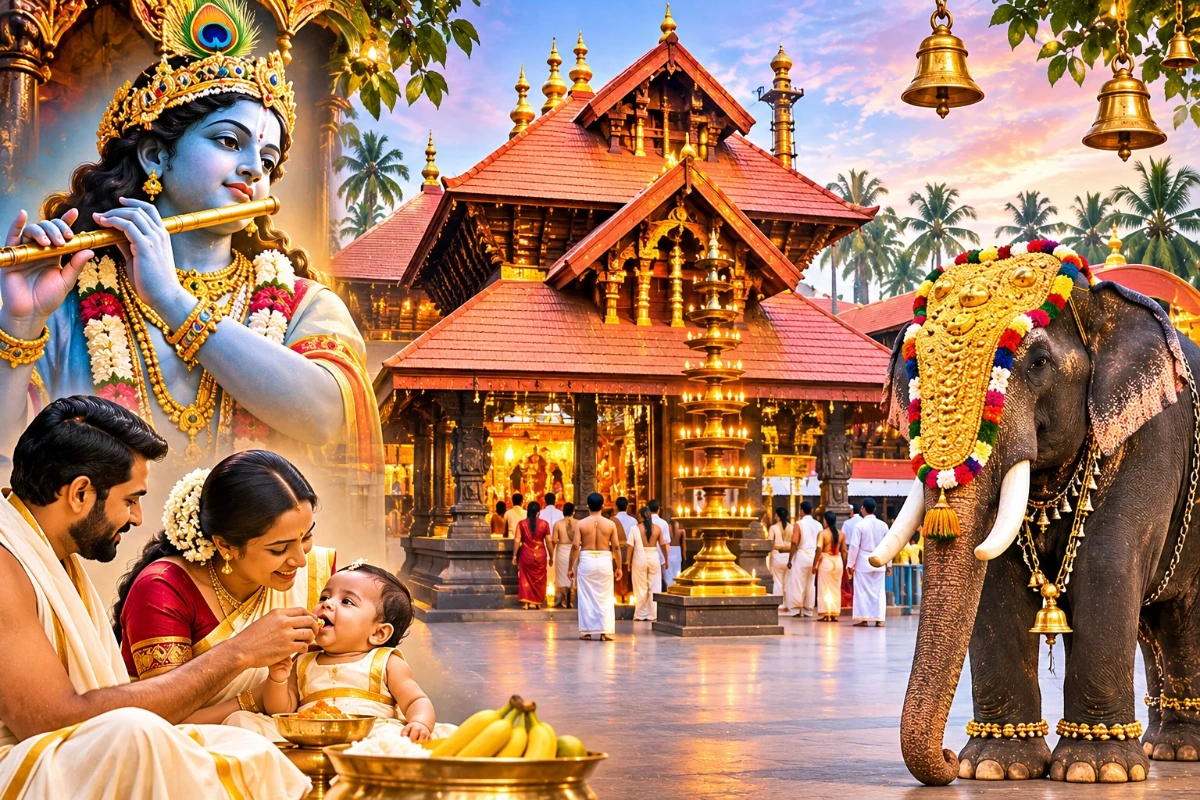
AI Generated Image
The Dwarka of the South: The Sanctuary of Healing and Elephants
Shree Guruvayurappan Temple (Guruvayur, Kerala) is a Krishna pilgrimage destination widely known as the Dwarka of the South. Its appeal brings together sacred tradition, Kerala temple architecture, devotional rituals, and the nearby elephant centre at Punnathur Kotta. Understanding these connections helps you plan a visit that goes beyond sightseeing and respects a living place of worship.
Why Is Guruvayur Called the Dwarka of the South?
Guruvayur is called the Dwarka of the South because temple tradition connects its sacred idol with Krishna’s city of Dwarka. According to legend, Guru, the preceptor of the gods, and Vayu, the god of wind, saved the idol from Dwarka’s submersion and brought it to Kerala. Their installation of the idol established the sacred connection remembered in Guruvayur’s name.
The story describes an image worshipped by Krishna himself. Before Dwarka was engulfed by the sea, Krishna instructed his devotee Uddhava about its preservation. Guru, also known as Brihaspati, and Vayu then carried the divine image to a suitable new home, installing it at the location that became Guruvayur.
For devotees, this is a story of continuity: the sea could engulf a city, but devotion found another home. Readers exploring Dwarka history should understand the account as sacred tradition rather than an independently established chronology. Its importance lies in how it explains the shrine’s identity and its relationship with Krishna.
If you arrived here searching for a Dwarka temple, keep the destinations distinct. This article concerns Guruvayur in Kerala, not the temple destination in Gujarat. ‘South Dwarka’ is a devotional description, not a separate town to enter into your travel booking.
A Kerala Temple With a Distinctive Sacred Setting
Guruvayur’s architecture belongs to Kerala’s temple tradition. Its gateways, enclosed sacred spaces, lamp pillars, and sanctum form a setting designed around worship rather than a visitor route. Kerala Tourism identifies the Nalambalam, the structure surrounding the sanctum, and the Deepastambam, or pillar of lamps, among its notable features.
The sanctum’s walls also contain seventeenth-century murals. These details offer another way to appreciate the temple beyond its founding legend: notice how light, painted surfaces, and the arrangement of buildings contribute to its character. Remember, however, that access and visibility depend on temple rules and the movement of worshippers.
Rather than treating every architectural feature as a photograph to collect, choose a few details to observe carefully. Leave space for people approaching their prayers, and follow staff instructions about where you may stand. A little preparation makes it easier to appreciate the surroundings without interrupting someone else’s pilgrimage.
What Does Healing Mean in Guruvayur’s Tradition?
Healing at Guruvayur is principally a matter of devotional belief, associated with prayer, sacred literature, and stories of divine grace. One important tradition concerns Melpathur Narayana Bhattathiri, whose composition of the Narayaneeyam is linked with his recovery from a painful illness. This spiritual association should not be interpreted as a promise of medical results.
In the traditional account, Bhattathiri offered verses to Guruvayurappan while seeking relief from suffering. As the work progressed, his health improved, and its completion became associated with his recovery. The story helps explain why the temple holds particular meaning for people praying for health and well-being.
For a visitor, ‘healing’ can be approached without making claims about cures. You might set aside time for quiet prayer, read a translation of a devotional passage, or simply acknowledge the hopes that bring other families here. Respect the distinction between a meaningful spiritual practice and a guaranteed physical outcome.
Rituals That Connect Daily Worship With Family Life
Guruvayur’s ceremonies range from elaborate offerings to intimate family milestones. Udayastamana Pooja, a notable dawn-to-dusk worship observance, expresses sustained devotion throughout the day. Kerala Tourism also identifies it among the important rituals associated with Guruvayur Ekadasi.
Annaprasanam, locally known as Choroonu, is the infant rice-feeding ceremony for which the temple is well known. Families bring a child for the ceremonial first feeding of rice, marking an important beginning through prayer. It is a family occasion rather than simply another attraction on a sightseeing schedule.
Another prominent offering is Thulabharam. A devotee is weighed against materials such as bananas, sugar, jaggery, or coconuts, which are then offered to the deity. Understanding what the ceremony represents makes the large balance more than an unusual object to notice.
If your visit includes a ceremony, prepare around the needs of the participants:
- Confirm arrangements directly: Ask the temple administration about current procedures, availability, and anything you must bring.
- Keep the day manageable: Avoid placing an infant’s ceremony between tightly timed journeys or several sightseeing stops.
- Clarify family access: Ask where relatives may accompany you rather than assuming everyone follows the same route.
- Leave room for rest: Build in time for feeding, changing, meals, and a quiet break instead of planning around the ceremony alone.
Punnathur Kotta and the Temple’s Elephants
Punnathur Kotta is the elephant centre associated with Guruvayur Temple. Occupying former palace grounds, it is also called Anakkotta, meaning ‘Elephant Fort’. Its distinctive character comes from this combination of royal heritage and its role in housing elephants connected with temple worship.
The centre has housed over 40 temple elephants: a report published on 13 August 2021 recorded 44. That figure should not be presented as a guaranteed current total. Kerala Tourism describes around 40, while reporting dated 3 June 2025 recorded 36. Treat elephant numbers as a changing detail, not a fixed attraction claim.
Although commonly described as a sanctuary, Punnathur Kotta is a captive elephant facility, not a wild habitat where elephants roam freely. Kerala Tourism describes its work preparing elephants and mahouts for temple-related duties. That distinction matters when deciding what kind of animal encounter you want from a visit.
Responsible observation should guide your behaviour. Keep to permitted areas, maintain your distance, and do not seek opportunities to touch or feed the elephants unless explicitly authorised. Avoid provoking a reaction for a photograph, and help children understand that these are powerful animals, not performers available on demand.
How Should You Plan a Respectful Visit?
Plan a Guruvayur visit around temple eligibility, clothing requirements, worship schedules, and your family’s comfort. Entry is restricted to Hindus, and a specific dress code applies. Checking these requirements before travelling prevents disappointment and helps you decide which parts of the destination are appropriate for your group.
Kerala Tourism’s clothing guidance specifies a plain white or cream dhoti for men, with shirts and trousers not permitted inside. Women may wear saris, skirts with blouses, or churidar. Confirm the current instructions before departure, particularly when packing for children or travelling with people unfamiliar with temple customs.
Use this practical checklist:
- Choose your journey first: Guruvayur has a railway station, while Kochi is an airport gateway. Compare connections before committing to accommodation.
- Verify worship access: Check current opening periods, ritual arrangements, and any special-day changes with the temple administration.
- Allow a flexible temple visit: Avoid booking an onward departure immediately after your intended worship time.
- Check elephant-centre access separately: Do not assume its visitor hours match the temple’s.
- Pack for comfort: Bring suitable clothing, organise essential medicines, and plan breaks for children and older relatives.
Build the Day Around Your Reason for Coming
For a pilgrimage-led visit, give worship the most flexible part of the day. If you are travelling for Annaprasanam, let the child’s needs determine the pace. Consider Punnathur Kotta a separate outing rather than something everyone must complete after visiting the temple.
A useful Dwarka travel guide should make the Kerala–Gujarat distinction clear before discussing transport or accommodation. Likewise, searches for Dwarka attractions and Dwarka tourism should not lead you to combine two different destinations into one itinerary. For Guruvayur, focus instead on the relationship between Krishna devotion, Kerala’s sacred architecture, and the temple elephant tradition.
The strongest takeaway is simple: come informed, leave enough time, and let respect shape the visit. Guruvayur is best approached not as a checklist of spectacles, but as a place where other people’s prayers, family milestones, and responsibilities continue around you.
Also Read: Hooghly River: Explore Kolkata’s Sacred Sites
To read more such news, download Bharat Express news apps