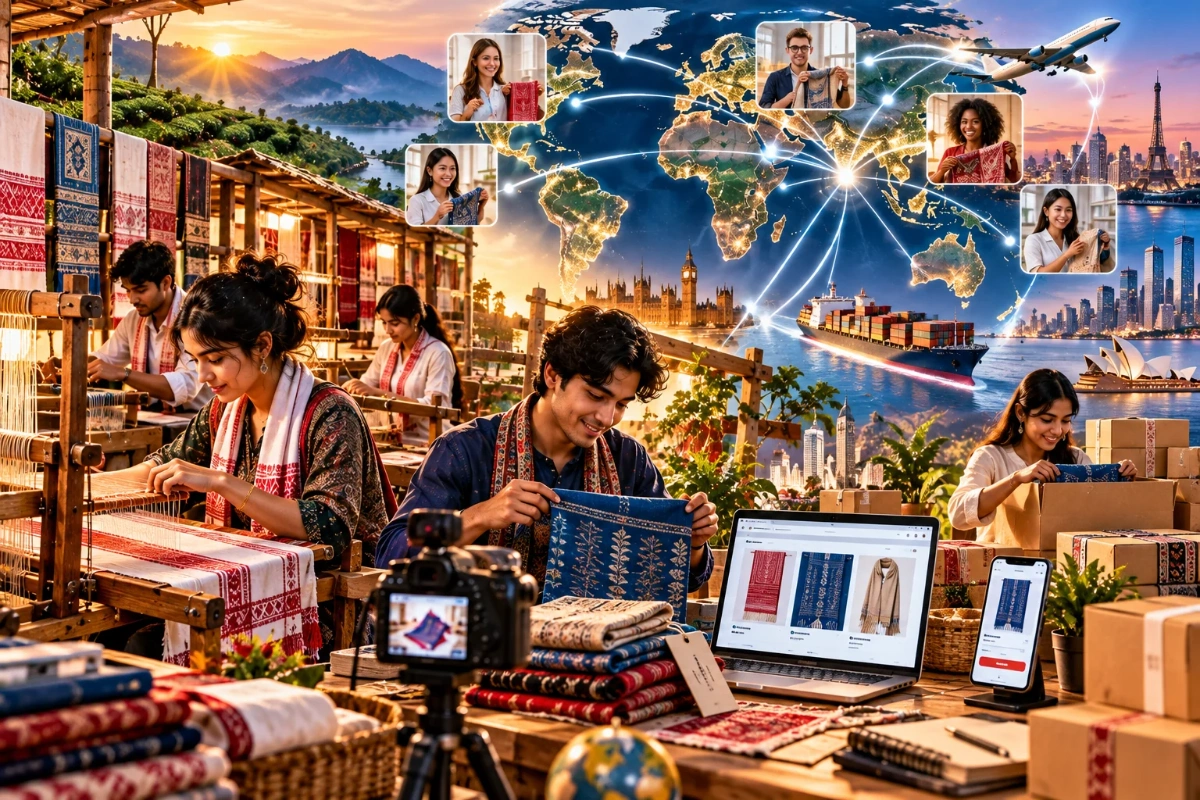
AI Generated Image
The Digital Bunkars: How Gen-Z Weavers Reclaimed Global Supply Chains Through Direct E-Commerce
A new wave of young textile makers is using direct e-commerce, social platforms, and privacy-conscious digital operations to reach buyers without relying entirely on wholesalers, trade fairs, or export intermediaries. The shift is not the result of a single company announcement, but part of a broader market trend: Gen-Z shoppers are increasingly comfortable buying internationally, while artisan sellers are learning to protect their work, data, and customer relationships online. In this context, ‘digital bunkars Gen-Z’ has become a useful shorthand for weavers who combine craft heritage with digital resilience.
What Changed for Gen-Z Weavers?
The clearest change is control. Instead of waiting for intermediaries to decide what sells, young weavers can showcase collections, explain materials, accept custom orders, and build direct relationships with buyers through e-commerce storefronts and social commerce. Recent consumer research supports this opportunity. DHL’s 2025 e-commerce report states that two-thirds of Gen-Z shoppers buy from other countries, often to access products unavailable locally, while Global-e reported in 2026 that younger shoppers rely heavily on social media to discover international brands.
For craft businesses, this matters because handwoven products often compete on the basis of story, provenance, technique, and trust. A product page can showcase the loom, the artisan, the dyeing process, and the delivery terms in one place. When executed well, direct e-commerce transforms a small weaving studio into a global shopfront while giving buyers clearer information than they might receive from a reseller’s listing.
Direct Sales Are Reshaping the Supply Chain Conversation
The direct-to-consumer model does not eliminate the supply chain; it changes who manages it. Young weavers who sell online still need packaging, payment systems, shipping partners, returns policies, inventory tracking, and customer service. What they gain is greater visibility into demand and more control over pricing, presentation, and production schedules.
That visibility is particularly important as shoppers ask more questions about where products come from. KPMG’s research on seamless commerce in Asia-Pacific notes that younger consumers are influenced by social commerce, digital payments, and cross-border shopping habits. Industry commentary also increasingly links Gen-Z expectations to transparency, speed, and ethical supply-chain practices.
The practical result is a different kind of supply-chain power. A weaver does not need to become a mass manufacturer to benefit from global demand. A small studio can test a limited production run, sell through a website or marketplace, gather feedback, and adjust its next collection before producing too much stock. This represents a quieter form of supply-chain reclamation, but it can be significant for makers who previously had limited access to end customers.
The New Risks Are Digital, Not Just Logistical
As more craft businesses move online, their vulnerabilities change. A delayed parcel remains a problem, but so do a hacked shop account, a copied product photograph, a fake social media profile, a payment dispute, or a phishing message impersonating a buyer or platform. This is why the ‘digital bunkar’ concept is gaining relevance: it treats online safety as part of business infrastructure rather than an afterthought.
For Gen-Z weavers, digital protection now sits alongside design and fulfilment. Online privacy practices help safeguard customer records. Strong passwords and two-factor authentication protect storefronts. Careful image watermarking, platform reporting tools, and consistent brand accounts can make copying and impersonation easier to detect. These basic cybersecurity measures can protect revenue, reputation, and creative ownership.
Key safeguards gaining importance include:
- Account security: Use unique passwords, enable two-factor authentication, and restrict access to store dashboards, payment accounts, and social media channels.
- Customer data management: Collect only the information needed to fulfil orders, store it securely, and avoid transferring buyer details to informal spreadsheets or personal messaging apps.
- Proof of authenticity: Use consistent product photography, maker notes, care labels, and order documentation to help buyers distinguish original work from copied listings.
- Safer communications: Treat urgent payment changes, bulk-order requests, and suspicious links as potential fraud until verified through the platform or an official channel.
- Operational backups: Keep offline copies of product descriptions, customer service templates, inventory records, and shipping documents in case an account is locked or compromised.
Buyers Are Rewarding Transparency and Trust
The growth of cross-border shopping does not mean buyers will purchase from every unfamiliar seller. Global-e’s survey found that shoppers abandon international shopping carts for reasons such as high shipping costs, long delivery times, unclear returns policies, and a lack of visibility into the final cost. For artisan sellers, this makes clear communication as important as attractive product photography.
A strong direct-commerce page should answer practical questions before checkout: where the item ships from, how long made-to-order products may take, what customs duties or fees may apply, how returns are handled, and how the textile should be cared for. These details support digital safety for buyers by reducing uncertainty and demonstrating accountability. They also protect makers by establishing expectations before a complaint or chargeback arises.
Sustainability is another consideration, but claims must be specific. DHL’s report indicates that Gen-Z shoppers pay close attention to sustainability when shopping online, including the environmental impact of deliveries. Weavers do not need exaggerated claims; clear information about materials, production volumes, repairability, packaging, and shipping choices is generally more credible than vague environmental messaging.
What Happens Next?
The next stage will likely focus less on ‘going viral’ and more on building durable digital operations. Social platforms may introduce buyers to a weaving studio, but long-term value comes from owned storefronts, repeat-customer lists, secure payment systems, and reliable fulfilment processes. This is where digital resilience becomes a business advantage.
Barriers remain. International shipping can be expensive. Platform fees can reduce profit margins. Algorithms can make sales unpredictable. Small sellers may also lack access to professional cybersecurity support even as their online exposure grows. These pressures mean the most successful Gen-Z weavers will not necessarily be the best storytellers alone; they will be those who combine craft skills with disciplined online security and clear supply-chain communication.
The trend is already changing how handmade textiles reach global markets. Direct e-commerce gives young weavers a route around traditional gatekeepers, while stronger digital protection helps them retain control as their customer base grows. The loom remains at the centre, but the online storefront, password manager, shipping dashboard, and privacy policy are now part of the same value chain.
Also Read: Drone Medical Delivery Revolutionises NE India
To read more such news, download Bharat Express news apps