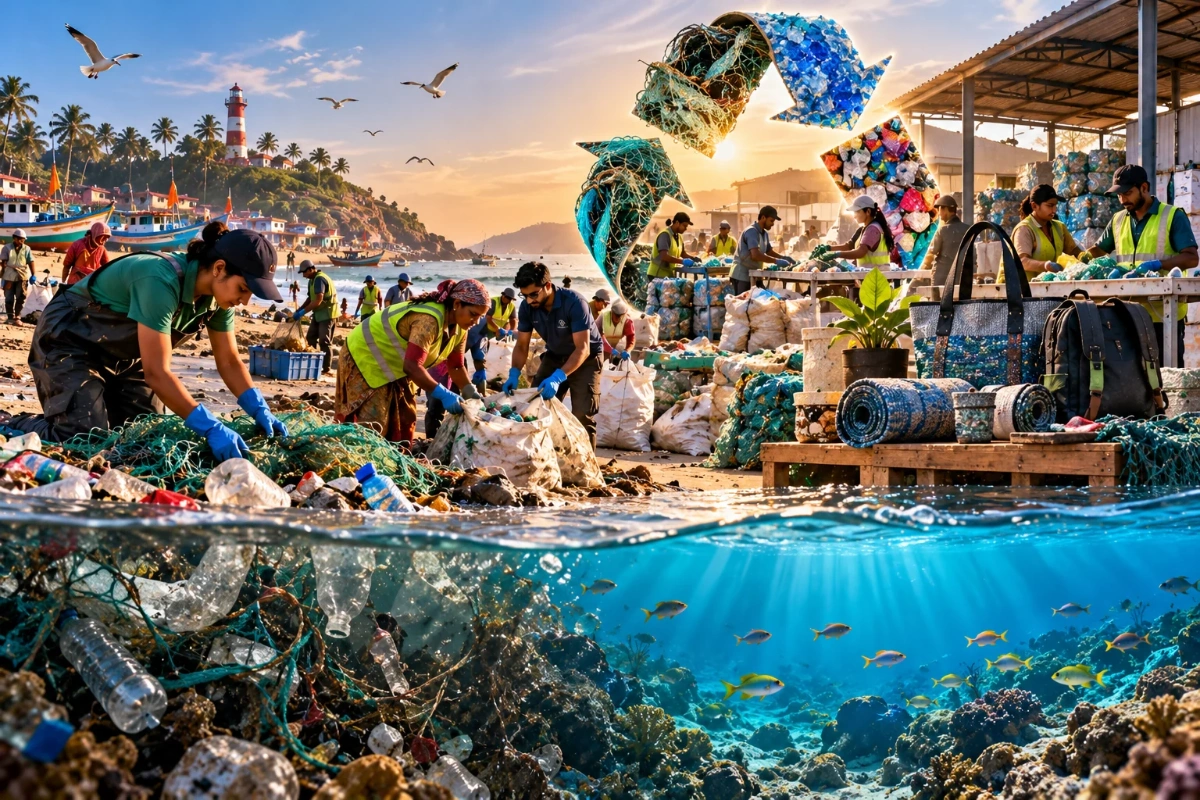
AI Generated Image
From Waste-Pickers to Circular Economy Founders: The Youth Cleaning India’s Coastal Belts
India’s coastal belts support fishing livelihoods, tourism, biodiversity and dense urban life, but they also receive a steady flow of plastic, packaging, discarded nets and mixed waste. A new wave of young Indians is approaching this challenge not only through clean-ups, but also through eco-friendly practices that connect waste-pickers, local communities, recycling networks and circular economy founders. Their work shows how environmental sustainability can become practical, local and income-generating.
What Is Changing Along India’s Coastal Belts?
The shift is from one-time beach cleaning to systems that keep waste moving away from landfills and oceans. Youth groups, student volunteers, entrepreneurs and informal waste workers are increasingly treating coastal waste as a resource that can be sorted, reused, repaired, recycled or redesigned into new products. This is where sustainable development becomes visible: cleaner shores, safer work, better segregation and greater local participation.
In many places, waste-pickers already understand the value of materials better than anyone else. The difference now is that young founders and community organisers are building bridges between this knowledge and the formal waste management India needs: collection points, sorting drives, awareness campaigns, partnerships with recyclers and products made from recovered materials.
The Journey from Collection to Circular Value
A circular approach does not end when a beach looks clean. It asks what happens before waste reaches the coast, who handles it and where it goes next. In conversations about India’s circular economy, this matters because unmanaged waste is both an environmental problem and a design failure.
A practical coastal circular model often includes:
- Source Awareness: Teaching households, vendors, tourists and fish markets to separate wet, dry and hazardous waste.
- Respectful Collection: Involving waste-pickers as skilled partners, not invisible labour.
- Material Sorting: Separating plastic bottles, multilayer packaging, glass, metal, cloth and fishing gear.
- Reuse and Recycling Links: Connecting sorted waste to recyclers, upcyclers, repairers or producer take-back systems.
- Product Innovation: Turning selected recovered materials into products with a useful lifespan, without pretending that every waste stream has equal value.
This chain is what makes the circular economy in India more than a slogan. It depends on logistics, trust, fair payment and consistent behaviour.
Why Does Youth Leadership Matter?
Youth leadership matters because coastal waste is a long-term problem that requires energy, experimentation and public participation. Young organisers are often comfortable combining social media awareness, volunteer mobilisation, local storytelling and entrepreneurship. They can make sustainability feel less like a lecture and more like a shared civic habit.
Their role is also cultural. When students, young fishers, designers and founders work alongside waste-pickers, the public begins to see waste work differently. It becomes part of a sustainable India: not charity, but infrastructure for cleaner cities, healthier beaches and more responsible consumption.
Better Practices for Coastal Waste Initiatives
Not every clean-up creates lasting change. The most useful efforts are planned, measured and connected to the next step in the waste chain.
A stronger coastal initiative should:
- Map the main waste sources before organising an event.
- Involve local waste-pickers, recyclers, resident groups and municipal teams from the outset.
- Provide gloves, sacks, drinking water and safe-handling guidance.
- Sort waste during collection instead of mixing everything together for later sorting.
- Track broad material categories without inventing impact claims.
- Share simple waste-prevention messages with shops, tourists and households.
- Build repeatable systems, not just photo-friendly moments.
Building a Cleaner Coastal Future
India’s coastal youth movement shows that environmental sustainability works best when it is practical and inclusive. Waste-pickers bring material knowledge, young founders bring new models, and communities bring the daily habits that determine whether coastlines stay clean.
The future of waste management India needs is not just about bigger bins or more campaigns. It is about building a circular system in which people, materials and responsibility remain connected. That is how coastal clean-ups can grow into lasting sustainable development.
Also Read: Drones In Remote Medical Logistics: Himalayas
To read more such news, download Bharat Express news apps