



AI Generated Image
Drones Over the Himalayas: How Young Pilots Automated Medical Logistics in Remote Mountain Belts
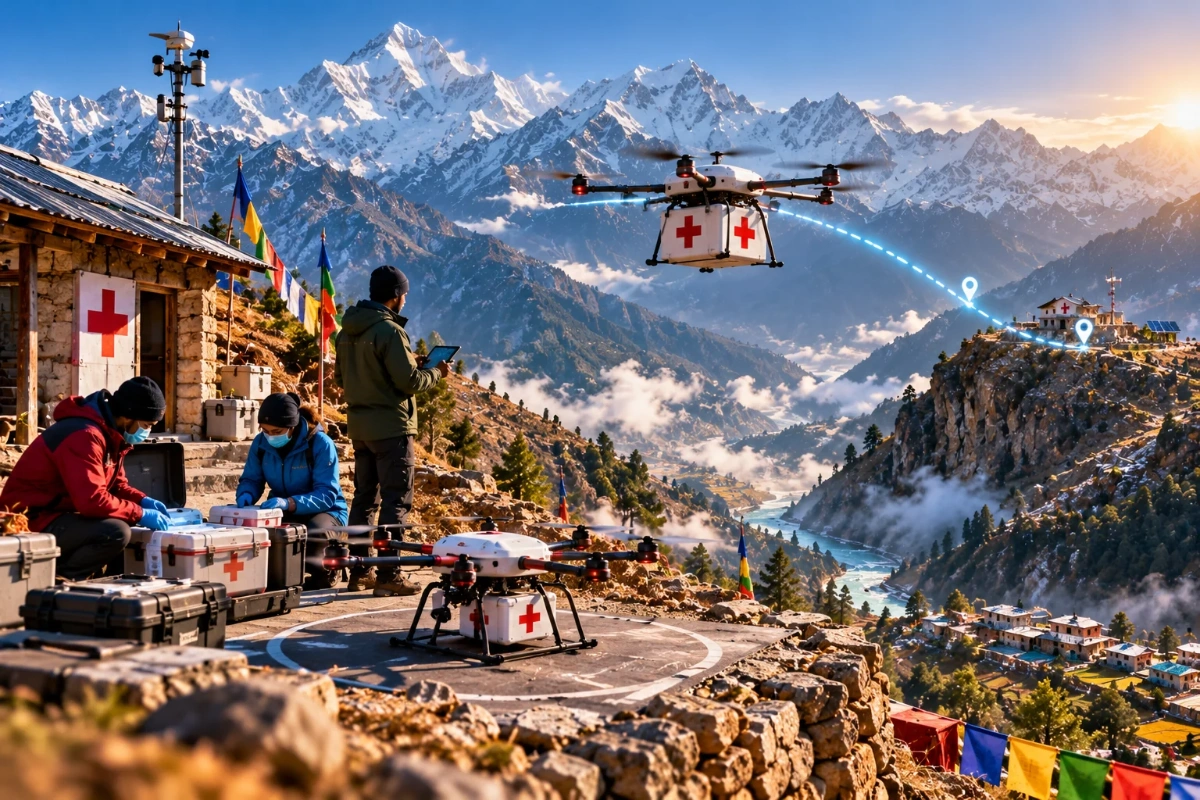
Remote Himalayan healthcare networks are exploring a practical new route for medical supplies: the sky. Drone delivery initiatives in India’s mountain districts demonstrate how trained pilots, flight planners and public health teams can transport medicines, samples and blood products across terrain where snow, landslides, traffic and distance can delay road transport. These developments are giving fresh momentum to the use of drones in remote medical logistics and broadening the conversation around drones in healthcare.
What Changed for Mountain Healthcare Teams?
The key change is that drone operations are moving beyond isolated demonstrations towards structured public health workflows. India’s ICMR i-DRONE initiative reports medical supply flights in remote regions, including a 40-kilometre flight from District Hospital Mokokchung to District Hospital Tuensang in Nagaland, carrying 3.5 kg of supplies. Separate feasibility work in Lahaul and Spiti, Himachal Pradesh, examined drone-based delivery in Keylong, a high-altitude Himalayan setting where winter snowfall can restrict access to healthcare facilities.
For young pilots and technical field teams, the work involves far more than steering a drone. It requires planning safe routes, preparing payloads, coordinating with local health staff, checking weather conditions and switching between manual control and automated flight paths. A Himalayan feasibility study noted the use of both manual remote control and autopilot functions based on KML route files, underscoring how medical drone flights depend on disciplined pre-flight planning rather than ad hoc launches.
From Emergency Runs to Repeatable Systems
The strongest signal from recent projects is the emphasis on operational discipline. Drones are being tested not only for high-profile rescue missions, but also for the routine movement of medical supplies between hospitals, primary health centres and remote communities. Meghalaya’s drone delivery network, for example, was launched to serve hard-to-reach facilities within a 50-kilometre radius of a drone station and support both routine and emergency medical deliveries.
For healthcare administrators, this matters because the value of drone delivery systems lies in their repeatability. A single successful flight demonstrates feasibility; reliable schedules, trained staff, proper documentation and integration with public health inventory systems create lasting service capacity. In mountain regions, even a relatively short route can prove valuable when roads are blocked or diagnostic samples need to reach a laboratory quickly.
Key operational elements shaping Himalayan medical drone programmes include:
- Route Automation: Pilots pre-map flight corridors, altitude profiles and landing points before take-off.
- Payload Management: Teams match the drone type to the medical item, its weight, packaging requirements and urgency.
- Local Coordination: Health departments, administrators, police and communities help secure permissions and organise landing arrangements.
- Weather Assessment: Flights must account for wind, cold, visibility, battery performance and sudden changes in mountain weather.
- Clinical Integration: Drones work best when connected to existing referral, laboratory, pharmacy and emergency systems.
The Limits Are Still Real
The Himalayan environment remains unforgiving. Research from north-east India has emphasised the need for skilled pilots and technical personnel to handle waypoint plotting, flight planning, maintenance, take-off and landing, particularly in difficult terrain. The same body of research identifies altitude, battery requirements, permissions and local coordination as practical constraints that programmes must address before scaling up.
That makes the next phase less glamorous but more important: training, standard operating procedures, maintenance capacity and regulatory clarity. If these elements mature, drones in healthcare could become a dependable component of mountain logistics rather than a temporary workaround.
The lesson from the Himalayas is clear: automation can shorten the route, but careful human preparation is what makes the flight useful.
Also Read: Hydro-Geologists Boost Aquifer Revival In Bundelkhand
To read more such news, download Bharat Express news apps