



AI Generated Image
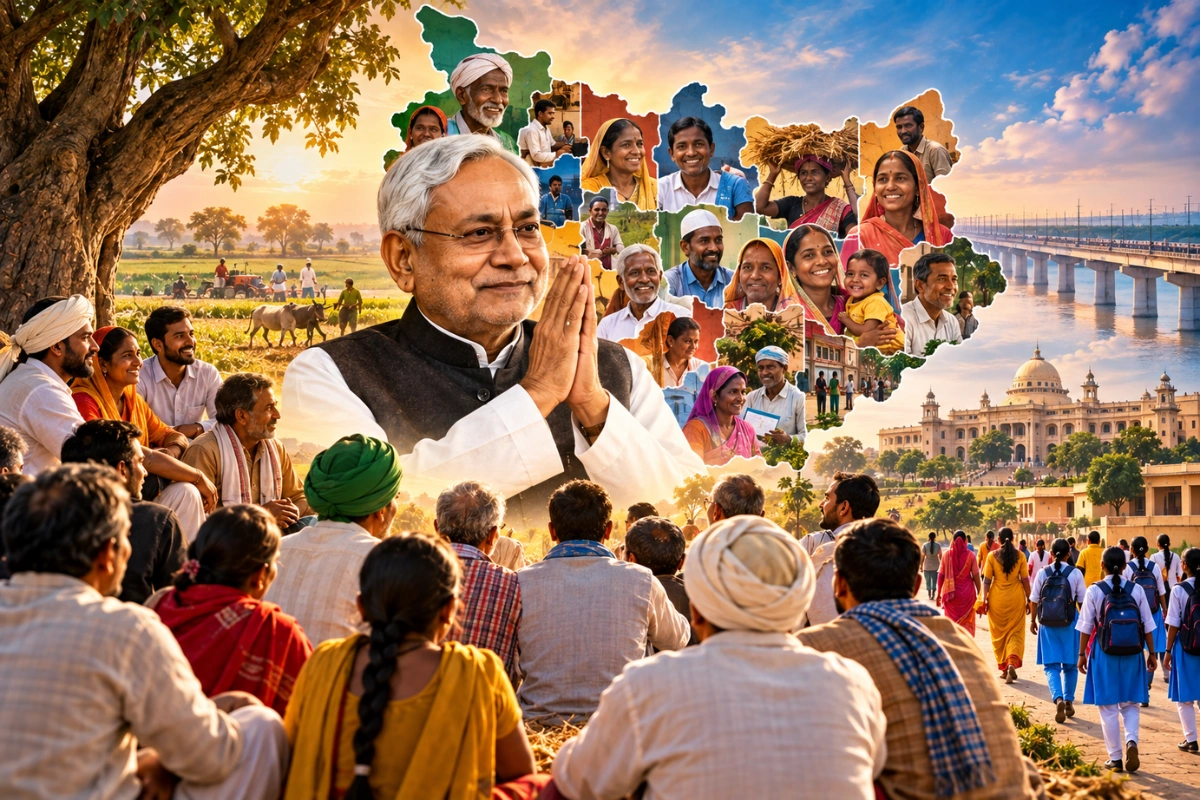
Nitish Kumar’s durability in Bihar politics is best understood through the voters who were long treated as fragments rather than a decisive bloc: Extremely Backward Classes, Mahadalits, non-dominant OBCs, and women cutting across caste lines. His strategy turned caste-based politics from a contest between a few loud identities into a wider architecture of recognition, welfare, reservation, and local representation.
How Did ‘Unknown Castes’ Become a Political Fortress?
They became powerful when Nitish Kumar gave scattered, locally influential but statewide underrepresented communities a shared political address. Bihar’s caste survey showed EBCs at 36.01% and OBCs plus EBCs at more than 63% of the population, making these groups numerically central even if many individual castes remained politically less visible.
The key was not only arithmetic. Nitish, whose own Kurmi caste is a small share of Bihar’s population, needed a coalition larger than a single caste identity. Analysts have noted that he built support among EBCs, non-Yadav OBCs, and Mahadalits by creating categories, schemes, and representation pathways that made smaller communities feel seen.
The Shift From Dominant Caste Blocs to Micro-Coalitions
Older Bihar caste politics often revolved around broad binaries: backward versus forward, Yadav versus non-Yadav, upper caste versus lower caste. Nitish’s model worked differently. It divided the political field into smaller, neglected constituencies and then stitched them into a governing majority.
This approach mattered because many castes lacked the numbers to bargain alone. By naming EBCs and Mahadalits as political categories, his politics offered recognition without asking each caste to become dominant by itself.
The Building Blocks of Nitish Kumar’s Social Coalition
- EBC Consolidation: Reservation and representation in panchayats and local bodies helped smaller backward communities enter formal politics.
- Mahadalit Outreach: The Mahadalit category reframed the most marginalised Dalit groups as a distinct constituency requiring targeted attention.
- Women as a Cross-Caste Vote: Policies such as women’s reservation in panchayats widened his base beyond caste loyalties.
- Non-Yadav OBC Appeal: By focusing on communities outside the strongest OBC blocs, Nitish reduced dependence on any single dominant caste.
- Governance Language: Development, law and order, and welfare allowed caste identity to be paired with administrative credibility.
Indian Express has described EBC support, Mahadalit politics, and women-focused measures as central pillars of Nitish Kumar’s success in Bihar.
Why Caste-Based Politics Still Depends on Delivery
Caste identity may open the door, but it does not keep a coalition together forever. Smaller communities often judge politics through practical access: roads, schools, scholarships, local posts, welfare delivery, police responsiveness, and dignity in public institutions.
That is why Nitish’s formula was more than symbolic. If a community sees its members elected in local bodies, included in beneficiary lists, or spoken of as a political category, loyalty becomes more durable. The ‘silent majority’ becomes a fortress when recognition and delivery reinforce each other.
What This Means for Bihar’s Future Politics
Nitish Kumar’s model changed the grammar of Bihar politics. Any party competing seriously in the state now has to understand micro-caste arithmetic, not just headline caste blocs. The caste survey strengthened this trend by putting numbers behind communities that had long shaped elections quietly.
For voters, the lesson is equally important: representation is not only about who speaks the loudest. In Bihar, the quieter castes became decisive when a leader translated their scattered numbers into organised political value.
Also Read: Sugarcane, Seats And Power: Why Western UP’s Politics Is Unlike Anywhere Else
To read more such news, download Bharat Express news apps