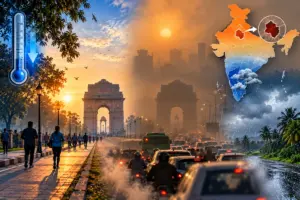




Delhi’s air quality plunged into the ‘severe’ category on Wednesday, with the Air Quality Index (AQI) registering at 408, as dense fog compounded pollution across the national capital.
Several areas recorded extremely poor air conditions, sharply reducing visibility and raising health and travel concerns.
Monitoring stations in central and south Delhi recorded ‘very poor’ air quality levels.
AQI readings stood at 370 at Mandi House and India Gate, 340 at Mathura Road and Sarojini Nagar, and 357 at both Rashtrapati Bhawan and ITO.
Adjoining areas and outer parts of the city experienced even more hazardous conditions, with AQI levels entering the severe range.
Localities such as Noida (418), Karol Bagh (408), Rajouri Garden (406), Mundka (472), Patel Nagar (410), Chanakyapuri (405), Vasant Kunj (402), Saket (430), and Vikaspuri (472) reported dangerously high pollution.
Lajpat Nagar reached the AQI upper limit of 500, while IGI Airport recorded an alarming 512, signalling a serious health hazard for residents and travellers.
Air quality forecasters have warned that pollution levels across the National Capital Region (NCR) are expected to worsen as the year ends.
Under the AQI classification, readings above 400 fall in the ‘severe’ category, posing serious health risks, especially for children, elderly citizens, and those with respiratory conditions.
The India Meteorological Department (IMD) has forecast persistent dense fog throughout Wednesday and advised commuters to exercise caution on the roads.
Flights Affected Due to Poor Visibility
Visibility issues also affected air travel, with IndiGo and Air India issuing advisories about possible delays and advance cancellations of flights at Delhi and other northern airports.
Airlines are adjusting operations to minimise disruption amid the fog and poor air quality.
North India continues to experience the effects of an active Western Disturbance.
The Meteorological Department issued a yellow alert for dense fog and light rain in parts of Punjab and Chandigarh, with rainfall expected to persist until January 1.
Several locations in the region reported near-zero visibility, creating hazardous conditions on roads and raising public health concerns.
Authorities have urged residents to limit outdoor activities, wear masks, and closely follow health advisories as pollution and fog create a challenging environment for travel and daily life.
Also Read: New Year Deliveries At Risk As Gig Workers Call Nationwide Strike On December 31
To read more such news, download Bharat Express news apps