



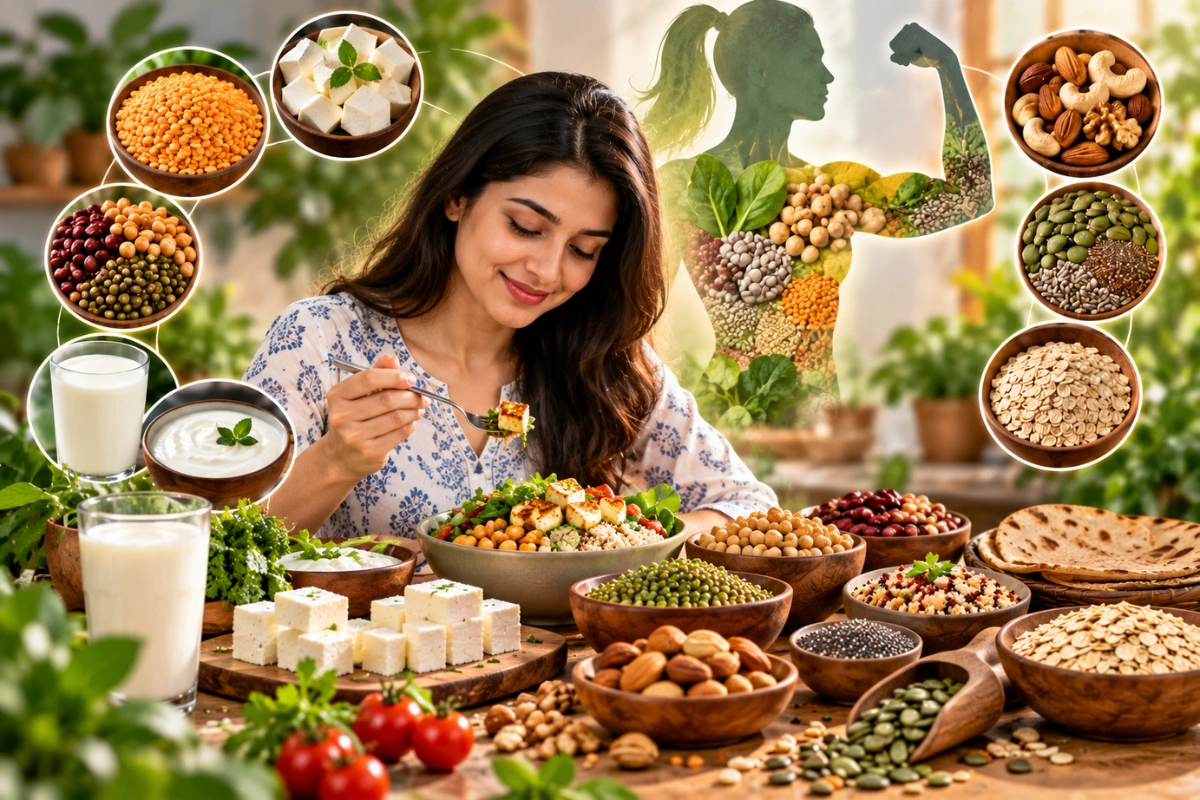
AI Generated Image
Protein plays an essential role in maintaining muscles, repairing tissues and supporting several bodily functions.
While many people associate protein primarily with meat, fish and eggs, a well-planned Indian vegetarian diet can provide adequate amounts through dairy products, soy foods, nuts, seeds and other ingredients.
The key is to include a variety of protein-rich foods throughout the day rather than relying on a single source.
Dairy products are among the convenient protein options for vegetarians.
Milk, yoghurt and paneer provide protein and other nutrients. Add paneer to curries or sandwiches, and yoghurt to meals and snacks.
Tofu and soy milk offer more protein options. Use tofu in curries, stir-fries or salads.
Almonds, peanuts, pumpkin seeds and chia seeds add protein to snacks and meals. Watch portions, as they contain plenty of calories.
Oats, quinoa and whole-wheat roti provide protein, carbohydrates and fibre. Combine different foods to maintain a balanced diet.
Pulses, lentils and beans are common vegetarian protein sources, but they may not suit everyone.
People who experience allergies or digestive discomfort should avoid foods that trigger symptoms and seek advice from a qualified healthcare professional about suitable alternatives.
Planning meals can make meeting protein needs easier. A breakfast containing yoghurt or milk, a lunch with paneer or tofu, and a snack of nuts or seeds can help distribute protein across the day. Individual requirements vary according to age, body weight, activity levels and health conditions.
A balanced vegetarian diet does not need to depend on expensive supplements.
Choosing suitable protein sources, eating a variety of foods and maintaining adequate overall nutrition can help support daily needs.
Anyone struggling to meet their requirements can consult a registered dietitian for personalised guidance.
Also Read: Honey And Milk For Skin: Have You Tried These 6 Face Packs?
To read more such news, download Bharat Express news apps