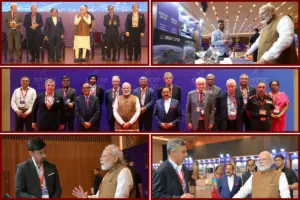




Ahead of the presentation of the Union Budget 2026–27, Prime Minister Narendra Modi will meet leading economists and subject-matter experts on Tuesday to seek their views and recommendations on the country’s economic priorities.
The meeting forms part of the government’s ongoing consultation process ahead of crucial policy decisions to be reflected in the upcoming Budget.
According to officials, the interaction will provide a platform for experts to share their assessments of India’s current economic conditions, emerging challenges and opportunities for sustainable growth.
Senior officials from the government’s policy think tank are also expected to attend, along with prominent economists and sectoral specialists. These include NITI Aayog Vice Chairman Suman Bery, NITI Aayog Chief Executive Officer BVR Subrahmanyam, and other members of the institution.
The government aims to gather a wide range of perspectives on macroeconomic stability, fiscal consolidation, investment trends, and employment generation, particularly in a challenging global environment.
Budget Timeline and Global Backdrop
Finance Minister Nirmala Sitharaman is likely to present the Union Budget 2026–27 on February 1.
The government is preparing the Budget against the backdrop of geopolitical uncertainties, global economic slowdown concerns, and the impact of proposed US tariffs, which could influence trade and investment flows.
As part of the groundwork, the Finance Minister has already held several rounds of discussions with economists, trade unions and labour organisations.
These interactions are part of the Finance Ministry’s annual stakeholder engagement process, which seeks to incorporate feedback from diverse sections of the economy.
In recent days, the government has also conducted pre-Budget consultations with representatives from key sectors such as banking, hospitality, information technology, and startups.
Officials said that detailed discussions have taken place on strategies to accelerate economic growth, boost private investment and create more jobs and income opportunities.
The government has placed special emphasis on strengthening the agriculture, MSME, and manufacturing sectors, which it sees as critical drivers of employment and inclusive growth.
CII Proposes Fiscal Roadmap
Apex industry body Confederation of Indian Industry (CII) has proposed a four-pronged fiscal strategy ahead of the Union Budget 2026–27.
The recommendations focus on debt stability, fiscal transparency, revenue mobilisation and expenditure efficiency.
According to a CII statement, a key element of its roadmap is adherence to the government’s debt glide path, which targets bringing public debt to 50 per cent of GDP, with a margin of plus or minus one per cent, by the financial year 2030–31.
CII further suggested that maintaining Central government debt at around 54.5 per cent of GDP and keeping the fiscal deficit at 4.2 per cent of GDP in FY27 would help preserve macroeconomic credibility while continuing to support economic growth.
Prime Minister Modi’s meeting with top economists is likely to shape the policy direction of the Union Budget 2026–27.
The government aims to balance fiscal prudence with growth-oriented measures as it navigates domestic priorities and global economic headwinds.
Also Read: Amit Shah Asks BJP Leaders In Bengal To Keep Positive Tone Ahead Of 2026 Polls
To read more such news, download Bharat Express news apps