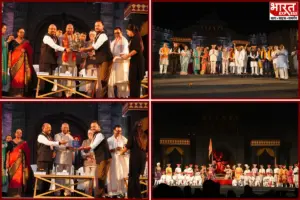
Prime Minister Narendra Modi and CP Radhakrishnan on Thursday paid homage to Mahatma Gandhi and the freedom fighters who participated in the historic Dandi Satyagraha.
Taking to X, PM Modi posted, “On this day in 1930, the Dandi March began. Respectful remembrance to all the distinguished personalities who took part in it.”
सन् 1930 में आज ही के दिन दांडी मार्च की शुरुआत हुई थी। इसमें शामिल सभी विभूतियों का श्रद्धापूर्वक स्मरण!
सत्यमेव जयति नानृतं सत्येन पन्था विततो देवयानः।
येनाक्रमन्त्यृषयो ह्याप्तकामा यत्र तत्सत्यस्य परमं निधानम्॥ pic.twitter.com/8xIDgxvx9y
— Narendra Modi (@narendramodi) March 12, 2026
Vice President Radhakrishnan also shared a message on the platform, describing the movement as a turning point in India’s independence struggle.
Taking to X, he posted, “The historic Dandi Satyagraha, launched on this day in 1930 under the leadership of Mahatma Gandhiji, marked a defining moment in India’s freedom movement, inspiring a nationwide spirit of self-reliance through the ideals of Satya and Ahimsa.”
“I pay homage to Bapu and all the brave freedom fighters who took part in this historic march. As we build an Atmanirbhar Bharat and strive towards the vision of Viksit Bharat, the spirit of self-reliance it inspired continues to guide our nation’s journey,” the post further read.
The historic Dandi Satyagraha, launched on this day in 1930 under the leadership of Mahatma Gandhiji, marked a defining moment in India’s freedom movement, inspiring a nationwide spirit of self-reliance through the ideals of Satya and Ahimsa.
I pay homage to Bapu and all the… pic.twitter.com/yCCM45Vy2p
— Vice-President of India (@VPIndia) March 12, 2026
What Was the Dandi March?
The Salt March, also known as the Salt Satyagraha, Dandi March and the Dandi Satyagraha, was a major act of nonviolent civil disobedience in colonial India led by Mahatma Gandhi.
On March 12, 1930, Gandhi began the march from Sabarmati Ashram to the coastal village of Dandi to protest against the steep tax imposed by the British on salt.
The 24-day march covered around 390 kilometres and was conducted in a non-violent manner. It later sparked the wider Civil Disobedience Movement across the country.
At the time, the British administration had banned Indians from collecting or selling salt and forced them to purchase it from British-controlled sources, which held a monopoly over its production and sale while also imposing a heavy tax.
Upon reaching the seashore at Dandi, Gandhi broke the law by producing salt, symbolically challenging the British monopoly.
The march began with around 80 participants but gradually expanded as more people joined along the route.
By the time it progressed, the movement had grown into a powerful force of over 50,000 supporters.
The Salt March soon turned into a mass civil disobedience campaign, with millions across India defying the salt laws by making or purchasing illegal salt.
The movement gained widespread national and international attention, drawing significant global media coverage and highlighting the Indian independence struggle against British rule.
Also Read: Man Arrested After Firing Incident At Jammu Event Attended By Farooq Abdullah, Surinder Choudhary
To read more such news, download Bharat Express news apps