



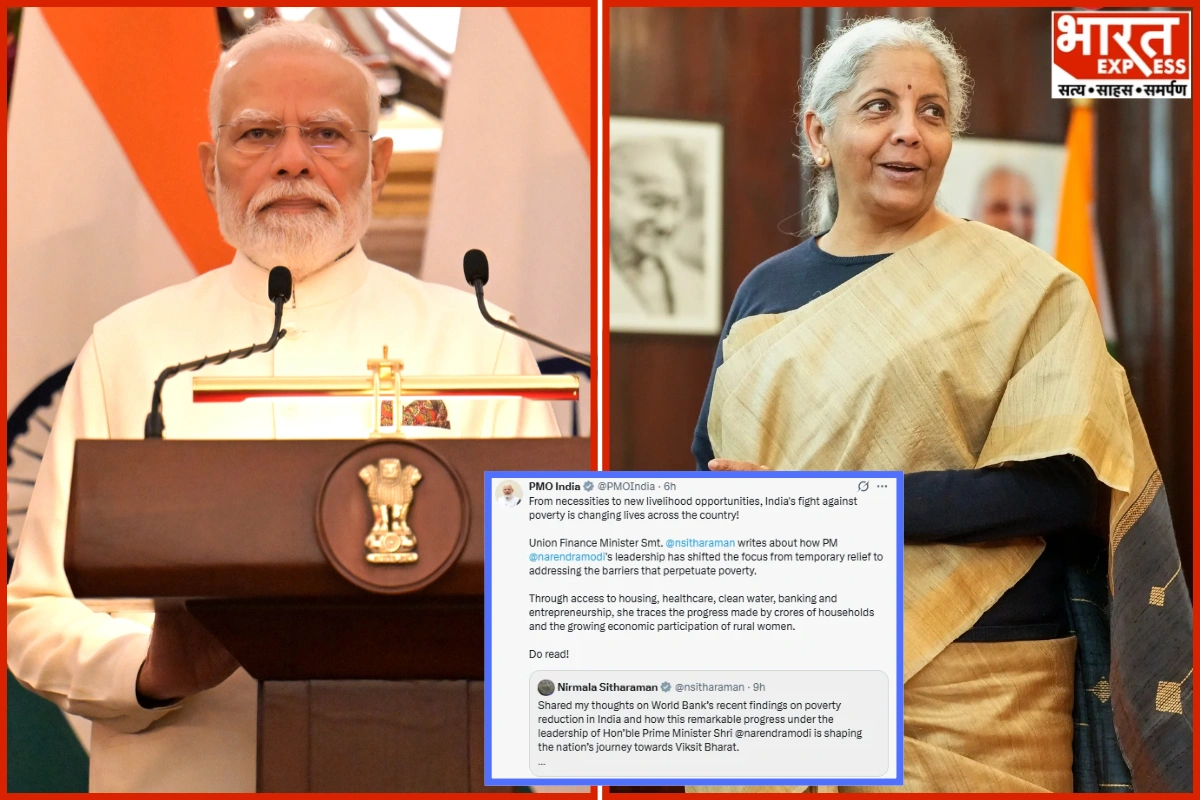
Prime Minister Narendra Modi on Monday highlighted India’s progress in tackling poverty and expanding livelihood opportunities, sharing an article by Union Finance Minister Nirmala Sitharaman on the impact of government initiatives across the country.
In his post on X, the Prime Minister said India’s efforts to address poverty were transforming lives by moving beyond basic necessities towards sustainable livelihood opportunities.
PM Modi highlighted improvements in access to housing, healthcare, clean drinking water, banking and entrepreneurship, along with the increasing economic participation of rural women. He further noted Sitharaman’s assessment that his government’s approach had shifted from temporary relief measures towards addressing the underlying barriers that perpetuate poverty.
From necessities to new livelihood opportunities, India’s fight against poverty is changing lives across the country!
Union Finance Minister Smt. @nsitharaman writes about how PM @narendramodi’s leadership has shifted the focus from temporary relief to addressing the barriers that perpetuate poverty.
Through access to housing, healthcare, clean water, banking and entrepreneurship, she traces the progress made by crores of households and the growing economic participation of rural women.
Do read!
https://t.co/2vENShs72L
— PMO India (@PMOIndia) November 23, 2026
In her LinkedIn article titled ‘The Decade India Turned the Tide on Poverty’, Sitharaman cited the World Bank’s October 2026 Poverty and Equity Brief, stating that nearly 50 crore Indians moved above poverty thresholds between 2011 and 2023.
According to the figures cited by the Finance Minister, the proportion of Indians living below the $4.20 daily poverty line declined from 57.7 per cent to 16.1 per cent.
Extreme poverty, measured at $3 per day, fell from 27.1 per cent to 2.6 per cent.
Sitharaman emphasised that poverty extends beyond income deprivation, with inadequate housing, unsafe drinking water, poor sanitation and limited healthcare leaving families vulnerable.
The Finance Minister credited welfare schemes, Jan Dhan accounts, Direct Benefit Transfers (DBT) and women’s self-help groups for supporting the progress. She further highlighted the Lakhpati Didi initiative and her interaction with beneficiaries in Kiphire, Nagaland.
Concluding her assessment, Sitharaman stressed the need to create sustainable livelihoods through employment, education, skill development and digital opportunities to advance the Viksit Bharat vision.
Also Read: PM Modi Announces NPR 24,000 Crore Development Package For Nepal’s Reconstruction
To read more such news, download Bharat Express news apps