The Union government on Thursday formally presented and opened discussions on the Constitution (One Hundred and Thirty-First Amendment) Bill, 2026, along with the Delimitation Bill in the Lok Sabha, while Opposition members insisted on a recorded vote before its introduction.
Among the 333 MPs present, 207 backed the introduction of the Bill, whereas 126 voted against it. This division has intensified the political contest during the special parliamentary sitting.
To secure passage after deliberations, the Bill must obtain a two-thirds majority of members present and voting, as mandated under Article 368 of the Indian Constitution. After parliamentary clearance, the legislation will require Presidential assent to come into effect.
The Lok Sabha currently has 540 members, with three vacancies. If all MPs participate in the final vote, at least 360 votes will be needed for approval.
The National Democratic Alliance (NDA) commands roughly 292 seats, while the Opposition INDIA bloc and its partners collectively hold about 229 seats, along with a small number of independents.
Within the NDA, the Bharatiya Janata Party remains the dominant force with 240 MPs, supported by the Telugu Desam Party and the Janata Dal (United).
Key Opposition parties include the Indian National Congress, Samajwadi Party, All India Trinamool Congress, and the Dravida Munnetra Kazhagam.
The proposed amendment aims to expand the strength of the Lok Sabha. It also seeks to enable the implementation of the 33 per cent reservation for women.
The government passed the measure earlier. It has yet to implement it due to the need for a fresh delimitation exercise.
The Delimitation Bill proposes to redraw constituency boundaries based on updated population figures.
Opposition leaders have opposed the move. They argued that it could disrupt the federal balance and favour states with higher population growth.
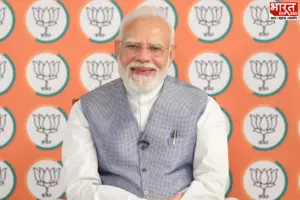
Speaking in the House, Prime Minister Narendra Modi defended the women’s quota and appealed to members to avoid politicising the issue. He stressed that united support would strengthen democratic values rather than benefit any individual party.
Several significant Bills await final approval. The evolving numbers in the Lok Sabha indicate a closely contested legislative process. This could influence the future structure of political representation in the country.
Also Read: President Droupadi Murmu Visits Sevagram Ashram; Pays Tribute To Mahatma Gandhi
To read more such news, download Bharat Express news apps