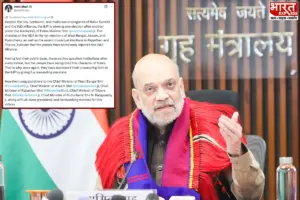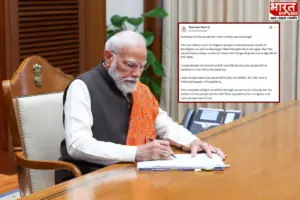




Prime Minister Narendra Modi met European Council President Antonio Costa and European Commission President Ursula von der Leyen on Tuesday, with all three leaders agreeing to further upgrade the India–EU Strategic Partnership based on common democratic principles, respect for human rights, pluralism, the rule of law and adherence to a rules-based international system led by the United Nations.
“The leaders welcomed the signing of the India–EU Security and Defence Partnership, the first such overarching defence and security framework between the two sides that will deepen ties in the domains of maritime security, defence industry and technology, cyber and hybrid threats, space, and counter‑terrorism among others. They also welcomed the launch of negotiations on a Security of Information Agreement that will facilitate the exchange of classified information and pave the way for a stronger cooperation in areas related to security and defence,” the Joint Statement highlighted.
Antonio Costa and Ursula von der Leyen are visiting India as Chief Guests for the 77th Republic Day celebrations at the invitation of Prime Minister Modi. Their delegation includes senior EU officials responsible for foreign affairs, security and trade.
The summit witnessed the formal adoption of the India–EU Security and Defence Partnership, marking the first comprehensive framework to guide defence and security cooperation between the two sides.
The new partnership seeks to expand collaboration in maritime security, defence manufacturing and technology, cyber and hybrid security, space cooperation and counter-terrorism efforts.
In addition, both sides agreed to begin negotiations on a Security of Information Agreement to enable the sharing of classified information and strengthen mutual trust in defence-related areas.
Multilateralism and Regional Stability
The leaders highlighted the need for a robust multilateral system with the United Nations at its centre and stressed the urgency of reforming the UN Security Council to make it more representative, transparent and effective in today’s geopolitical context. They also recognised the close link between European and Indo-Pacific security and prosperity.
Both sides reiterated their support for a free, open and stable Indo-Pacific region in accordance with international law, including UNCLOS. They welcomed deeper engagement through upcoming India–EU consultations on the Indo-Pacific, as well as cooperation under the Indo-Pacific Oceans Initiative and the Indian Ocean Rim Association.
India and the EU shared concerns over the conflict in Ukraine and expressed support for efforts aimed at achieving a lasting and just peace through dialogue and diplomacy. The leaders also exchanged views on recent developments in Iran and the wider region, emphasising peaceful resolution of disputes.
The summit concluded with a strong and unequivocal condemnation of terrorism and violent extremism in all forms. Both sides committed to intensifying cooperation to counter radicalisation, disrupt terror financing, prevent misuse of emerging technologies and enhance global counter-terrorism efforts. The leaders also denounced recent terror attacks in Jammu and Kashmir and New Delhi.
The presence of EU leaders as Republic Day Guests of Honour was described as a reflection of the growing strength, depth and momentum of India–EU relations and their shared vision for a stable, resilient and multipolar world.
Also Read: PM Modi Announces Expansion Of India–EU Trilateral Projects Beyond Indo-Pacific
To read more such news, download Bharat Express news apps