



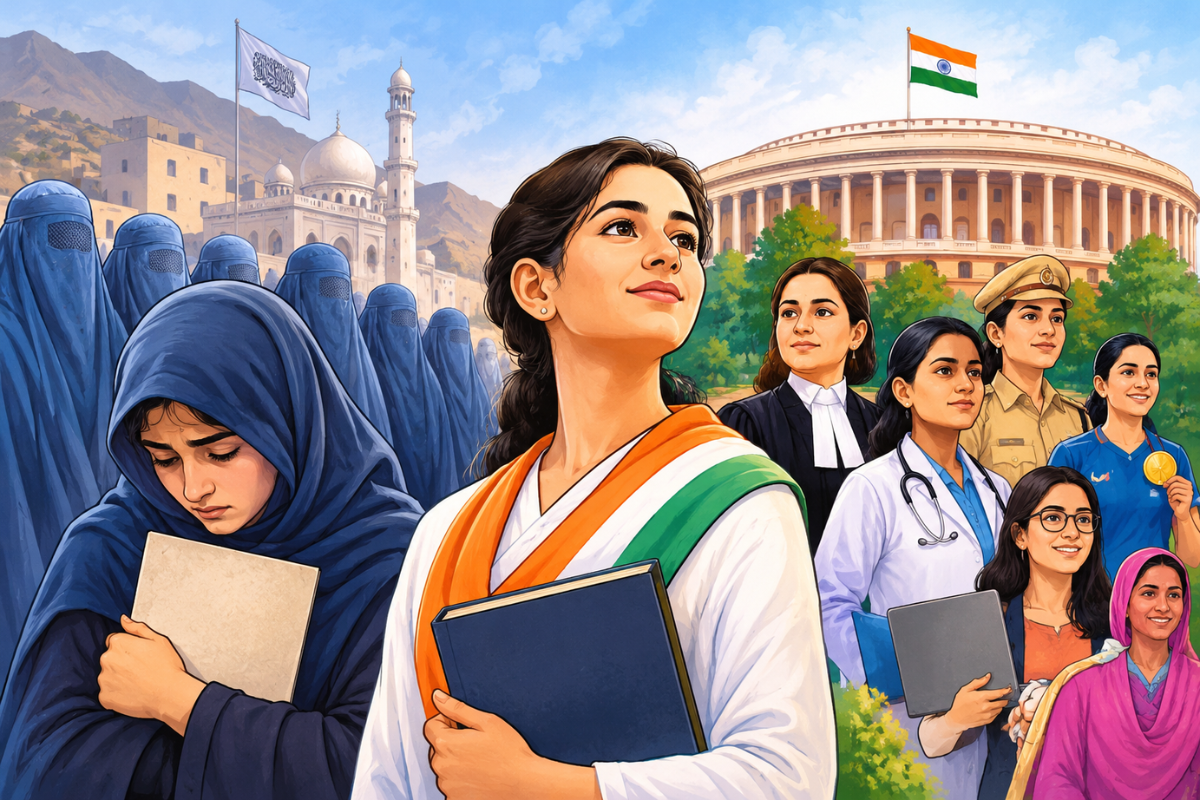
AI Generated Image
Dr Shalini Ali
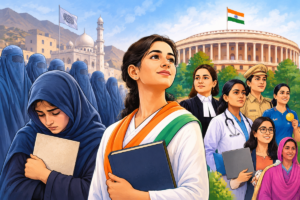
A woman’s identity does not disappear only through physical violence. Erasing her name can also strip away her dignity and recognition.
Recent reports from Afghanistan’s Balkh province suggest that hospitals have been instructed not to address female patients by their names. Medical prescriptions reportedly carry the word ‘Bibi’ instead.
The reported restriction follows earlier measures that limited women’s education, employment and public participation. Taliban representatives have also expressed opposition to mentioning the names of mothers, wives, sisters and daughters.
The restrictions have raised questions about the use of religion to justify discrimination. Hazrat Maryam, Hazrat Khadija, Hazrat Aisha and Hazrat Fatima hold significant places in Islamic history.
Their contributions remain central to religious teachings and Muslim communities.
India’s Constitutional Framework Guarantees Equality
India’s Constitution guarantees equality through Articles 14, 15 and 16. Women have enjoyed voting rights since 1950.
Political participation through reservations in local panchayats has also expanded opportunities for women, including those from Muslim communities.
Recent legislative changes concerning instant triple talaq and Hajj without a male guardian have also featured in discussions about Muslim women’s rights.
Parliament passed the Nari Shakti Vandan Adhiniyam in 2023, providing for one-third reservation for women in the Lok Sabha and state assemblies. However, implementation remains linked to delimitation.
Reports suggest that a revised proposal could increase Lok Sabha seats to 850, with one-third reserved for women. The proposed legislation is expected to return during the special parliamentary session beginning on 30 November.
The debate has renewed calls for MPs across political parties to support women’s representation beyond partisan differences. Greater participation could strengthen the voices of women from different communities.
While Afghan women continue to face restrictions, the article calls on religious scholars and Muslim-majority nations to address the reported developments and question the silence surrounding them.
Also Read: PM Modi’s December Canada Visit To Focus On Trade Pact And Defence Cooperation
To read more such news, download Bharat Express news apps