



AI Generated Image
The Glacial Sanctuary at 15,000 Feet: Surrounded by Seven Snow Peaks
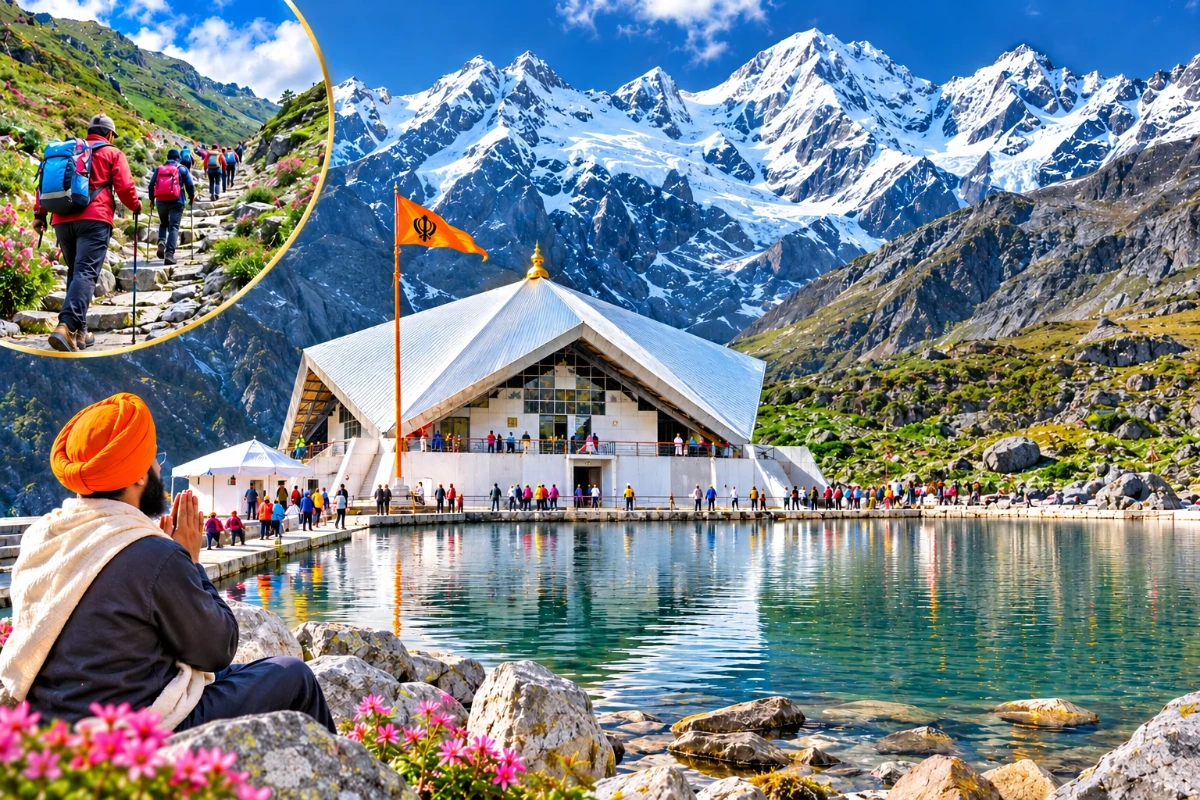
Hemkund Sahib is a high-altitude Sikh pilgrimage site in Uttarakhand, where a glacial lake, seven snow peaks and a nearby temple dedicated to Lakshmana create a landscape of shared sacred significance. Set at approximately 15,000 feet in the Garhwal Himalayas, it offers visitors more than mountain scenery. Understanding its traditions and the demands of the approach makes the journey more meaningful.
Shree Hemkund Sahib and Lokpal Temple (Uttarakhand)
Perched beside a crystal-clear glacial lake in the high Himalayas, Hemkund Sahib brings water, mountains and worship into unusually close company. The lake gives the sanctuary its name and forms the natural heart of the pilgrimage. Beside this Sikh place of devotion stands the Lokpal Temple, dedicated to Lakshmana, the younger brother of Lord Rama.
Calling it a glacial sanctuary at 15,000 feet captures both its setting and atmosphere. Yet the landscape is not simply a backdrop for photographs. The lake and surrounding peaks are integral to the traditions through which devotees understand this sacred place.
For a thoughtful visit, approach the site as a living place of worship rather than a viewpoint with religious buildings attached. Make time to learn why people undertake the climb, observe how worshippers use the space and let their needs take priority over your itinerary. The most rewarding encounter may be a quiet one.
Why Is Hemkund Sahib Sacred to Sikh and Hindu Pilgrims?
Hemkund Sahib is sacred to Sikh pilgrims because devotional tradition identifies it as the place where Guru Gobind Singh Ji meditated in a previous birth as Rishi Dusht Daman. Hindu reverence centres on the ancient Lokpal Temple nearby, dedicated to Lakshmana, who is traditionally believed to have meditated or performed penance here. These associations give the lakeside a significance that reaches beyond any single journey or community.
The Sikh account connects Hemkund with the mountain setting described in Bachitra Natak, including its seven snow peaks. The elaborated Dusht Daman narrative belongs to the site’s devotional and literary inheritance. Presenting it as religious tradition respects its meaning without confusing sacred belief with independently established historical evidence.
Local reverence for the lake predates its development as a major Sikh pilgrimage destination. Known as Lokpal, it already held a place in the sacred geography of surrounding Himalayan communities. The presence of the Gurudwara and Mandir therefore reflects overlapping histories of devotion rather than a landscape whose importance began with modern tourism.
Its civilisational significance lies in that continuity: stories, names, pilgrimage practices and places of worship preserve different relationships with the same mountains. Visitors need not share every belief to recognise the care those relationships deserve. Listening respectfully is a better starting point than treating either shrine as an incidental stop.
How Do You Reach the Sanctuary From the Valley of Flowers Region?
The traditional approach to Hemkund Sahib is commonly described as a roughly 19-kilometre uphill trek from Govindghat through the wider Valley of Flowers region, using Ghangaria as the shared base. One important clarification: the Hemkund trail does not pass through the Valley of Flowers National Park itself. From Ghangaria, the sanctuary and the flower valley are separate excursions, so visiting both requires additional walking and planning.
Distances can differ according to the starting point. A Uttarakhand government document identifies Pulna as the trekking start and places Hemkund approximately 16 kilometres away, with the final stretch from Ghangaria around six kilometres. Treat the traditional 19-kilometre figure as route context, not a guaranteed measure of the walking required by every current itinerary.
Build your plan around these practical distinctions:
- Confirm your actual trailhead. Ask where vehicle travel ends, and walking begins, rather than relying on a package’s headline distance.
- Use Ghangaria as a planning checkpoint. Reassess your energy, health and onward arrangements before committing to the higher climb.
- Separate the two destinations. If the Valley of Flowers is also a priority, give it dedicated time instead of assuming it lies along the sanctuary route.
- Leave room for changes. Avoid making a successful visit depend on completing every stage at the fastest suggested pace.
Before departure, verify access, registration requirements, accommodation and local instructions with Uttarakhand Tourism and the shrine authorities. Do not treat an older itinerary or someone else’s walking time as a promise. A flexible schedule makes it easier to turn back when circumstances require it.
Bathing, Prayer and Respectful Participation
Pilgrims traditionally bathe in the lake’s ice-cold waters before offering prayers at the high-altitude Gurudwara and Mandir. Uttarakhand Tourism describes the holy dip as a notable part of the Hemkund pilgrimage. For devotees who undertake it, the act belongs to a spiritual journey, not an adventure challenge.
Do not interpret a description of the ritual as advice to enter freezing water. Observe current restrictions and seek medical guidance if you are considering immersion, particularly if you have an underlying health condition. There is no reason to turn another person’s devotional practice into a test of your own endurance.
Respectful participation starts with paying attention. Follow the instructions at each shrine, ask attendants when unsure about coverings or footwear, and keep your voice low around prayer. Put your camera away wherever photography is restricted, and seek permission before photographing worshippers, especially anyone bathing or engaged in private devotion.
Allow space for different forms of participation. Some visitors arrive with a specific religious purpose; others come to understand the setting and its heritage. Neither curiosity nor enthusiasm should interrupt someone else’s prayers.
Preparing for Altitude Without Rushing the Journey
At this elevation, fitness alone does not protect against altitude illness. The CDC recommends gradual ascent and identifies headache, nausea, dizziness and unusual fatigue as possible symptoms of acute mountain sickness. Preparation should therefore focus on acclimatisation and sensible decisions, not merely on whether you can walk the distance.
Discuss the itinerary with a healthcare professional if you have a relevant medical condition or concerns about altitude. The CDC specifically advises consultation for travellers with certain heart, lung and other underlying conditions. Seek individual advice rather than copying someone else’s medication or assuming that a previous comfortable trek guarantees another.
Use this preparation checklist before setting out:
- Build in acclimatisation time. Avoid an itinerary that rushes directly from low elevation into strenuous high-altitude activity.
- Agree on a symptom plan. Everyone in the group should know that feeling unwell must be reported promptly, not hidden to avoid delaying others.
- Prepare for a changed itinerary. Keep enough flexibility to rest, abandon the ascent or arrange a return.
- Know when to descend. Do not continue higher with altitude symptoms; worsening symptoms require descent and medical assessment.
Plan your return as carefully as your ascent. Before leaving, agree on who will make decisions if somebody becomes unwell and how the group will obtain help. Reaching the shrine should never become more important than bringing everyone back safely.
Glacier Retreat and the Responsibility to Tread Lightly
The sanctuary’s setting also invites attention to glacier retreat across the wider Himalayas. ICIMOD reports that glaciers in the Hindu Kush Himalayan region are shrinking and retreating, with implications for the mountain water systems on which communities depend. This regional evidence gives visitors reason to look beyond the beauty of snow and ice.
It does not, however, justify assigning a precise retreat rate to the ice around Hemkund without site-specific research. Nor can a single photograph establish a long-term trend. Distinguishing regional findings from local measurements makes environmental discussion more useful, not less urgent.
Let that awareness shape your conduct: carry out all packaging, use designated waste facilities, remain on established paths and avoid leaving offerings in the lake. Bring reusable items where practical and ask before discarding anything whose disposal arrangements are unclear. Treat keeping the shore clean as part of respecting the sanctuary, not as an optional extra after sightseeing.
Take Away More Than a Mountain Photograph
Hemkund calls for a different kind of travel: one informed by its traditions, realistic about the climb and attentive to the people praying beside you. Learn the route, leave space for acclimatisation and approach both shrines with patience. The most meaningful visit is not the fastest ascent, but one that honours the sanctuary without compromising safety or leaving a burden behind.
Also Read: Quiet Ashram In The Pines: Tech Pioneers’ Peaceful Retreat
To read more such news, download Bharat Express news apps