



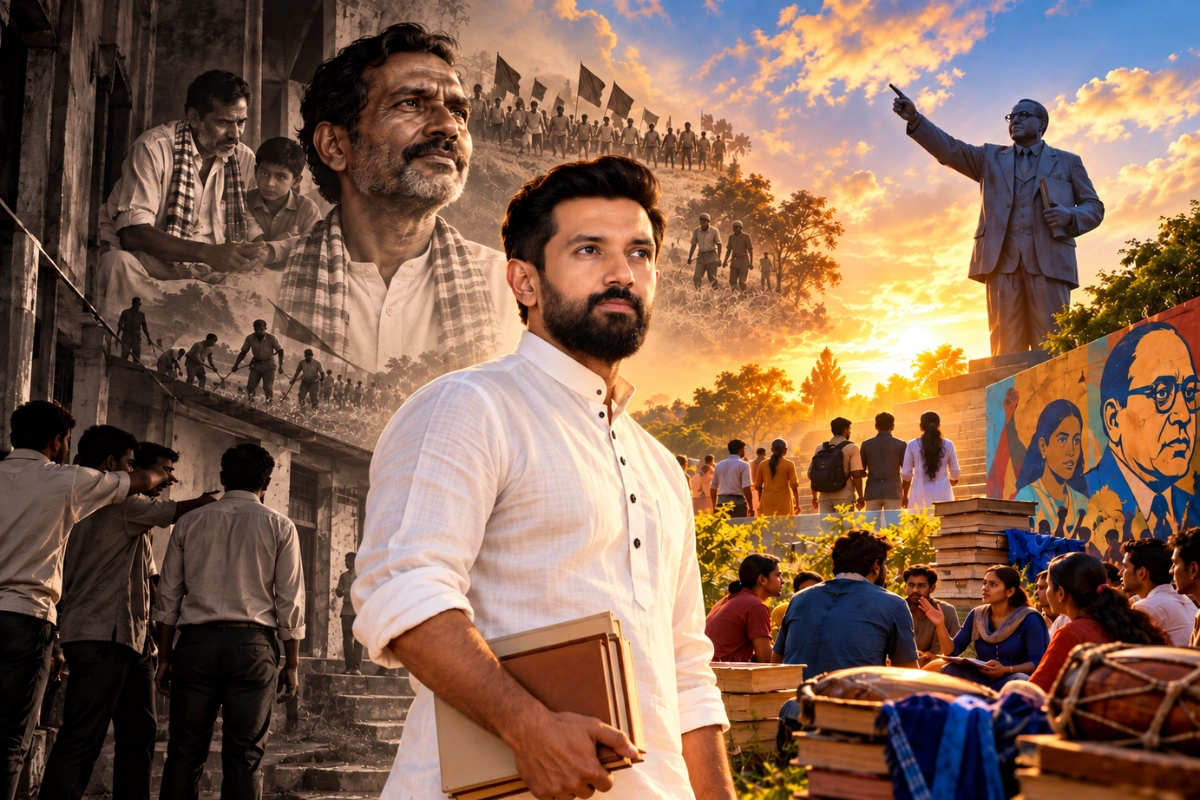
AI Generated Image
A son’s struggle to claim his father’s Dalit legacy is more than a family story. It is a confrontation with memory, silence, social pressure, and the responsibility of carrying forward a history shaped by resistance. Through Chirag’s symbolic journey, we can better understand how Dalit identity, culture, rights, and empowerment continue to shape personal and public life.
What Does It Mean to Claim a Dalit Legacy?
To claim a Dalit legacy means to accept both inheritance and duty: the pain of caste oppression, the dignity of survival, and the unfinished work of justice. For Chirag, the ‘war’ is not only against outside prejudice. It is also an inner conflict over whether he can fully stand in the truth his father lived, defended, and passed down.
A father’s legacy may appear in stories, rituals, books, political beliefs, community ties, or quiet lessons about self-respect. When that legacy is Dalit, it often carries the weight of Dalit history: exclusion, assertion, education, protest, and the demand to be seen as fully human. Chirag’s crucible is the pressure of choosing whether to remember comfortably or remember honestly.
The Personal Weight of Dalit Identity
Dalit identity is not a label that exists only in documents or public debates. It lives in names, neighbourhoods, family memories, language, food, faith, and the choices people make when dignity is challenged. For someone like Chirag, identity may feel both grounding and demanding.
He may inherit pride, but also questions. How much should he reveal? How should he respond to discrimination? Can he honour his father without being trapped by grief or anger? These tensions make the story emotionally powerful because they show identity as something lived, not merely declared.
Dalit Culture as Memory and Resistance
Dalit culture is often carried through everyday acts of remembrance. Songs, literature, oral histories, community gatherings, and political symbols can preserve what dominant histories tried to erase. In this sense, culture becomes a form of resistance.
A meaningful portrayal of Chirag’s journey would not reduce Dalit culture to suffering. It would also show creativity, humour, learning, solidarity, and spiritual strength. That balance matters because Dalit empowerment grows not only from opposing injustice, but also from celebrating community knowledge and self-worth.
The Father’s Unfinished Work
The father in this story represents more than one man. He stands for a generation that may have fought for education, land, voice, safety, or recognition. His Dalit legacy becomes a question placed before his son: will you protect what was won, and will you push further?
Chirag’s response might take many forms:
- Learning Dalit History beyond textbook summaries and family fragments.
- Speaking Against Caste Prejudice in private spaces as well as public ones.
- Valuing Dalit Culture without apologising for its distinctiveness.
- Supporting Dalit Rights through awareness, organising, education, or legal advocacy.
- Turning Inherited Pain Into Purpose without romanticising struggle.
These actions show that legacy is not passive. It must be practised.
Why Does This Story Matter Today?
This story matters because caste does not disappear when people stop naming it. Conversations about Dalit rights, representation, and dignity remain necessary wherever social hierarchy still shapes opportunity and respect. Chirag’s battle reflects a larger question: how does a new generation carry forward justice without losing itself?
The answer is not simple. Some people inherit fear, others inherit defiance, and many inherit both. But when a son chooses to understand his father’s life in full, he helps keep Dalit history from being softened, hidden, or forgotten.
A Legacy Claimed With Courage
Chirag’s crucible is the moment when memory becomes action. To claim his father’s Dalit legacy is to stand inside a history of pain and power, then decide what kind of future it demands. The most honest inheritance is not imitation, but courage: the courage to remember, to speak, and to build a more dignified world.
Also Read: The Political Weathervane: How Ram Vilas Paswan Never Lost A Battle For Power
To read more such news, download Bharat Express news apps