



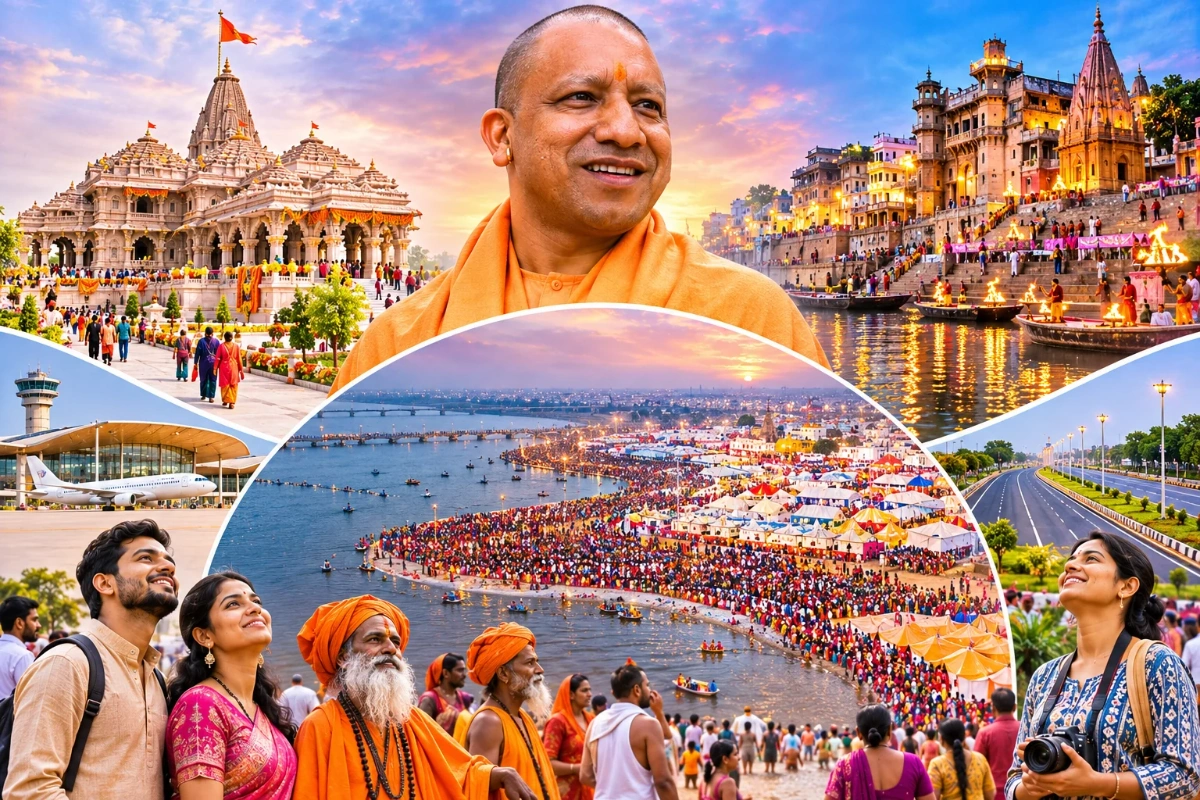
AI Generated Image
When Civilisation Meets Development: Ayodhya, Kashi and Prayagraj in the Yogi Adityanath Years
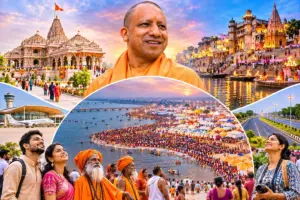
Ayodhya, Kashi and Prayagraj show how India’s civilisational heritage intersects with contemporary development: sacred destinations are also places needing transport, sanitation, livelihoods and public space. During the Yogi Adityanath years, major temple, connectivity and pilgrimage projects have brought that relationship into sharper focus. Understanding their significance means examining both new infrastructure and the experiences of people who worship, work and live around it.
How Have Ayodhya, Kashi and Prayagraj Connected Heritage With Development?
Across Ayodhya, Kashi and Prayagraj, development has linked established religious traditions with infrastructure intended to make pilgrimage more accessible. The connection is visible in Ayodhya’s temple-centred transformation, the Ganga-to-temple route in Varanasi, and Prayagraj’s preparations for mass gatherings. These initiatives involve different institutions, not one government department or political leader acting alone.
Yogi Adityanath became Uttar Pradesh’s Chief Minister on March 19, 2017. His administration provides the state-government context for this period, while Union Ministries, public agencies, temple institutions and local authorities have distinct responsibilities. Keeping those roles separate makes the development story more accurate—and accountability easier to understand.
The useful question is therefore not simply whether a city looks different. It is whether heritage-led investment improves access without weakening the neighbourhoods, livelihoods and traditions that give each place its character.
Ayodhya: Sacred History and a Changing Urban Landscape
Ayodhya’s history cannot be reduced to a construction timeline. Revered in Hindu tradition as Lord Ram’s birthplace, the city also carries a contested modern history, including the Babri Masjid’s demolition in 1992 and the Supreme Court’s 2019 judgment permitting temple construction while directing land provision for a mosque. A responsible account should acknowledge both devotion and this legal and social context.
The Ayodhya Ram Mandir consecration took place on January 22, 2024. Responsibility for temple construction and management belongs to the Shri Ram Janmabhoomi Teerth Kshetra Trust, formed by the Government of India in February 2020 following the Supreme Court’s directions. The temple should therefore not be described simply as an Uttar Pradesh government construction project.
Transport investment is another strand of Ayodhya’s development. The Airports Authority of India developed the airport, inaugurated as Maharishi Valmiki International Airport on December 30, 2023. Its terminal incorporates temple-inspired architecture and artwork depicting Ram’s life, illustrating how contemporary infrastructure can reference local cultural identity.
The Yogi Adityanath–Ayodhya connection is consequently best understood through state-level development and administration, alongside the separate roles of the temple trust and Union agencies. For Ayodhya tourism, the opportunity extends beyond arrivals: visitors should have reasons to spend time locally rather than treating the city as a single-stop destination.
Kashi: Opening Access While Protecting a Living City
In Varanasi, the Kashi Vishwanath Corridor links the temple precinct with the Ganga. Prime Minister Narendra Modi inaugurated its first phase on December 13, 2021. The Uttar Pradesh Public Works Department executed the project, with the Shri Kashi Vishwanath Special Area Development Board, established by the state government, overseeing its delivery.
The practical purpose was more than visual grandeur. The project created a more accessible route between the river and the shrine, supported by pilgrim facilities such as assistance centres, rest spaces and other amenities. For visitors, especially those needing a less constrained approach, the relationship between ritual bathing and temple worship becomes easier to navigate.
Cultural preservation was also part of the work: the Ministry of Culture reported that more than 40 older temples were rediscovered, restored and beautified during redevelopment. These smaller Kashi temples matter because heritage is not confined to the principal shrine. Their continued visibility can help visitors recognise the layered religious landscape around it.
Preservation should nevertheless be judged beyond restored stone. Planning should protect everyday worship, neighbourhood access and opportunities for local businesses. A successful corridor ought to introduce people to the surrounding city, not encourage them to overlook it.
Prayagraj: The Sangam and the Demands of Scale
The Prayagraj river experience centres on the Triveni Sangam: the meeting of the Ganga and Yamuna, joined in Hindu belief by the unseen Saraswati. Ritual bathing, priestly services and boat journeys connect this landscape with pilgrimage. Unlike a single temple precinct, the Sangam requires planning across riverbanks, approach routes and gathering spaces.
Prayagraj’s development around Maha Kumbh 2025 involved responsibilities at several levels. The Union Ministry of Tourism identified the organisation and enhancement of festival infrastructure and facilities as state-government responsibilities. Separately, Indian Railways undertook station improvements, passenger shelters, track-capacity works and road-overbridge and underbridge construction in the Prayagraj area.
These distinctions matter when assessing what remains useful after a festival. Railway improvements can support subsequent journeys, whereas temporary arrangements must be evaluated for safe installation, operation and removal. Permanent investment should also be assessed by its usefulness to residents outside peak pilgrimage periods.
Safety must remain central to that assessment. Police reported at least 30 deaths in the January 29, 2025, Maha Kumbh stampede, demonstrating that large infrastructure programmes do not eliminate crowd-management risks. Clear movement routes, timely information and effective emergency access must accompany efforts to attract visitors.
What Does Religious Tourism Mean for Local Communities?
Uttar Pradesh religious tourism can create opportunities for accommodation providers, drivers, guides, food sellers and other local enterprises, but visitor growth alone does not establish who benefits. Ayodhya illustrates both opportunity and disruption: reporting before the temple opening described enthusiasm about new business alongside concerns over demolished properties and compensation. Community experience therefore belongs at the centre of any assessment.
The disagreement should be represented fairly. Ayodhya’s district administration said compensation and rehabilitation followed applicable rules, while interviews with affected residents documented dissatisfaction. Neither an aggregate compensation figure nor an individual success story can substitute for examining household-level outcomes.
For all three cities, useful measures of inclusive development would include:
- Local earning opportunities: Track whether small enterprises can access visitor markets, not merely whether larger hotels open.
- Continuity for affected traders: Assess replacement premises, customer access and the time needed to resume business.
- Resident mobility: Preserve workable routes to homes, schools, workplaces and essential services during busy periods.
- Living cultural heritage: Support practitioners and everyday religious activity alongside monuments and redesigned public spaces.
- Environmental care: Judge cleanliness by waste handling, sanitation and river protection rather than appearance alone.
These are proposed tests, not claims that every outcome has been achieved. UP cultural heritage is best served when communities help determine how change happens. Consultation should continue after inauguration, when maintenance problems and unintended consequences become clearer.
Planning a Connected Pilgrimage Without Rushing It
The Kashi-to-Prayagraj-to-Ayodhya distance is best understood as two separate road journeys. Uttar Pradesh government tourism information places Varanasi–Prayagraj at approximately 125 kilometres and Prayagraj–Ayodhya at approximately 166 kilometres: roughly 290 kilometres combined. Exact distances depend on starting points, destinations and route choice.
Use those figures as planning context, not a promise about travel time. A practical Ayodhya travel guide—or a three-city itinerary—should leave room for walking, waiting, rest and changing access arrangements. The aim should be a meaningful visit rather than the highest possible number of stops.
Before travelling:
- Check official information: Confirm temple arrangements, transport services and local advisories close to departure.
- Separate transfer days from major rituals: Avoid making an important onward connection depend on an uncertain finishing time.
- Plan around mobility needs: Ask accommodation providers about pedestrian access, vehicle drop-offs and assistance for older relatives.
- Make room for local experiences: Consider a guided neighbourhood walk, locally prepared meal or time with a cultural practitioner.
- Treat river access responsibly: Follow local restrictions, use appropriate safety equipment on boats and keep waste out of the water.
Development That Deserves to Last
Ayodhya, Kashi and Prayagraj offer a useful test of heritage-led development during the Yogi Adityanath years. The strongest standard is neither nostalgia nor construction alone, but whether investment makes sacred places accessible while protecting community life.
That means recognising institutional responsibilities, listening to residents and treating safety, maintenance and cultural continuity as permanent commitments. Civilisation and development meet most meaningfully when the people who sustain a place can share in its future.
Also Read: Entrepreneurship In Uttar Pradesh: Youth Dreams & Challenges
To read more such news, download Bharat Express news apps