



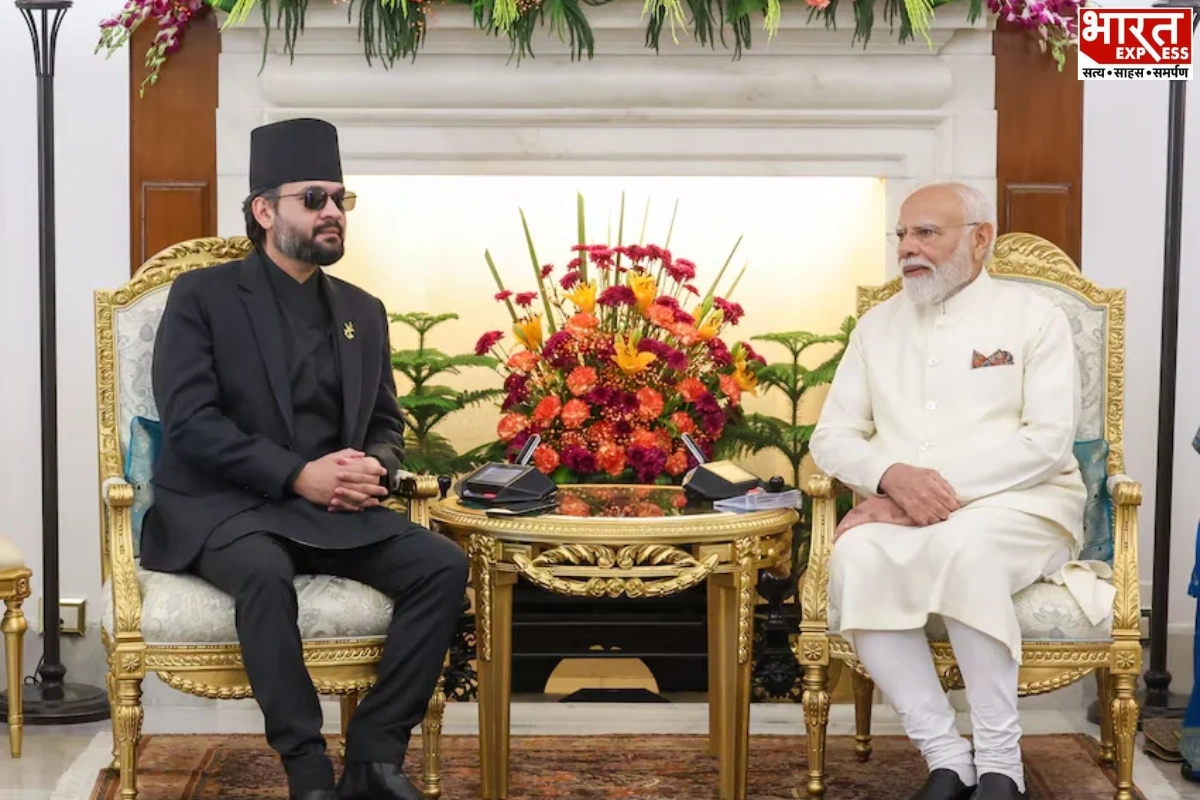
India and Nepal signed eight memorandums of understanding (MoUs) on Monday, November 23, during Nepalese Prime Minister Balendra Shah’s state visit to New Delhi.
A major agreement focuses on establishing a Satellite Communication (SATCOM) Network through the South Asia Satellite. The Indian Space Research Organisation (ISRO) signed the agreement with the Government of Nepal.
The two countries also agreed to strengthen technical collaboration in sustainable urban development and expand cooperation in livestock and fisheries development.
India developed and launched the South Asia Satellite, also known as GSAT-9, to strengthen communication networks and disaster management capabilities across the region.
Built by ISRO and entirely funded by India, the satellite represents an investment of approximately ₹450 crore, including ₹235 crore for the spacecraft.
Weighing 2,230 kg, the communication satellite supports broadcasting, internet connectivity and communication services across geographically challenging areas.
The satellite carries 12 Ku-band transponders, enabling participating countries to strengthen their communication infrastructure and broadcast independent as well as shared South Asian programming.
Its applications include direct-to-home television services, telemedicine, distance education, banking, weather forecasting and natural resource mapping.
The network will also facilitate the exchange of disaster-related information, enabling countries to improve emergency responses and coordination during natural calamities.
The SATCOM agreement reflects India’s continued efforts to share space technology and technical expertise with neighbouring countries.
Nepal’s participation is expected to improve digital connectivity, expand access to essential services in remote regions and encourage stronger people-to-people engagement across South Asia.
To read more such news, download Bharat Express news apps