AI Generated Image
A Prayer for Children, a Lesson for Parents: The Deeper Meaning of Shravana Putrada Ekadashi
Shravana Putrada Ekadashi is a Hindu observance dedicated to Lord Vishnu, traditionally associated with prayers for a son and the well-being of one’s family. Its devotional story connects the hope for children with compassion, responsibility, and shared prayer.
What Is Shravana Putrada Ekadashi?
Shravana Putrada Ekadashi falls on the eleventh lunar day of the bright fortnight, or Shukla Paksha, in the month of Shravana. Devotees worship Vishnu and observe an Ekadashi vrat, a religious vow involving fasting and devotional practices. The traditional name Putrada means ‘bestower of a son’.
There are two annual observances called Putrada Ekadashi: one in Pausha and another in Shravana. Both are associated with prayers for offspring, but their commonly narrated stories differ. The Shravana observance concerns King Mahijit, while the Pausha account centres on King Suketuman.
Understanding this historical emphasis need not mean treating sons as more valuable than daughters. A compassionate contemporary reading can extend the prayer to every child: may they be welcomed, protected, and allowed to flourish. This interpretation preserves space for devotion while encouraging families to examine the expectations they place on children.
The Story of King Mahijit
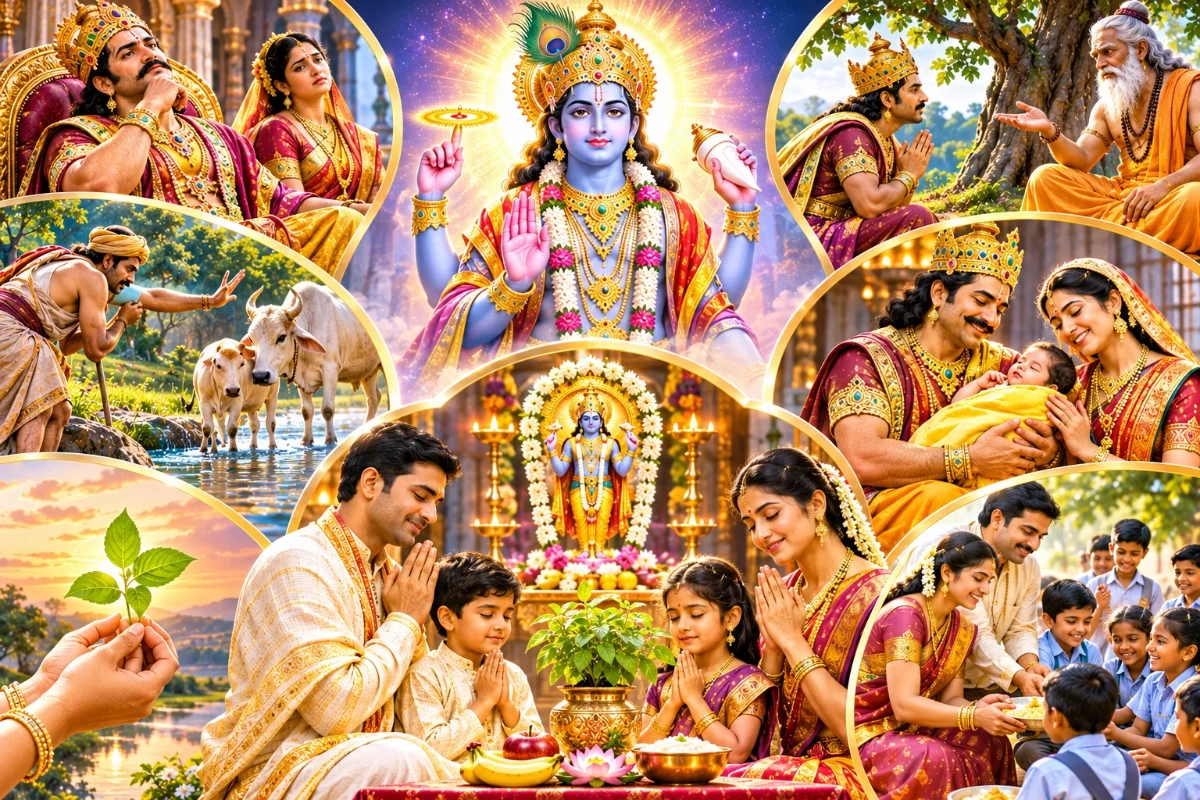
In the traditional account, Mahijit rules Mahishmati but feels deep sorrow because he has no son. His concerned advisers seek guidance from the sage Lomasha, who explains the king’s predicament through an incident from a previous life.
As a thirsty merchant, Mahijit had once driven a cow and her calf away from water so that he could drink first. Lomasha links this unkindness to the king’s present sorrow. He advises the king and his people to observe the Shravana Ekadashi vow and dedicate its spiritual merit to him. They follow his guidance, and the narrative ends with the queen giving birth to a son.
This is a sacred narrative, not a basis for judging anyone’s circumstances. Its account of past actions should never become permission to accuse someone experiencing childlessness of wrongdoing. For reflection, the most useful question is directed inward: when have my own urgent wants made me overlook another being’s needs?
What Does the Festival Teach Parents?
One meaningful reading of Shravana Putrada Ekadashi is that the desire to nurture life should be accompanied by the willingness to protect it. The story’s contrast is striking: someone hopes for a child, yet an earlier action disregarded a vulnerable creature. For parents, that contrast can become a practical lesson in attention, restraint, and care.
Compassion Begins with Everyday Choices
The episode involving the water invites reflection on what happens when personal need becomes the only need that matters. A parent might recognise that tension while rushing through homework, managing a difficult morning, or responding to a child’s repeated questions. The point is not to deny adult needs, but to make room for someone else’s experience before acting.
Try pausing before offering a correction. Ask whether the child needs an explanation, a boundary, rest, or simply a chance to finish speaking. Compassion can still be firm; it need not mean agreeing to every request.
Responsibility Matters More Than Control
A prayer for a child can also prompt an honest examination of parental expectations. Do we want to support a person, or shape someone who will fulfil our unfinished ambitions? Consider making one commitment that does not depend on achievement: listening without comparison, apologising after an unfair reaction, or spending time together without discussing results.
Such commitments make the reflection concrete. Instead of asking only what a child should become, ask what kind of adult you want that child to encounter at home.
Care Can Extend Beyond One Household
The community’s participation offers another possible lesson: concern need not stop at one family’s door. You might support a caregiver, contribute useful supplies to a local children’s organisation, or offer practical help to someone who is overwhelmed. Choose assistance that responds to an actual need rather than an imagined one.
This makes generosity more than a ceremonial gesture. It turns a day of personal prayer into an opportunity to notice who else needs support.
Ekadashi Significance Beyond the Wish for Children
In the devotional account, this observance belongs to a wider practice of fasting, worship, and seeking spiritual benefit. Its emphasis includes remembrance of Vishnu, not only the fulfilment of a family wish. A useful way to approach the significance of Ekadashi, therefore, is to consider both the intention behind the vow and the behaviour accompanying it.
For personal reflection, distinguish three parts of the day:
- Prayer: Express hope honestly, without turning an uncertain outcome into a test of personal worth.
- Restraint: Choose something to practise beyond dietary rules, such as avoiding harsh speech or unnecessary arguments.
- Service: Offer help without expecting recognition, repayment, or a particular blessing in return.
These are suggestions for meaningful participation, not substitutes for the customs of a particular tradition. They also offer a way to connect this observance with other Hindu festivals: let celebration leave behind a worthwhile habit rather than ending when the ritual is complete.
How Can Families Observe the Day Thoughtfully?
Families can observe Shravana Putrada Ekadashi through the worship of Vishnu, hearing the traditional story, prayer, and an appropriate form of fasting according to their religious customs. Published observance guidance includes bathing, lighting a lamp, making offerings, reading devotional texts, and singing devotional songs. For a household, the aim can be a sincere, manageable day rather than an elaborate performance.
A simple plan might include:
- Prepare Your Intention. Decide what you are praying for and identify one quality you want to practise, such as patience or generosity.
- Create Time for Worship. Follow your family’s established practice, or ask your temple for guidance if you are unfamiliar with the observance.
- Read the Story Carefully. Separate its traditional religious claims from the lessons you choose to apply in daily life.
- Include Children Without Pressure. Invite them to listen, ask questions, draw a scene, or help arrange the prayer space.
- Finish with a Practical Commitment. Choose one act of care that you can continue after the festival.
You could ask each family member to name one kind action they appreciated that week. Keep the conversation voluntary and specific. The purpose is connection, not an inspection of anyone’s devotion.
Ekadashi Fasting Without Competition
Ekadashi fasting practices vary, so avoid treating one household’s menu as a universal rule. Vaishnava guidance commonly excludes grains and legumes, while other published guidance describes fruit-based observance. Follow the practices of your own tradition rather than combining unrelated instructions into a stricter vow.
Parana, the breaking of the fast, takes place on the following day, Dwadashi, within an appropriate time window. That window is not simply the moment the Ekadashi lunar day ends; fasting dates and timings require the relevant calendar guidance. Check a location-specific panchang and your tradition’s instructions before making plans.
Keep the family atmosphere free from comparison. There is little value in turning a devotional meal into a contest over who has endured more. If food restriction is unsuitable for someone, discuss participation with appropriate guidance rather than pressuring them to imitate another person’s fast.
Shravana Putrada Ekadashi 2023: A Calendar Note
For readers looking back, Shravana Putrada Ekadashi 2023 was listed on Sunday, August 27, 2023, in the New Delhi Hindu calendar. This is a historical date, not one to reuse for another year.
Location and tradition matter when consulting older records. For example, Drik Panchang’s 2023 San Francisco calendar listed the main observance on August 26 and the Vaishnava observance on August 27. When planning a future observance, select the correct year, city, and tradition rather than relying on an undated search result.
Carrying the Prayer into Ordinary Life
The most constructive takeaway is a commitment, not a prediction. Let prayer for children become patient attention to children; let the wish for family happiness become a willingness to share responsibility. For anyone longing for parenthood, make room for hope without imposing blame or promises.
A meaningful observance can end with one quiet question to carry forward: how will I care more thoughtfully tomorrow? The answer may be as ordinary as listening fully, keeping a promise, or helping someone who cannot offer anything in return.
Also Read: Kamika Ekadashi Faith: Rituals Beyond Grandeur
To read more such news, download Bharat Express news apps