



AI Generated Image
Is True Devotion Measured by Grand Rituals? What Kamika Ekadashi Teaches About Faith
Kamika Ekadashi is a Hindu observance dedicated to Lord Vishnu, traditionally marked by fasting, worship, and remembrance. Its devotional teachings suggest that the sincerity of an offering matters more than its expense: even humble Tulsi leaves hold a cherished place in worship. This offers a thoughtful way to explore Kamika Ekadashi, faith, and rituals without turning devotion into a competition.
A beautifully arranged altar can express love. So can a quiet prayer offered without an audience. The useful question is not which looks more impressive, but whether the practice helps us become more attentive, humble, and compassionate.
What Does Kamika Ekadashi Teach About True Devotion?
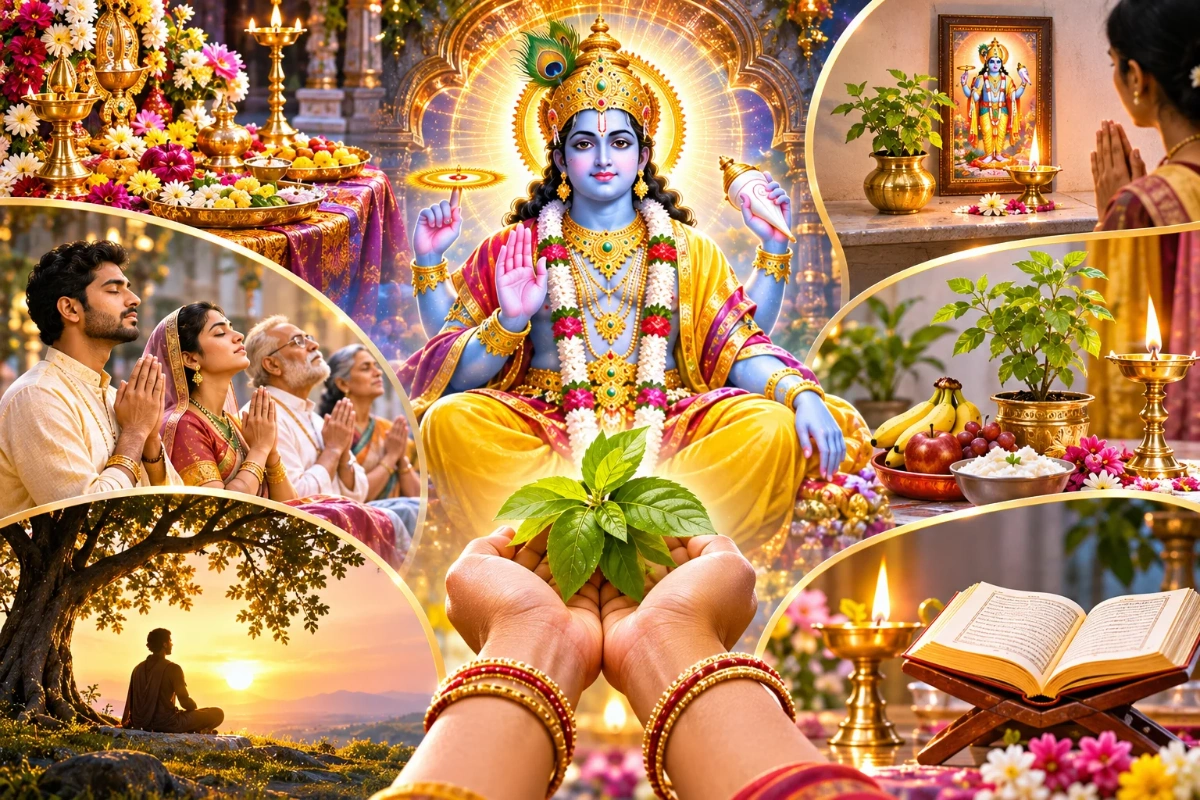
Kamika Ekadashi teaches that devotion cannot be judged simply by the grandeur of religious offerings. Its traditional account praises the worship of Vishnu with Tulsi leaves, placing this modest offering above costly jewels and ornaments. Read as a lesson about faith, that contrast directs attention towards the love behind the offering rather than its material value.
This does not require dismissing elaborate worship. Preparing flowers, arranging offerings, or joining a temple ceremony can be a sincere expression of reverence. The distinction is between using ritual to deepen devotion and using it to demonstrate superiority.
Consider two possible approaches to the same prayer. In one, you carefully complete every action while worrying about whether others approve. In the other, you prepare thoughtfully, understand what you can, and honestly acknowledge where your attention wanders. The second approach offers a useful model for personal reflection, not a verdict on anyone else’s faith.
Try asking yourself: Am I offering this with gratitude, or hoping it will prove something about me? Let the question invite honesty rather than guilt. It is a starting point for reflection, not another standard by which to judge yourself.
The Sacred Setting and Significance of Ekadashi
Kamika Ekadashi falls on the eleventh lunar day of the waning fortnight. It is placed in Shravana in the Purnimanta calendar and Ashadha in the Amanta calendar; these different month names describe the same observance. The fasting date and the following day’s fast-breaking period should be checked against a local calendar and the tradition being followed.
Its religious setting matters because the day is more than a general invitation to simplify life. Shree Swaminarayan Mandir Bhuj describes worship with flowers and Tulsi, a lamp before God, devotional singing, and remembrance through the night. These practices give devotion a tangible form through offerings, voice, time, and attention.
One way to understand the significance of this Ekadashi is as an invitation to interrupt routine deliberately. Instead of allowing the day to disappear into ordinary demands, the devotee makes room for worship. The outward practice provides a framework; the inward work is to remain present within it.
You need not reduce that relationship to a choice between tradition and sincerity. A more constructive aim is to let inherited practices become conscious acts rather than actions performed simply because they are familiar.
Simple Offerings Carry a Deeper Message
The emphasis on humble offerings has a broader scriptural parallel. In Bhagavad Gita 9.26, Krishna accepts a leaf, flower, fruit, or water offered with devotion. The verse names accessible gifts while emphasising the devotional quality with which they are given.
For someone worried about having an impressive prayer space, this offers reassurance: begin with attention rather than comparison. You might prepare a clean place, set aside distractions, and make an offering appropriate to your tradition. Allow its simplicity to help you concentrate rather than treating simplicity itself as an achievement.
There is also a caution worth carrying into worship: simplicity can become its own form of pride. Rejecting another family’s elaborate ceremony as empty would repeat the same mistake as judging a modest altar inadequate. Neither expense nor austerity gives an outside observer reliable access to another person’s intentions.
For your own practice, consider three adjustments:
- Prepare with care, not display. Choose arrangements you can manage without turning preparation into resentment or financial pressure.
- Understand one action more deeply. Ask a trusted teacher about an offering or prayer instead of rushing to add more elements.
- Protect your attention. Put your phone away during worship and return gently when your thoughts wander.
How Can Ekadashi Rituals Support Sincere Faith?
Ekadashi rituals can support sincere faith by giving remembrance a practical structure: dietary restraint, prayer, sacred reading, and offerings create deliberate space for devotion. ISKCON Delhi explains fasting as a way to reduce bodily demands and devote more time to chanting or service. The ritual serves its purpose when it supports worship rather than becoming an isolated test of endurance.
Exact observances vary, so avoid assembling a supposedly universal rulebook from unrelated advice. Follow your family’s or temple’s guidance for the religious details. If you are unfamiliar with a practice, ask what it means before assuming that the strictest version must be the most appropriate.
The following plan is a practical framework, not a replacement for that guidance:
- Choose a clear intention. Decide what you want to bring into worship: gratitude, steadier remembrance, or an honest acknowledgement of a recurring fault. Keep the intention specific enough to revisit later.
- Confirm the observance beforehand. Ask about fasting expectations, permitted foods, offerings, and local timings. Resolve uncertainties before the day rather than spending it comparing conflicting instructions.
- Reserve time for devotion. Protect a manageable period for prayer or reading. A shorter period you can attend to fully is a useful starting point.
- Let restraint include your conduct. Choose one behaviour to monitor, such as interrupting, gossiping, or responding sharply. Treat a lapse as a reason to pause and correct yourself.
- Close with reflection. Ask what helped you remember Vishnu and what distracted you. Carry one constructive change into the following day.
For fasting rules commonly followed within its tradition, ISKCON Delhi describes avoiding grains and beans and breaking the fast on Dwadashi, the following lunar day, within the prescribed period. Confirm the applicable instructions locally rather than copying another city’s timings.
Ekadashi Prayers Without the Pressure to Perform
Ekadashi prayers may include chanting divine names, singing bhajans, and hearing devotional teachings. The Kamika Ekadashi observance described by Shree Swaminarayan Mandir Bhuj specifically encourages singing God’s praise and sustained devotion. This places active remembrance alongside the physical offerings of worship.
If you are beginning, choose a prayer used in your tradition and learn its meaning gradually. You do not need to pretend familiarity with words you have only just encountered. Ask for help with pronunciation, listen carefully, and allow learning to become part of your devotion.
You can also express a personal intention in ordinary language. For example: May I remember You with humility, speak with kindness, and recognise where I need to change. This is an illustrative personal prayer, not a scriptural quotation or prescribed mantra.
Afterwards, leave a little silence. Rather than immediately checking whether the experience felt extraordinary, notice whether you were honest and attentive. Prayer need not become another performance to assess or compare.
What Are the Benefits of Ekadashi Beyond Completing a Fast?
Traditional accounts describe the benefits of Ekadashi in spiritual terms, including purification, divine grace, and liberation. Kamika Ekadashi’s devotional narrative praises its power to free worshippers from sin and attachment. These are religious teachings and expressions of belief, not guaranteed material results or measurable promises.
For personal reflection, look beyond whether you completed every outward action. Ask whether the observance encouraged you to take responsibility for your behaviour. If prayer brought a particular regret to mind, consider an appropriate apology or a practical change rather than assuming the ritual removes the need for either.
A brief evening review can help:
- Attention: When did I participate consciously, and when was I merely rushing?
- Humility: Did I compare my observance with someone else’s?
- Conduct: Is there a harsh word or neglected responsibility I should address?
- Continuity: What small practice can I maintain after today?
These questions are suggestions for reflection, not a scoring system. Their purpose is to connect a sacred observance with the choices that follow it.
Let Devotion Continue After the Ceremony
You do not have to choose between meaningful ritual and inward faith. Instead, approach the ritual as an opportunity to offer your attention, learn patiently, and act with greater care. Let an elaborate ceremony be sincere, and let a simple prayer be sincere too.
The takeaway is not to do less for its own sake. It is to stop treating visible effort as the sole measure of devotion. Begin with the practice available to you, bring honesty to it, and carry one expression of kindness beyond the prayer space.
Also Read: Devshayani Ekadashi: Spiritual Significance & Dates
To read more such news, download Bharat Express news apps