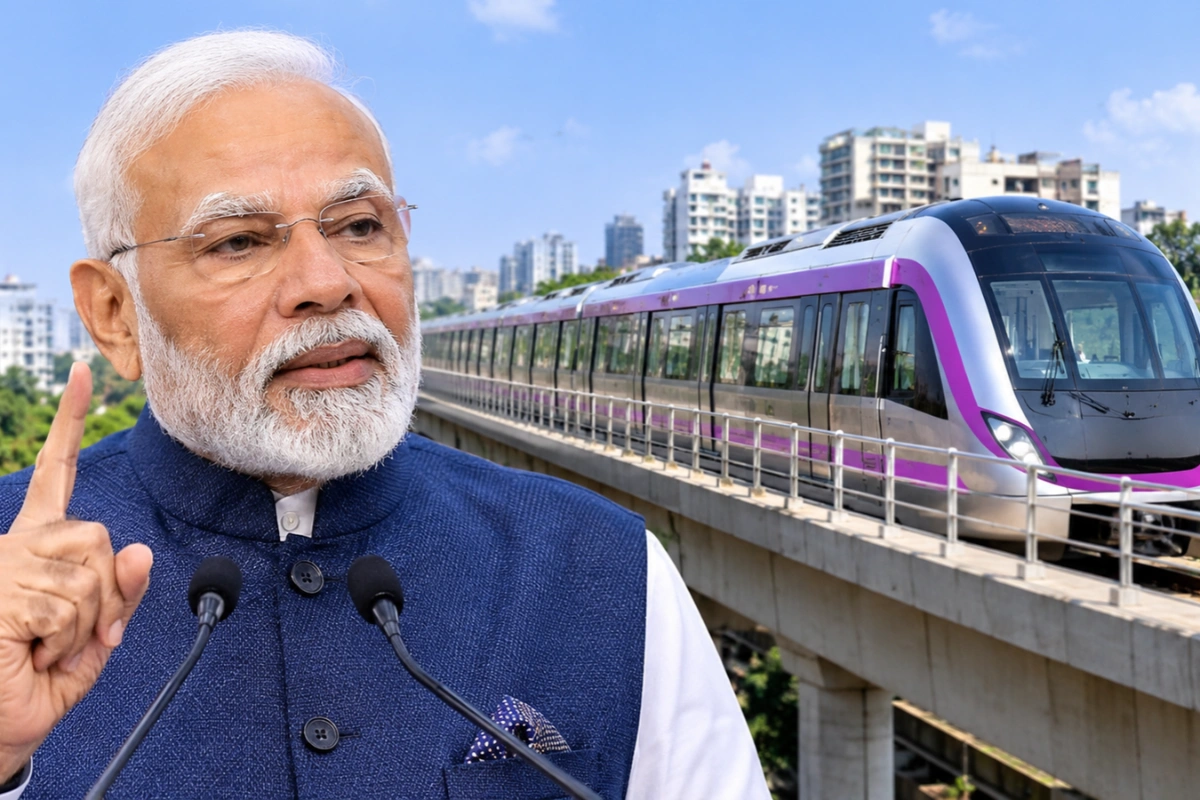
AI Generated Image
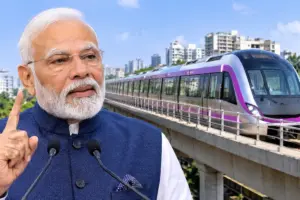
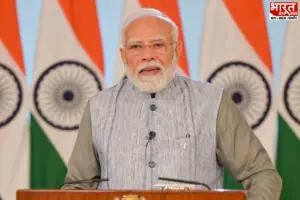
Prime Minister Narendra Modi on Thursday underscored India’s growing Metro connectivity, revealing that the network has increased from 248 km in five cities in 2014 to approximately 1,200 km across 26 cities.
He credited the expansion with improving urban transportation and making daily commuting easier for millions of people.
In his X post, PM Modi questioned how many years or decades Pune might have waited for Metro services if the country had continued expanding its network at the earlier pace.
“Over 1 crore people travel by Metro every day,” he stated, highlighting the scale of the network’s reach.
Let me ask you…
If India’s Metro network had continued expanding at the pace it did before 2014, how long would the wait be for cities like Pune to have a metro?
YEARS….no…DECADES perhaps.
And that was UNACCEPTABLE.
In 2014, India had just 248 km of Metro lines across 5 cities.
Today, we have nearly 1,200 km across 26 cities.
Over 1 crore people travel by Metro every day.
The impact goes beyond statistics or numbers.
It means less time in traffic, more family time, greater productivity and better opportunities.
This is the transformation we are working towards for urban India!
— Narendra Modi (@narendramodi) November 5, 2026
The Prime Minister said the growing infrastructure delivers tangible benefits, including shorter commutes, improved productivity, reduced traffic delays and additional time for families.
Pune Metro Expansion Boosts Connectivity
On Tuesday, November 3, PM Modi virtually inaugurated Pune Metro Line 3, an elevated 23.2-km corridor linking the Hinjewadi IT hub with Shivajinagar’s District Court station.
The authorities developed the corridor through a Public-Private Partnership arrangement, investing more than ₹8,300 crore to improve commuting and reduce road congestion.
PM Modi noted that women operate every train on the Pink Line. He also highlighted its use of solar energy, which supplies approximately 30 per cent of its electricity requirements.
The Prime Minister subsequently laid the foundation stone for Pune Metro Phase II, involving an investment of nearly ₹13,500 crore.
The proposed corridors will connect important locations such as Kharadi, Wagholi, Hadapsar, Swargate and Khadakwasla.
PM Modi emphasised the importance of environmentally sustainable mass transit as cities continue to expand.
He said Metro infrastructure would help reduce pollution, minimise road congestion and improve public transport accessibility across Tier-1 and Tier-2 cities.
The government also plans to strengthen connections between Metro stations, railway stations and bus terminals to facilitate smoother multimodal journeys.
Also Read: Fire Engulfs Delhi’s Narela Industrial Unit; 10 Fire Engines Mobilised
To read more such news, download Bharat Express news apps