AI Generated Image
The Sovereign of Chamundi Hills: Defeater of Mahishasura Above the Royal City
Shree Chamundeshwari Temple stands atop the roughly 3,300-foot Chamundi Hills above Mysuru, Karnataka, uniting a sacred landscape with the city’s royal identity. Dedicated to Chamundeshwari, a fierce form of Goddess Durga, it is both a living place of worship and a rewarding cultural visit. Understanding its legend, darshan schedule, climbing route, and Dasara traditions makes the journey more meaningful.
Why Are Chamundi Hills Sacred to Mysuru?
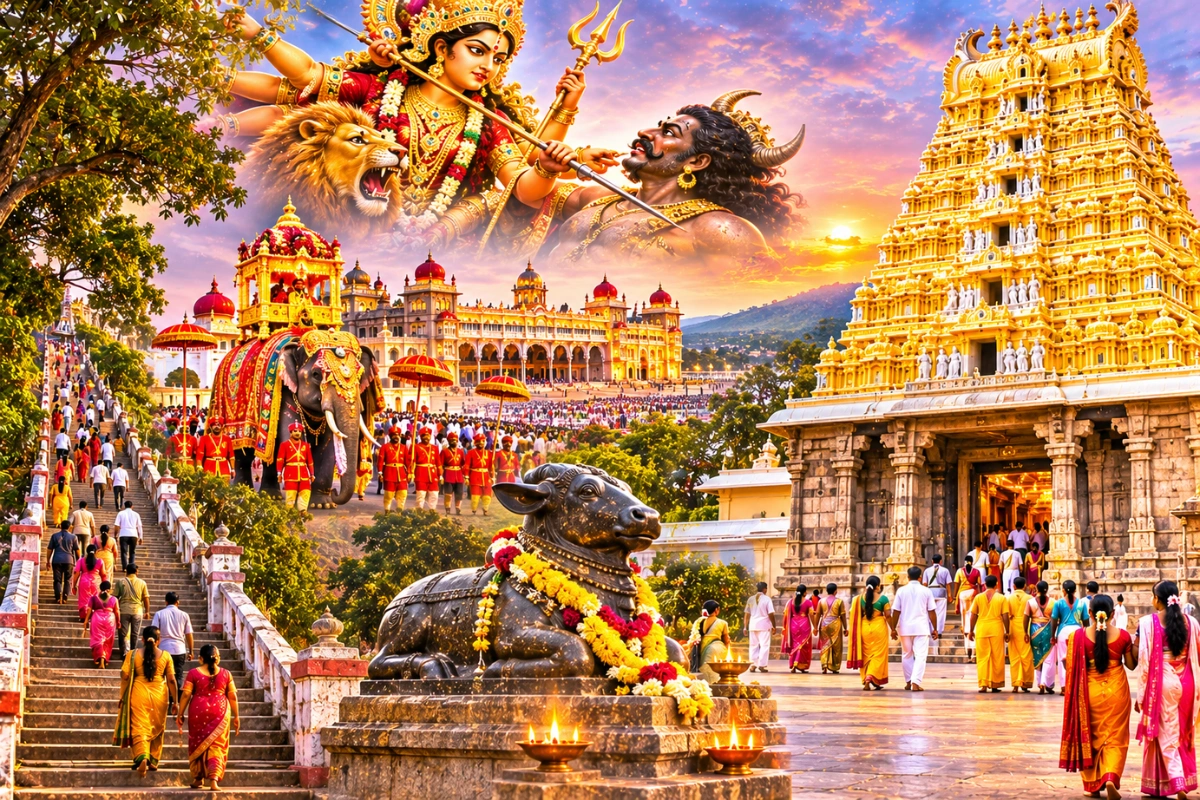
According to local sacred tradition, Goddess Durga, worshipped here as Chamundeshwari, slew the buffalo-headed demon Mahishasura on this hill, liberating the region from his oppression. The story also explains Mysuru’s name: Mahishasurana Ooru, meaning the town of Mahishasura, became associated with the city. The goddess’s victory therefore connects the hill, the city’s identity, and its enduring devotional life.
This is a religious narrative rather than a documented historical battle. Read in that spirit, it explains why the shrine matters beyond its architecture: devotees approach Chamundeshwari as a protective presence, while visitors encounter a story woven into Mysuru’s public culture. The temple authority identifies her as both the presiding deity of Mysuru and the tutelary deity of its former maharajas.
The temple is approximately 13 kilometres from Mysuru. Elevation descriptions differ: although travel accounts commonly round the hills to 3,300 feet, the district administration lists the temple’s hilltop setting at approximately 3,489 feet above sea level.
Royal Patronage and the Temple Landscape
The Chamundi temple’s relationship with the Wadiyar rulers helps explain its prominence. Their reverence for Chamundeshwari linked royal authority with devotion, and successive contributions shaped the shrine visitors see today. Krishnaraja Wodeyar III added the gopuram with its gold finials and supported festivals and processions.
Architecture and Nearby Shrines
The temple displays Dravidian architectural features, including a seven-tiered entrance tower decorated with sculptural figures. Look upwards before joining the queue: the tower provides an introduction to the building’s visual language. The hill also contains the older Mahabaleshwara Temple and a shrine dedicated to Narayana Swamy, placing Chamundeshwari within a broader sacred landscape.
Chamundi Hills Temple Timings and Daily Planning
The Karnataka government’s temple portal lists three daily darshan periods. These are temple visiting windows, not a guarantee that every hill road, viewpoint, or transport service follows the same schedule. Use them to plan worship, then confirm access arrangements separately.
| Darshan Session | Listed Hours |
|---|---|
| Morning | 7:30 AM–2:00 PM |
| Afternoon | 3:30 PM–6:00 PM |
| Night | 7:30 PM–9:00 PM |
The portal lists closures between 2:00 PM and 3:30 PM, and between 6:00 PM and 7:30 PM. However, the temple authority’s homepage currently displays only the morning and afternoon darshan periods. Confirm the night session directly before relying on it.
If you are searching for ‘Chamundi Hills timings today’, treat published hours as a starting point rather than live confirmation. Karnataka Tourism notes that special worship and festivals can involve extended hours. Check current temple notices before leaving, and avoid arriving immediately before a scheduled closure. Leave room for the queue instead of planning your next stop around an assumed finishing time.
How Many Steps Are There on Chamundi Hills?
The traditional climbing route has 1,008 stone steps, according to Karnataka Tourism. Taking the steps turns the ascent into part of the pilgrimage, while the motorable road offers an alternative for visitors who prefer not to climb. Neither approach is necessary for appreciating the temple’s significance; choose according to your mobility, energy, and available time.
Choosing Between the Steps and the Road
Consider these practical differences before setting out:
- Choose the steps for a deliberate ascent. Wear footwear with reliable grip, carry drinking water, and pause before fatigue makes the climb uncomfortable.
- Choose road access to reduce exertion. The temple authority confirms KSRTC bus connections from Mysuru’s city bus stand; check the return service before travelling.
- Allow time for Nandi. The climbing route includes a monumental bull carved from a single granite block, giving the ascent another important sacred landmark.
Avoid assigning everyone the same climbing time. Your pace, rest stops, weather, and comfort on stairs should determine the plan.
Mysuru Dasara Brings the Goddess into the City
Mysuru Dasara demonstrates that Chamundeshwari’s importance is not confined to the hilltop. Sacred ceremonies at the temple connect with celebrations in the royal city, culminating in the Vijayadashami procession known as Jamboo Savari. The festival publicly celebrates the goddess’s victory over Mahishasura.
Its defining sight is the golden idol of Chamundeshwari carried atop a decorated elephant in a 750-kg golden howdah. That figure describes the complete ceremonial carrier, not 750 kilograms of solid gold: official festival information describes gold covering a wooden frame.
Travel reporting has described over a million spectators converging on Mysuru’s streets to witness the procession. Treat that as a reported indication of its scale, not a fixed annual attendance count. For visitors, the practical lesson is straightforward: plan transport and meeting points carefully, and follow official crowd-management instructions.
A Respectful Approach to Your Visit
For a Mysuru Chamundi visit, plan around worship rather than treating the shrine solely as a viewpoint. Keep voices low, follow queue directions, and ask before photographing ritual activity. Observe posted footwear and photography instructions instead of assuming the same rules apply throughout the complex.
Pack lightly and avoid disposable plastic bags: the temple authority identifies the hill area as a no-plastic zone. Carry your waste back to an appropriate disposal point. A thoughtful visit leaves time for darshan, architectural details, and the landscape without adding litter or rushing through an active place of devotion.
Also Read: Explore Kalinga Architecture: Twin Sisters And Ekamra
To read more such news, download Bharat Express news apps