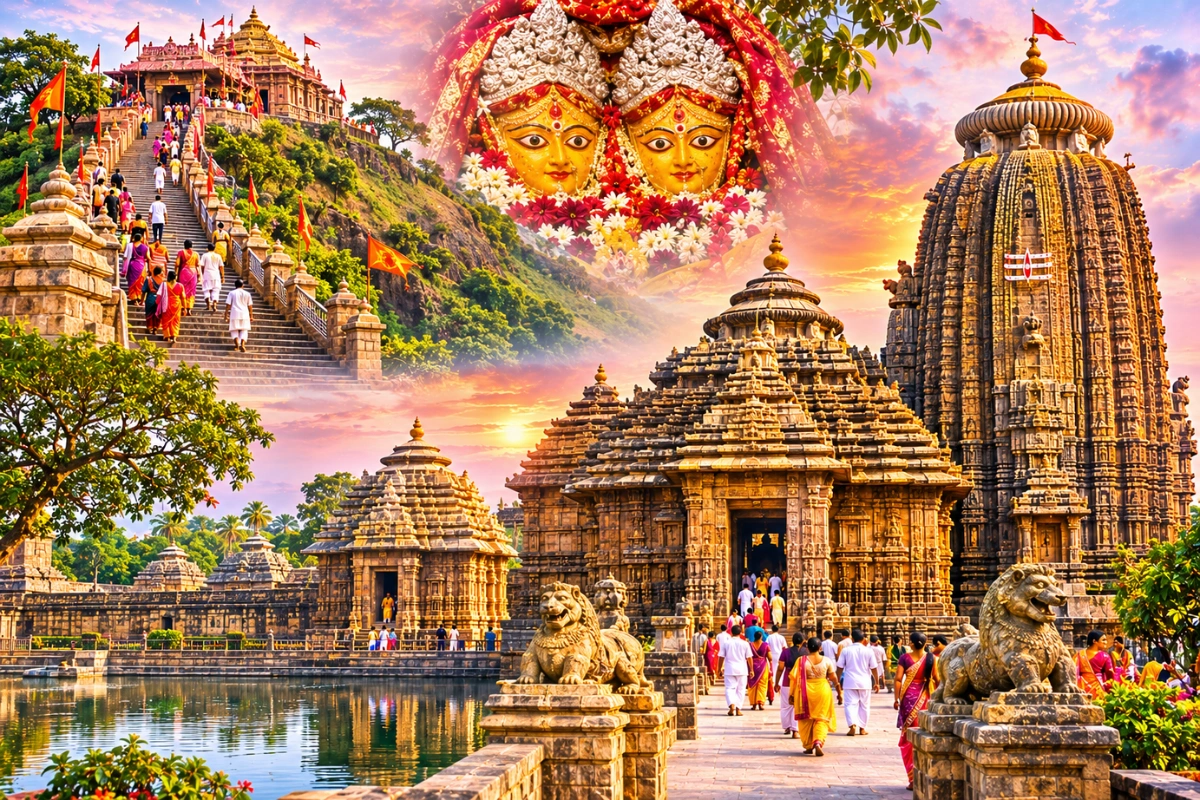
AI Generated Image
The Twin Sisters of the Hill and the Kalinga Architecture of Ekamra Kshetra
Taratarini Mandir and Lingaraj Mandir reveal two complementary sides of Odisha’s sacred heritage: the hilltop worship of twin goddesses and the monumental temple-building tradition of Bhubaneswar. Read together, they connect pilgrimage, landscape, and Kalinga architecture without reducing either shrine to a sightseeing stop. The theme ‘The Twin Sisters of the Hill and the Kalinga Architecture of Ekamra Kshetra’ offers a way to explore these distinct but related worlds.
Taratarini and Lingaraj Mandir (Odisha)
Begin with an important geographical distinction. Taratarini stands in Ganjam district in southern Odisha, while Lingaraj belongs to Ekamra Kshetra, the sacred historic landscape of Bhubaneswar. They are not neighbouring temples within one precinct; their connection lies in the wider religious and artistic traditions of Odisha.
Their settings offer different ways of approaching those traditions. At Taratarini, the hill and river frame the pilgrimage. At Lingaraj, the relationship between the tower, halls, subsidiary shrines, and surrounding sacred spaces brings the architectural tradition into focus. Looking at both encourages a richer question than simply asking which temple is older or larger: how does each place make devotion tangible?
Why Are Tara and Tarini Called the Twin Sisters of the Hill?
Tara and Tarini are worshipped together as twin sister goddesses at Taratarini Mandir, perched atop the Kumari hills overlooking the Rushikulya River near Purushottampur. The sanctum contains two sacred stone faces representing the goddesses. Their shared presence, rather than a single presiding image, gives the shrine its distinctive identity.
Revered as one of the oldest Shakti Peethas, Taratarini is counted among the principal Adi Shakti seats. According to the sacred tradition associated with Sati, her breasts fell here, making the site a Stana Peetha, or breast shrine. This is a statement of religious belief, not an archaeologically established event or construction date.
The twin goddesses are also remembered as patron deities of ancient Kalinga mariners. Maritime tradition associates their worship with prayers for protection before difficult ocean journeys. This connection adds another dimension to Kalinga history: alongside temples and royal patronage, seafaring communities also found expression for their hopes and anxieties through devotion.
The Ascent and the Family Rituals
Pilgrims can climb the traditional 999 steps or use the cable car, also called the ropeway, to reach the hilltop. The ascent on foot makes the approach an active part of the pilgrimage, while the alternative offers another way to reach the shrine. Confirm ropeway operations before travelling rather than assuming the service will be available on arrival.
The shrine’s website describes millions of devotees visiting throughout the year. Families come for blessings and children’s ceremonies, although the best-documented collective practice is mundan, the first hair offering, rather than child-naming rituals. Anyone planning a naming ceremony should confirm the arrangements with the temple priest beforehand; the overall visitor figure should not be mistaken for a count of naming ceremonies.
Chaitra Tuesdays are especially significant, bringing large gatherings associated with worship and family vows. For parents, the practical distinction matters: a visit for general darshan and a visit for a specific ceremony require different preparation. Ask about the ritual location, required offerings, and arrangements for accompanying relatives before setting out.
Lingaraj Mandir: Harihara Above the Temple City
Lingaraj Mandir in Bhubaneswar represents Harihara, the combined form of Shiva and Vishnu. Its sacred identity therefore brings Shaiva and Vaishnava traditions together rather than fitting neatly into an exclusively Shaiva description. The lingam is worshipped within this combined religious understanding.
The temple’s 180-foot stone tower dominates the historic skyline of Bhubaneswar, the city of temples. Its height is only part of its impact: the curving profile gathers the surrounding buildings into a composition whose visual emphasis remains the sanctuary. Stand back, where permitted, before studying individual carvings; the overall silhouette helps explain the monument’s power.
Generally dated to the eleventh century, Lingaraj is associated with Somavamsi patronage and later additions under the Ganga rulers. This layered development is worth remembering. A living temple complex need not represent a single building campaign, even when its finished appearance feels remarkably coherent.
What Makes the Kalinga Style of Temple Architecture Distinctive?
The Kalinga style is Odisha’s regional expression of the broader Nagara tradition. Its most recognisable features include a curvilinear sanctuary tower, tiered hall roofs, and sculptural decoration integrated with the building’s structure. Rather than looking only for ornament, notice how different roof forms identify spaces with different ritual functions.
Three terms make the Kalinga style of temple architecture easier to recognise:
- Rekha deula: The sanctuary structure with its rising, curvilinear tower. Its continuous upward profile distinguishes it from the stepped roof of the adjoining hall.
- Pidha deula: A structure roofed with receding horizontal tiers, producing a pyramidal outline. This form commonly appears over the assembly hall, or jagamohana.
- Khakhara deula: An elongated shrine form with a wagon-vaulted roof. It provides an important reminder that the regional tradition includes more than one temple silhouette.
These forms are a vocabulary, not three ingredients that every temple must contain. Learning the differences lets you identify what a building actually presents instead of trying to force every shrine into the same pattern. Begin with the roofline, then work down towards the walls and entrance.
Reading Lingaraj from Hall to Sanctuary
Lingaraj demonstrates a developed sequence of four principal components: the vimana containing the sanctuary, the jagamohana or assembly hall, the natamandira associated with ceremonial performance, and the bhoga-mandapa for offerings. Their arrangement gives Kalinga temple architecture a readable relationship between ritual activity and built form. Each component belongs to the whole, but each serves a different purpose.
Look vertically as well as horizontally. Architectural descriptions distinguish the lower body, or bada, the tower’s gandi, and the crowning mastaka. These terms help turn an apparently overwhelming mass of stone into an intelligible composition.
For a first encounter with Kalinga art, try this sequence:
- Read the silhouette: Separate the curved sanctuary tower from the tiered hall roofs.
- Follow the divisions: Notice where the wall, superstructure, and crown change character.
- Choose one detail: Study a carved panel or projection before moving to another, rather than trying to absorb everything at once.
Ekamra Kshetra Beyond a Single Monument
Ekamra Kshetra encompasses Bhubaneswar’s historic sacred landscape, not just Lingaraj’s enclosure. Temples, water tanks, smaller shrines, settlements, and ritual routes are connected within it. Bindusagar is particularly important to understanding how the old town functions as a religious place rather than a collection of isolated buildings.
The Kalinga style of architecture becomes more meaningful when seen at this scale. A monumental tower establishes a landmark, but water bodies and routes help organise movement and observance around it. Leave time to understand these relationships instead of treating the principal temple as the entire story.
Visiting with Attention and Respect
Give the two destinations separate attention. Odisha Tourism identifies Brahmapur as the rail gateway for Taratarini, while Lingaraj is within Bhubaneswar. Plan the intercity journey explicitly rather than treating the hill shrine as a short addition to an Old Town walk.
Before visiting:
- Confirm access: Lingaraj currently permits only Hindus inside; Odisha Tourism identifies an external viewing platform for other visitors. Verify the arrangements before arrival.
- Match the ascent to your group: Discuss whether everyone can manage Taratarini’s steps, and check alternatives beforehand.
- Prepare for ceremonies: Ask priests about requirements rather than relying on general descriptions online.
- Respect worship: Follow local instructions on footwear, photography, queues, and restricted areas.
Two Settings, One Richer Understanding
Taratarini and Lingaraj reward different kinds of attention: one begins with twin goddesses and a hilltop approach, while the other centres on Harihara and a monumental architectural composition. Together, they show why Odisha’s sacred heritage cannot be understood through stone alone. Bring curiosity about belief, ritual, and setting, and the architecture becomes easier to read—and harder to forget.
Also Read: The Divine Love Madness: Exploring Vrindavan’s Sacred Temples
To read more such news, download Bharat Express news apps