AI Generated Image
The City Older Than Time: Where Death Meets Liberation on the Banks of the Eternal Ganga
Varanasi, also known as Kashi or Banaras, is an ancient living city where the Ganga connects everyday life with Hindu beliefs about death and liberation. For many Hindus, dying in this sacred city carries the promise of freedom from the cycle of birth and death. Understanding this belief reveals a place far richer than its famous funeral fires: a city of devotion, learning, creativity and enduring human attachment.
Why Does Varanasi Feel Older Than Time?
Varanasi feels timeless because its riverfront remains a setting for living traditions, not simply a collection of historical monuments. India’s submission to UNESCO’s World Heritage Tentative List describes a city where rituals, pilgrimage, craftsmanship and learning have continued across generations. Its antiquity is real, but ‘older than time’ belongs to poetry rather than archaeology.
That distinction helps us appreciate the city without turning it into a myth untouched by change. Varanasi’s significance lies less in imagining that nothing has changed than in noticing how traditions continue to find a place in everyday life. The ghats, with their flights of steps connecting the city to the water, make that continuity visible.
Look beyond the postcard view. A meaningful encounter begins when the riverfront stops being a backdrop and becomes a place where people belong. Allow room for ordinary moments rather than searching only for scenes that appear ancient or mysterious.
The Eternal Ganga as a River of Life
In Varanasi, the sacred Ganga is inseparable from the city’s religious identity. Hindu tradition associates its waters with purification, while devotion to Shiva gives Kashi particular spiritual importance. Calling it the eternal Ganga expresses this enduring sacred relationship; it is devotional language, not a claim that the physical river exists beyond natural change.
The phrase ‘river of life’ offers another way to understand this connection. Along Varanasi’s riverfront, religious practices share space with work, social exchange and cultural traditions. The river is not merely something people look at; it helps shape the city’s relationship with both the sacred and the everyday.
For a visitor, this suggests a useful shift in attention. Instead of asking only what the river symbolises, notice how people relate to it. Observe without assuming that every gesture has the same meaning, and ask thoughtful questions when conversation is welcome. Respect begins with recognising that a shared sacred place can hold many personal experiences.
How Does Death in Varanasi Connect With Liberation?
In Hindu belief associated with Kashi, dying in Varanasi can bring moksha: liberation from the cycle of birth and rebirth. This is a religious conviction, not an outcome that historical research can verify. It helps explain why the city holds such profound importance for people contemplating mortality and spiritual freedom.
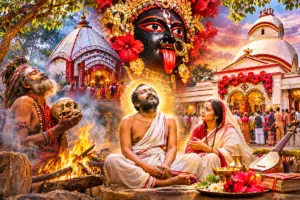
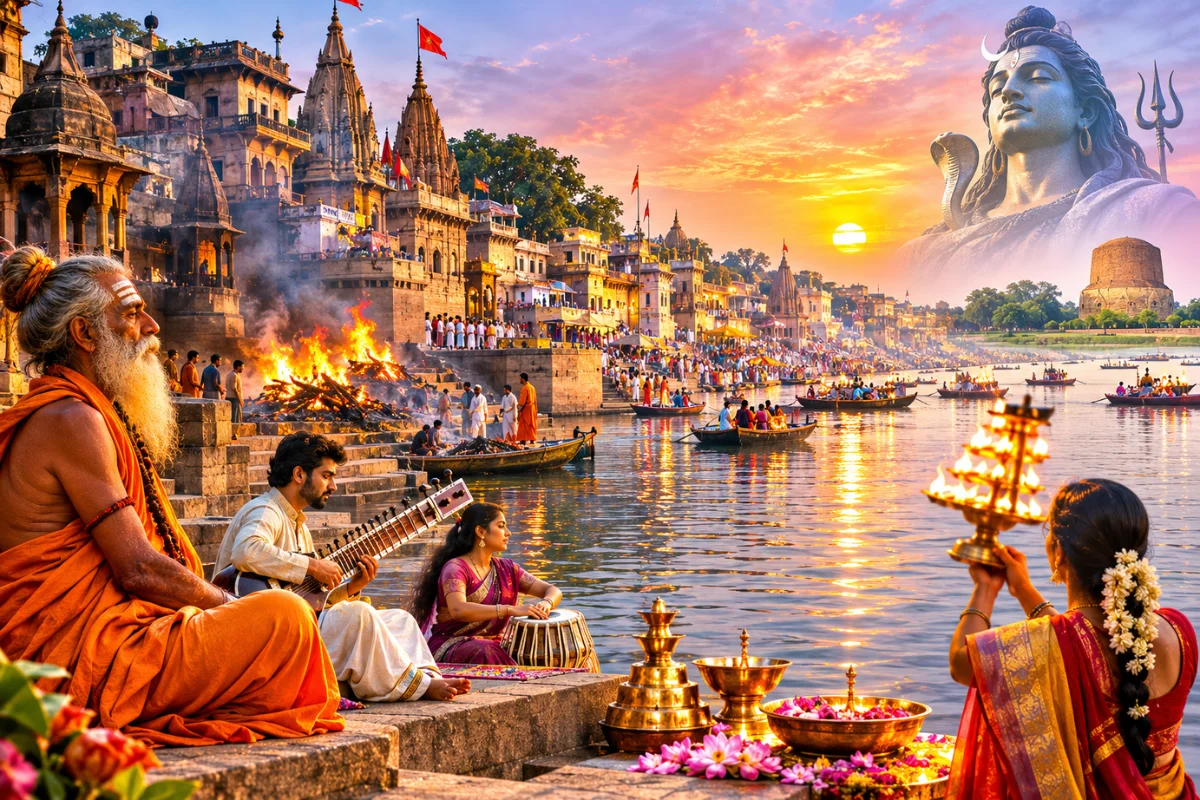
Manikarnika Ghat is one of the riverfront’s most significant cremation grounds. Funeral rites there honour the departed within a sacred setting shaped by Hindu traditions and legends. Its importance lies not simply in the visibility of death, but in the way death is approached through ritual, responsibility and belief.
For someone unfamiliar with these practices, witnessing a cremation may be unsettling. Resist the urge to turn that discomfort into a dramatic conclusion about an entire culture. You do not need to share a family’s beliefs to recognise the seriousness of its farewell.
Nor should spiritual interpretations erase grief. Treat the people before you as individuals, not illustrations of a philosophical idea. The most respectful response may be to remain quietly at a distance—or to leave rather than watch.
The Ghats Reveal Different Sides of the City
Varanasi’s waterfront is not one uninterrupted ritual space. Different ghats have different associations: Assi is known for morning cultural and spiritual gatherings, Dashashwamedh for the evening Ganga Aarti, and Manikarnika for cremation rites. Understanding these differences prevents a visit from being reduced to a single image of death beside the holy Ganges.
Morning at Assi Ghat
Assi Ghat is associated with Subah-e-Banaras, an early-morning gathering featuring devotional practices, including yoga and meditation. It offers a way to experience the riverfront at the beginning of the day rather than through its funerary associations.
Give yourself permission to stay in one place. Listen before taking photographs, leave room for participants and avoid treating a spiritual gathering as a performance arranged for your arrival. A slower approach creates more space for attention and less pressure to collect experiences.
Evening at Dashashwamedh Ghat
At Dashashwamedh Ghat, Ganga Aarti honours the river through lamps, chanting, bells and incense. The ceremony brings the divine Ganga into focus as an object of devotion, not merely a scenic waterway. Its visual richness is part of a religious act whose meaning extends beyond what a camera can capture.
If you attend, choose consideration over the perfect viewpoint. Keep passageways clear, follow local directions and avoid holding a phone in someone else’s line of sight. Let the ceremony unfold without feeling compelled to document every moment.
A Living Culture Beyond the Funeral Fires
Reducing Varanasi to cremation overlooks its substantial artistic life. The city belongs to UNESCO’s Creative Cities Network as a City of Music, and its musical heritage includes traditions sustained through teacher-pupil relationships. Music is therefore not an optional embellishment to the city’s identity; it is one of the ways knowledge and cultural memory are passed on.
Varanasi is also associated with silk weaving, learning and religious exchange. Nearby Sarnath, where the Buddha delivered his first sermon after enlightenment, broadens the region’s spiritual significance beyond a single tradition. Together, these dimensions challenge the idea that the city can be understood through one ritual or one faith alone.
Make space for this wider city. Consider listening to music, learning about a craft or exploring its intellectual history alongside time at the ghats. Such choices encourage a fuller understanding of residents as makers, teachers, workers and neighbours—not simply figures within a visitor’s spiritual journey.
How Can You Experience the Sacred River Respectfully?
Experience Varanasi respectfully by placing people’s privacy, religious practices and freedom of movement ahead of your itinerary. You can observe without participating, appreciate without claiming expertise and step away whenever your presence feels intrusive. Curiosity becomes more meaningful when paired with restraint.
Use these principles as a practical starting point:
- Keep cameras away from cremations. Do not photograph bodies, funeral rites or grieving families. Choose a different subject rather than trying to negotiate access to someone’s loss.
- Ask before taking personal photographs. A person praying, working or resting does not automatically consent to becoming part of your travel story. Accept refusal immediately.
- Follow instructions at religious sites. Check expectations around clothing, footwear, access and photography instead of assuming that every place follows the same rules.
- Clarify paid arrangements beforehand. For a guide or boat outing, ask what is included, how long it lasts and what the total charge will be. Avoid starting with unresolved expectations.
- Leave nothing behind. Carry your waste with you and favour ways of showing respect that do not add material to the river.
You are not required to witness every ritual. If a setting feels emotionally overwhelming, move away quietly. Respect does not depend on how much you see; it depends on how you behave while you are there.
Make Room for Reflection, Not Just Sightseeing
Rather than building a visit around a long checklist, choose a few experiences with different purposes. This gives you a framework without turning the city into a sequence of attractions to complete. Try this simple approach:
- Observe: Spend unhurried time beside the river without immediately reaching for your camera.
- Learn: Seek context for one tradition, musical practice or craft instead of relying on appearances.
- Reflect: Notice what challenged your expectations while avoiding sweeping judgements about other people’s beliefs.
Leave some questions unresolved. A brief encounter cannot explain every ritual or reveal what the city means to everyone who lives there. Acknowledging that limitation is more honest than claiming to have discovered its complete spiritual essence.
What Remains Beside the Eternal River?
The eternal river is a powerful image, but the most valuable takeaway need not be mystical. It may be a greater willingness to consider mortality, a deeper respect for unfamiliar beliefs or a reminder that sacred places are also people’s homes.
Approach Varanasi without demanding a revelation. Give your attention freely, protect others’ dignity and let understanding develop slowly. That is a meaningful way to encounter a city whose significance cannot be reduced to either its beauty or its funeral fires.
Also Read: Infinite Faith In Lord Venkateswara: Spiritual Surrender
To read more such news, download Bharat Express news apps