



AI Generated Image
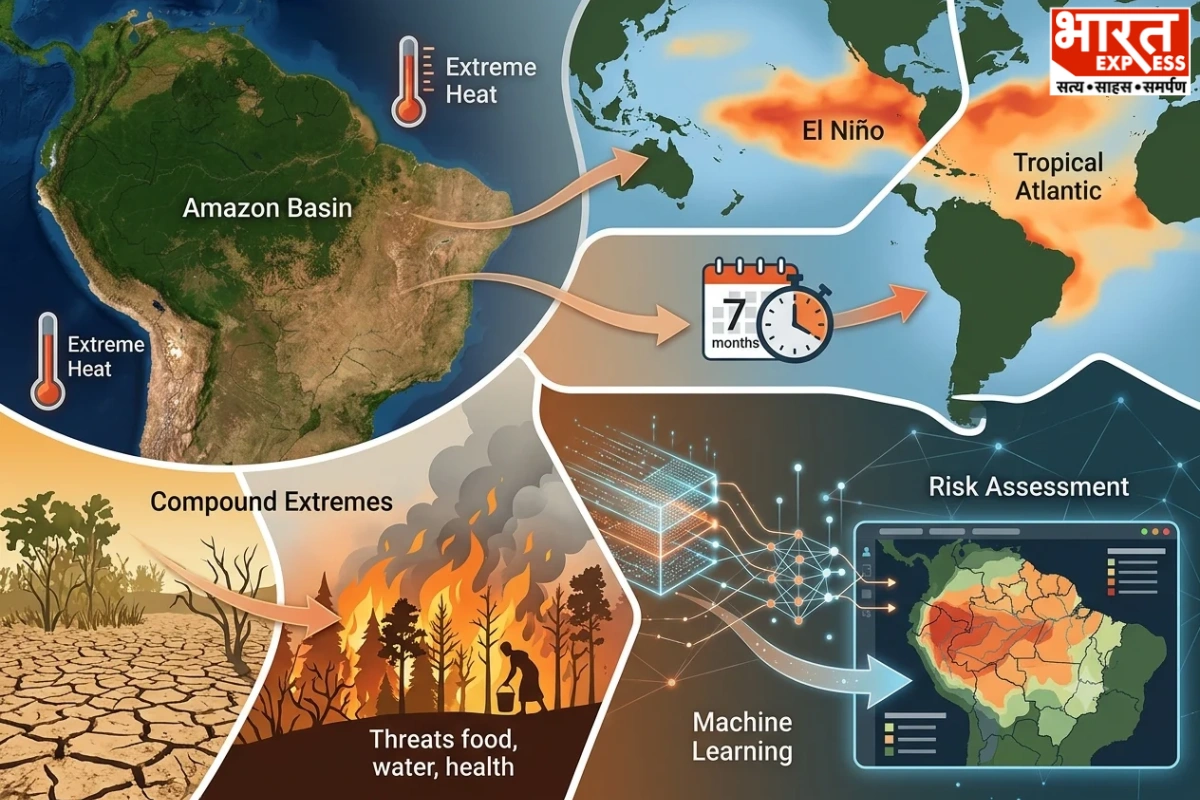
Extreme heat in the Amazon could become more predictable, with El Nino and warming in the tropical Atlantic providing warning signals up to seven months in advance, according to new research.
Researchers from the Australian Research Council Centre of Excellence for the Weather of the 21st Century and Brazil’s National Institute for Space Research examined how major patterns of natural climate variability influence temperature and rainfall extremes across the Amazon Basin.
The study found that Amazon heat extremes become more likely after unusually warm conditions linked to El Niño in the tropical Pacific and warming across parts of the tropical Atlantic.
Researchers identified the strongest long-range signal between March and May. During this period, extreme heat across large parts of the Amazon correlated with climate conditions recorded as much as seven months earlier.
The study, published in Earth’s Future, further identified potential early-warning signals for compound hot-and-dry events, particularly across the northern and lower central Amazon. Predictability remained considerably weaker in other parts of the basin.
Researchers used machine learning to examine links between climate variability and compound extremes, which remain particularly difficult to forecast.
Hot-and-dry conditions can sharply increase wildfire risks, damage fragile ecosystems and threaten human health, food supplies and water resources. Such events can further weaken the Amazon’s capacity to absorb carbon dioxide.
Researchers noted that hot-and-dry extremes have become more frequent and intense, increasing the value of reliable warnings. However, they stressed that further research must translate the identified climate relationships into practical warning systems that communities and governments can use.
Also Read: EAM Jaishankar Begins Five-Day Africa Visit To Ghana, Côte d’Ivoire, Ethiopia
To read more such news, download Bharat Express news apps