

A rare moment of political crossover unfolded on social media after Union Minister Ashwini Vaishnaw publicly thanked Congress leader Rahul Gandhi for highlighting the rapid expansion of a Foxconn iPhone manufacturing facility in Karnataka.
Vaishnaw framed Gandhi’s remarks as an implicit endorsement of Prime Minister Narendra Modi’s flagship Make in India initiative, launched in 2014 to position India as a global manufacturing powerhouse.
In a post on X, Vaishnaw pointed to Gandhi’s praise for the Foxconn plant as evidence that India’s manufacturing push has gained irreversible momentum under the Modi government.
Thanks @RahulGandhi for acknowledging the success of PM Shri @narendramodi Ji’s ‘Make in India’ programme. As you have noted, we are becoming a producer economy as we implement our PM’s vision. pic.twitter.com/1K8kmE6s3t
— Ashwini Vaishnaw (@AshwiniVaishnaw) December 24, 2025
He underlined that the factory hired nearly 30,000 workers within just nine months. He called this a powerful validation of the policy framework attracting large-scale global manufacturing to India.
Rahul Gandhi, in his earlier post, had showcased the Karnataka facility as a model of industrial growth and employment generation.
He described the plant’s ramp-up as the fastest seen in India’s manufacturing sector and emphasised its workforce composition.
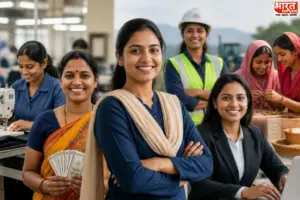
Rahul Gandhi said nearly 80 per cent of the employees are women. He noted that most of them are aged between 19 and 24.
Rahul Gandhi added that many are entering the formal workforce for the first time. He highlighted the factory as a source of dignified employment and a demonstration of how scalable industrial ecosystems can thrive in an opposition-ruled state.
Manufacturing Becomes Political Battleground
Vaishnaw responded by asserting that such outcomes flow directly from the central government’s long-term manufacturing vision.
He credited the Make in India reforms for creating favourable conditions. He also acknowledged the PLI scheme for enabling companies like Foxconn to scale rapidly.
The minister suggested that the success in Karnataka reflects national policy strength rather than regional exception.
The exchange has sharpened the ongoing BJP-Congress rivalry over the economic narrative and credit. While Gandhi positioned the project as proof of Karnataka’s governance model, the BJP framed it as a dividend of central policy consistency and global investor confidence in India’s manufacturing ecosystem.
The Foxconn facility stands as one of the most visible beneficiaries of the PLI scheme, which incentivises domestic manufacturing through performance-linked subsidies.
The project has also become politically significant for its emphasis on women-led employment, aligning with broader national and global conversations on inclusive growth and workforce participation.
Despite such successes, India’s manufacturing sector continues to face structural challenges. Manufacturing contributes around 17 per cent to India’s GDP in 2025, well short of the government’s stated ambition of reaching 25 per cent by 2047.
Policymakers argue that large-scale projects like Foxconn’s iPhone plant are critical stepping stones toward achieving that target.
The public exchange between Vaishnaw and Gandhi underscores how industrial growth has become a central political battleground.
As India pushes to expand its manufacturing base, it is creating more jobs and increasing women’s employment. The country is also integrating further into global supply chains, making these themes central to economic and electoral discussions.
Also Read: MRM Marks 24 Years With Fierce Call For Unity; Minority Rights & National Responsibility
To read more such news, download Bharat Express news apps